Time needs a temperature
“24 hours” is incomplete without a temperature. Fermentation proceeds more slowly in the fridge than in a warm kitchen. A large batch of freshly mixed dough also takes time to cool through.
Start with a recipe that gives a clear sequence: mixing, an initial rest, refrigeration and a period before shaping. The yeast quantity for a quick dough cannot simply be carried over to a multi-day schedule.
Cover it and allow room
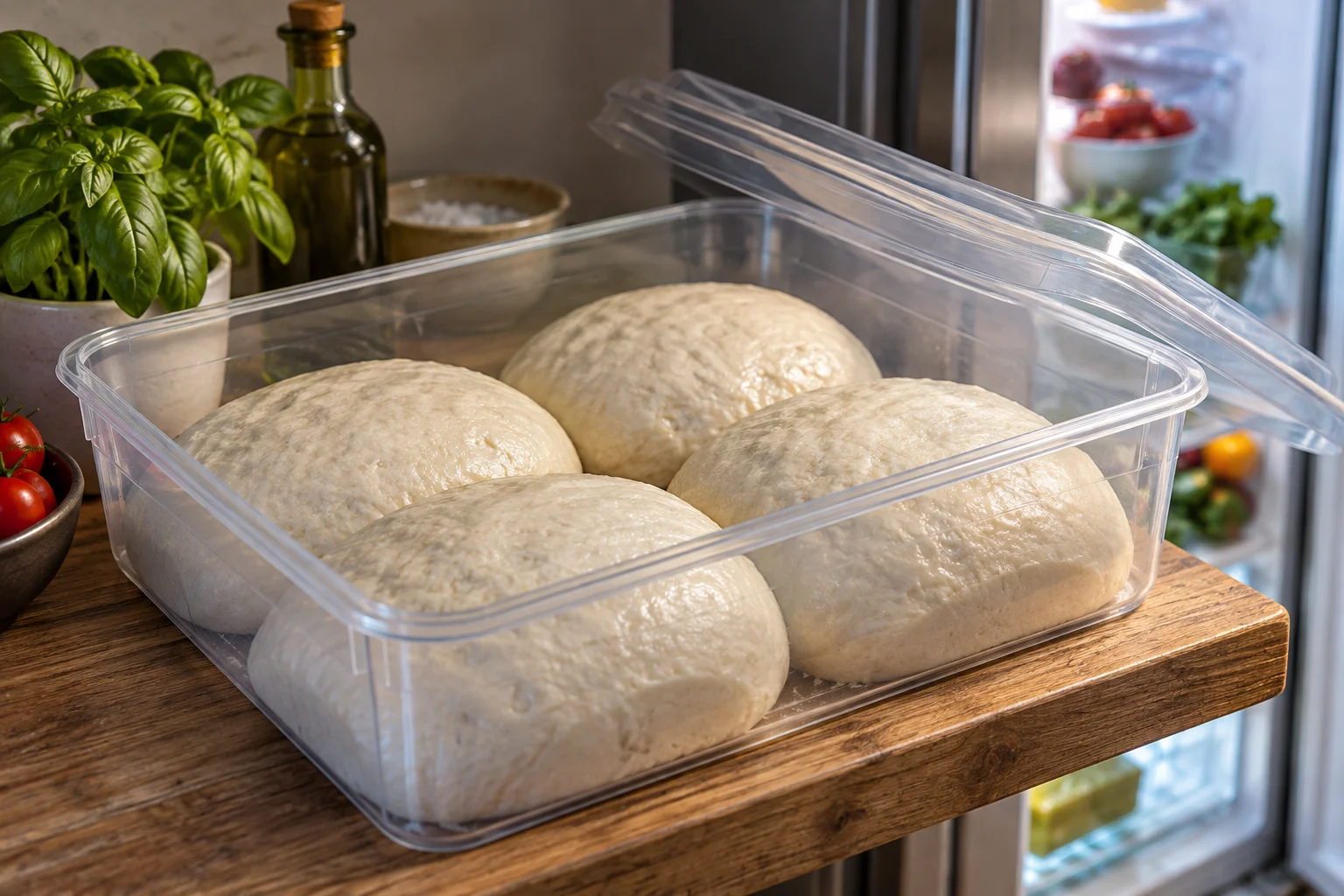
Place the dough in a food-safe container and cover it to prevent the surface drying out. Leave room for expansion. If storing individual dough balls, keep enough space between them to avoid merging into one mass.
Label the batch with its starting time and recipe. This is useful when preparing several portions for guests. Keep the fridge at its normal cold setting and avoid placing a large warm batch next to sensitive foods.
Look at the dough before baking
Cold dough often resists stretching. Take it out ahead of baking according to your recipe, keeping it covered. The time needed depends on room temperature and dough-ball size.
A ready dough ball should stretch without immediately springing back strongly. Very slack dough that collapses may have fermented too far. For the next batch, change time, temperature or yeast quantity deliberately, rather than altering all three together.