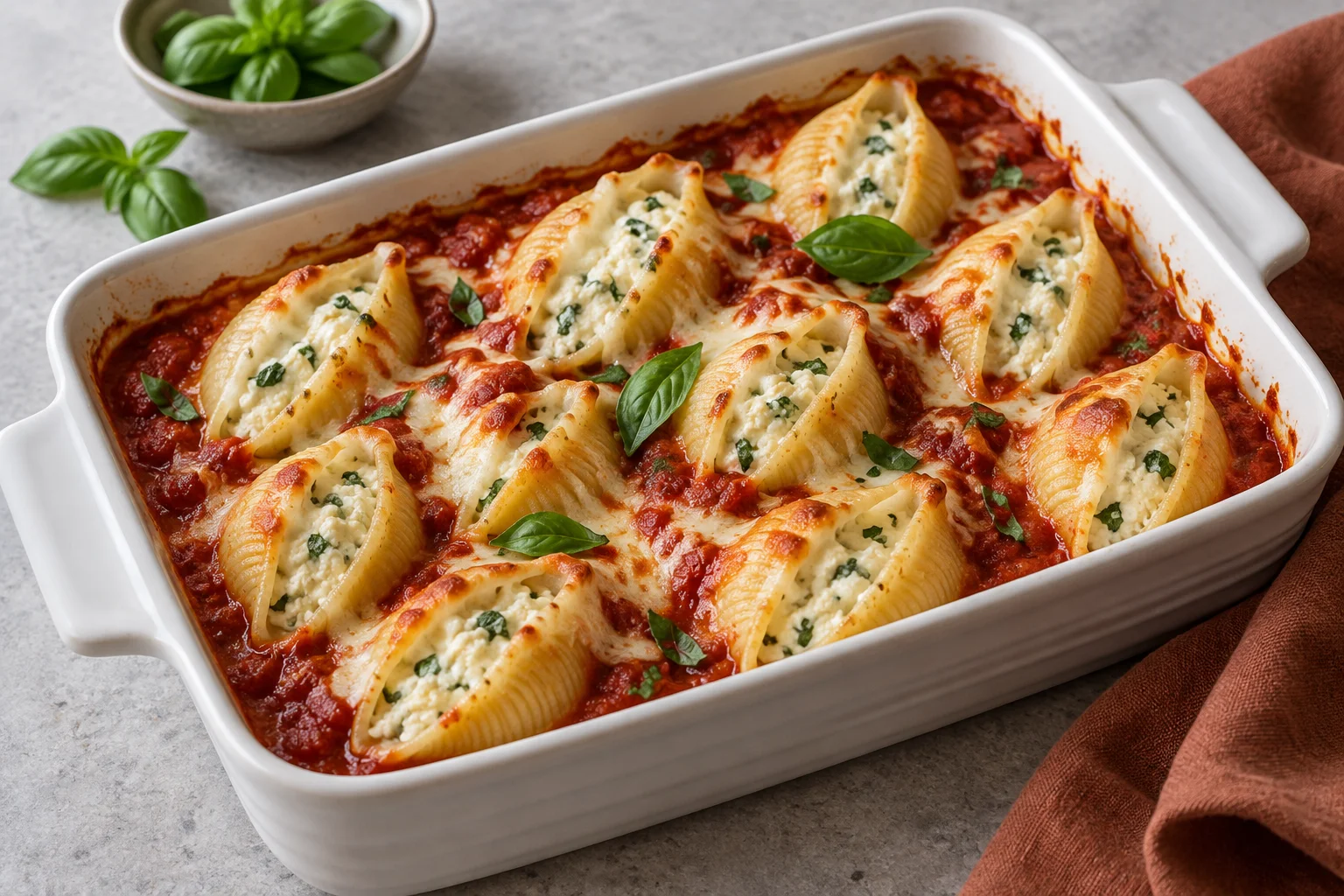
The recipe
Ingredients
- 250 g dried conchiglioni
- 400 g ricotta, weighed after draining any separated whey
- 60 g finely grated Parmesan
- 100 g well-drained or firm mozzarella
- 700 g passata
- 60 g peeled onion
- 1 garlic clove
- 2 tbsp olive oil
- 12 basil leaves
- Salt, pepper and hot water as needed
Method
- Preheat the oven to 200°C conventional heat. Finely dice the onion and garlic. Heat the oil, soften the onion for 5 minutes, then add the garlic for 30 seconds. Stir in the passata, simmer gently for 12–15 minutes and season.
- Meanwhile, boil the conchiglioni in salted water for about 2 minutes less than the packet time for al dente. Drain carefully and spread individually on a tray to cool briefly.
- Finely slice 8 basil leaves. Mix with the ricotta, 40 g Parmesan, pepper and a little salt. Dice the mozzarella and reserve the other 4 basil leaves.
- Spread about half the loose sauce in a sufficiently large baking dish. Fill the shells with a teaspoon and arrange side by side. Spoon the remaining sauce over the pasta edges and into the gaps.
- Scatter over the mozzarella and remaining 20 g Parmesan. Bake on the middle shelf for 25–30 minutes, checking from 25 minutes. The pasta must be cooked and the central filling thoroughly hot. Bake longer if needed, covering with an ovenproof lid if the top browns strongly.
- Rest for 5 minutes, tear the reserved basil leaves over the top and serve.
Cook large shells before filling
You need conchiglioni: large pasta shells intended for stuffing. Small conchiglie do not have enough space for this filling. The number of shells in 250 grams depends on the product. Follow the weight and divide the filling between the shells you actually have. Boil them for about two minutes less than the packet gives for al dente pasta. They should then be flexible but still hold together when lifted.
After draining, place the pasta individually on a tray until cool enough to handle. Some space prevents the shells from sticking into a difficult heap. The baking dish should hold the filled shells side by side; roughly 20 by 30 centimetres is a starting point. If your shells are particularly wide, use two smaller dishes. Stacked shells are harder to coat with sauce and more likely to lose their filling when served.
Keep the ricotta creamy and moisten the edges
Drain visible whey from the ricotta tub, then weigh out 400 grams. The filling should remain on a spoon while still being soft. Finely grated Parmesan and sliced basil provide flavour; this version does not include an added egg. Of the 60 grams of Parmesan, 40 grams go into the filling and 20 grams on top. Initially fill each shell to a similar level, then distribute any remainder rather than overloading the first few.
Put sauce beneath the pasta and spoon it over the edges as well. Some of the pale filling can remain visible. If the sauce becomes very thick during simmering, loosen it with a little hot water so it flows between the shells. At the end, check both a shell and the filling in the middle of the dish. The pasta must be cooked and the filling thoroughly hot. A browned surface alone tells you little about the centre. A five-minute rest makes the shells easier to lift out.