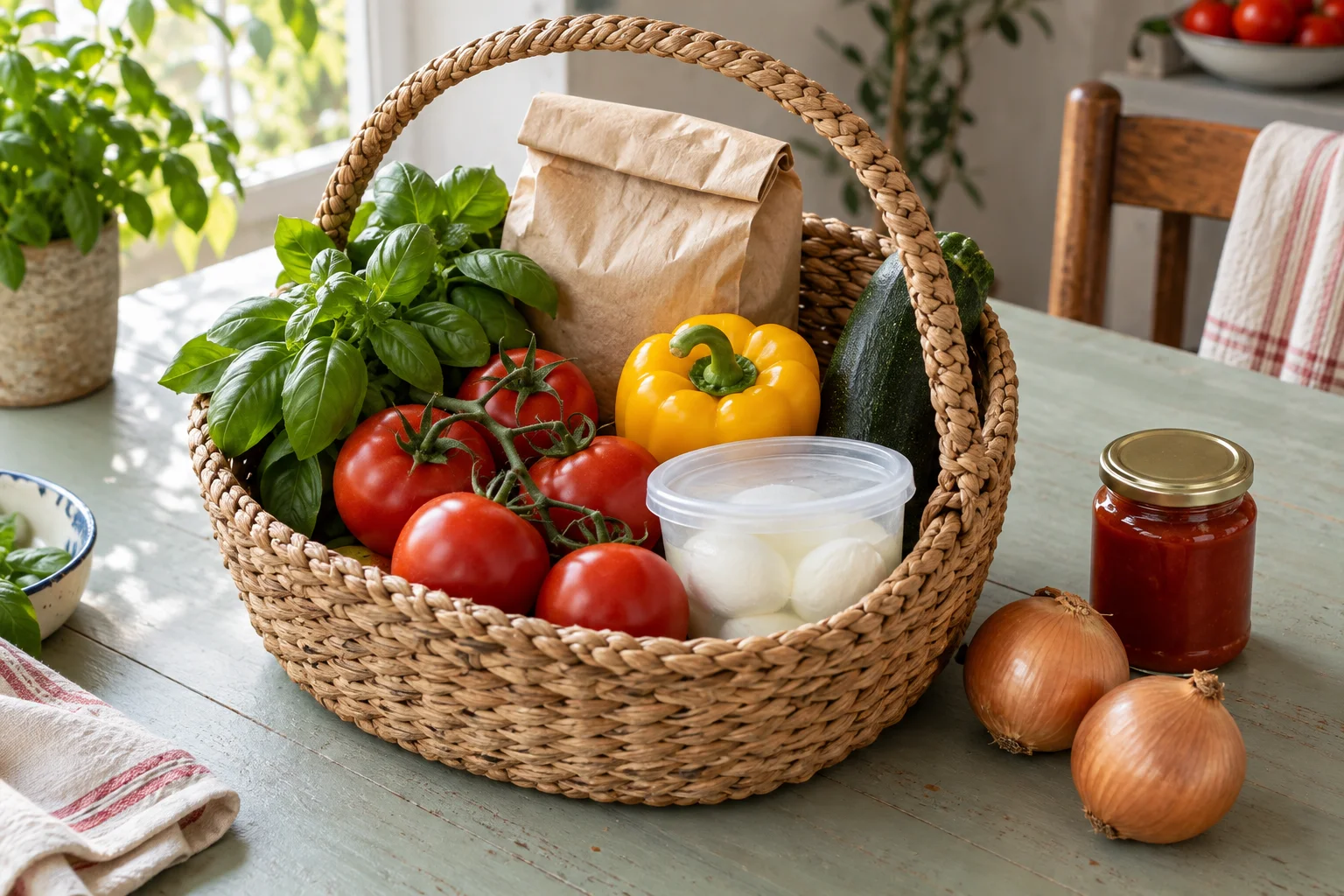
Count pizzas, then calculate ingredients
Decide how many pizzas of each size you want to make in total. Guest numbers and pizza numbers are not automatically identical: appetite, children, starters and dough weight per pizza all affect demand. Then scale your chosen dough recipe to the full planned quantity. The dough calculator helps scale flour, water, salt and yeast together.
List any reserve explicitly instead of rounding up again for every ingredient just in case. For example, your chosen recipe might use 60 g of sauce and 70 g of drained mozzarella on each of eight planned pizzas. That requires 480 g of sauce and 560 g of drained mozzarella. These figures illustrate the calculation; they are not a universal topping recommendation for every pizza.
Combine several varieties into one list
Write down the ingredients for each variety first, then combine identical items. Three mushroom pizzas and five without mushrooms require mushrooms for only three pizzas. Sauce, cheese or basil may appear across several varieties. Separate the shared base ingredients from toppings wanted by only some guests.
Pay attention to the condition in which a recipe states an ingredient's weight. The drained weight of mozzarella, olives or artichokes is not the total weight including liquid. Cooked, squeezed spinach does not weigh the same as the raw spinach needed to make it. If the recipe gives no buying quantity, choose a suitable pack or a clearly described alternative; do not silently substitute gram for gram.
Check supplies and guests' needs first
Look through your flour, salt, yeast, oil and seasonings at home. Check both quantity and suitability for use, rather than simply whether a packet exists. Subtract usable supplies from the calculated requirement. An almost empty flour bag and an unopened full pack should not receive the same tick on the list.
Guests' replies should inform the menu before you shop. For vegan pizzas, for example, leaving off meat is not sufficient if the plan still includes cheese. Discuss ingredients and preparation directly with anyone who has an allergy or coeliac disease. Keep the relevant ingredient information from purchased products so you can answer specific questions on the evening.
Organise the list for shopping
Group the finished list by shopping steps: shelf-stable dough ingredients and tins, vegetables and herbs, refrigerated items and drinks. Record the quantity and relevant detail for each, such as “560 g mozzarella, drained weight”. Only now round up to the packs actually available, distinguishing the quantity purchased from the quantity that will go onto the pizzas.
Finally, check the few essentials beyond ingredients: suitable fuel for the intended oven, clean containers, enough refrigerator space and the tools you already have. Transport perishable purchases appropriately chilled and put them away promptly. Avoid planning more sensitive ingredients than you can sensibly store and prepare. A compact selection of well-chosen pizza varieties makes both shopping and topping easier to organise.