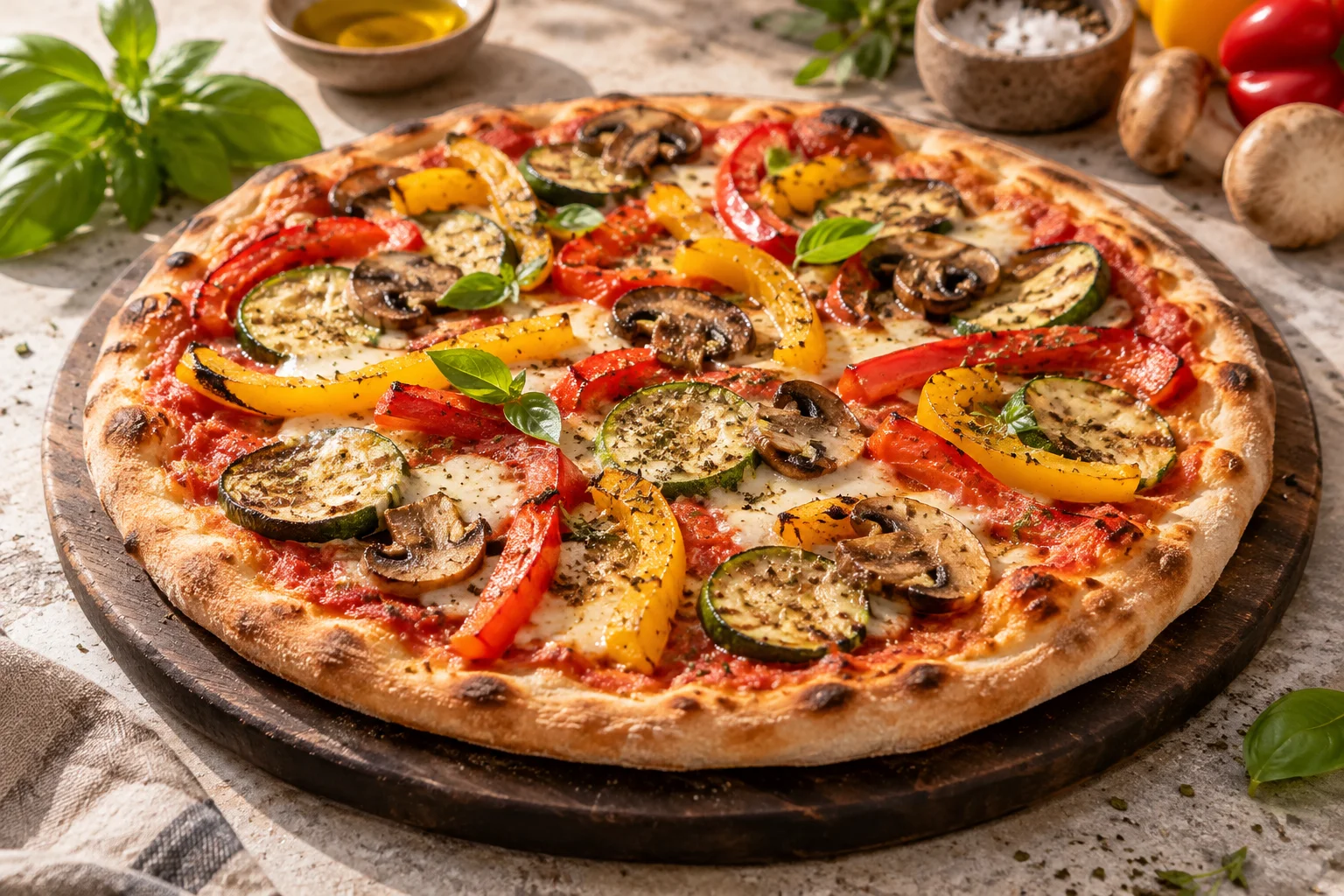
Begin with a manageable combination
A good vegetable pizza starts with ingredients suited to a short bake. Some can go onto the dough raw; others benefit from cooking first. Make that decision using their size, moisture and the texture you want. These examples help you build toppings that contribute flavour without burying the base beneath a heavy, wet layer.
For a first vegetable pizza around 28 to 30 cm across, use a dough ball from our margherita recipe. A practical starting point is a thin layer of approximately 70 to 80 g tomato sauce, around 50 to 60 g drained mozzarella and a small handful of prepared vegetables. This is not a fixed maximum allowance. It is a manageable arrangement in which you can still see sauce and occasional spaces between the topping ingredients.
Choose two vegetables initially rather than five. For example, combine cooked mushrooms with a few thin onion strips. Alternatively, use precooked peppers and add rocket after baking. This is about more than flavour: two ingredients are easier to prepare so that they finish together. Add a third component later when it has a clear purpose, perhaps acidity, freshness or a different texture, rather than simply because it is available in the fridge.
Think about vegetable quantity after preparation. A 150 g portion of raw mushrooms becomes considerably smaller after frying. A weight without that distinction can therefore mislead. The shopping list uses the raw weight, while the pizza receives the prepared amount. Keep those two quantities separate when you want to repeat a combination for more people. It also helps you understand why equal raw weights of different vegetables do not produce equal topping coverage.
Distinguish water from excess oil
Water-rich vegetables can release liquid during baking. When that liquid collects in the centre, the topping becomes watery and the base beneath it stays soft. Adding oil does not solve the problem. Oil introduces a different issue: too much makes the pizza greasy. Drain vegetables packed in oil or marinade as carefully as fresh cheese. A few drops of flavourful oil after baking are easier to control than a topping carrying a pool of marinade.
Dry washed vegetables before cutting them. With particularly juicy tomatoes, remove some loose seeds and liquid if useful. Let cooked ingredients release excess steam and cool before placing them on raw dough. Hot, wet vegetables change the dough surface while you are still building the pizza. The longer it then waits, the harder transferring it may become. This matters especially when you are preparing on a peel and need the base to slide freely.
The aim is not to dry every vegetable completely. Pizza should still be pleasantly moist. Control the amount of free liquid rather than creating a dry layer of crumbs. Distribute the topping loosely and evenly. A tall pile in the middle cooks differently from the same quantity spread over the surface. On a thin pizza, improving that distribution can matter more than making another change to the dough itself.
Mushrooms and how to prepare them
Thinly sliced button or cremini mushrooms can be used raw in modest quantities when you want a fresh, softer texture. For stronger flavour and less liquid released during the bake, cook them first. Cut evenly, heat a wide pan and add an amount you can move around comfortably. Cook until most released liquid has evaporated and some surfaces have coloured, then leave them to cool before using them as a topping.
An overcrowded pan initially collects a lot of liquid. Divide a larger batch into two rounds instead of simply increasing the heat. Season the mushrooms with the rest of the topping in mind. Salty cheese or olives may reduce the additional salt you need. Place the prepared mushrooms on the pizza as separate pieces. A thick continuous blanket makes it harder for moisture beneath the topping to escape and hides what is happening to the sauce.
Other mushroom species have their own preparation and thorough-cooking requirements. Do not transfer a quick button-mushroom method to arbitrary wild mushrooms. Clearly identified shop-bought cultivated varieties are easier to plan for an uncomplicated home pizza. If you use more than one type, prepare them separately where useful. This lets you assess each texture before combining them, rather than discovering during the pizza bake that one variety needs significantly longer than another.
Peppers, courgettes and aubergines
Thin raw pepper strips soften during a longer domestic-oven bake but may retain some bite. For a very short hot bake, or a softer result, cook them first in a pan or oven. Remove the stem and seeds, cut evenly and use a modest amount of oil. Jarred roasted peppers provide a convenient alternative if well drained. Account for a strongly seasoned marinade when deciding how much salt and acidity to add elsewhere.
Very thinly sliced courgette can be used raw in a light layer. Thicker pieces benefit from precooking so that the pizza does not finish while the vegetable still feels firm. After frying or roasting, keep any collected liquid off the dough. If you salt courgettes beforehand, allow for the moisture they release and pat the pieces dry. Season cautiously afterwards because the sauce and cheese also contribute salt to the finished pizza.
Aubergine usually develops a more appealing texture through precooking than through a brief spell on top of pizza. Cut it into thin slices or small cubes, coat lightly with oil and cook until tender. It can absorb considerable oil, so repeatedly adding more can create a heavy topping. Distribute the cooled pieces with tomato and a little cheese. A few basil leaves added after baking provide a fresh finish without requiring another substantial topping layer.
Onions, spinach and tomatoes
Thin raw onion strips keep more pungency and bite. Slowly cooked onions are milder and sweeter, but have already developed colour and need less further browning. Use either in modest amounts when the onion is intended to support other ingredients. Very fine strips can darken rapidly under strong top heat. Tuck some between other toppings or add them later in the bake if your oven tends to scorch exposed edges.
Fresh spinach loses a great deal of volume as it cooks. For a predictable amount, wilt it briefly, cool it and squeeze out excess water. Distribute small loose portions across the pizza. Prepare frozen spinach according to its packaging and remove surplus liquid as well. A large wet mound beneath a thick cheese layer is harder to cook successfully than several small patches. Season after draining, when you can judge the amount that will actually reach the pizza.
Fresh tomato slices add water as well as the sauce already on the base. Slice them thinly or reduce the sauce accordingly. Halved small tomatoes can sit cut-side upwards to keep some juice from immediately reaching the dough. Dried tomatoes provide a more concentrated, often saltier flavour. Cut them into small pieces and pair with a comparatively mild base. Drain versions packed in oil before adding them, rather than pouring their storage liquid onto the pizza.
Firm vegetables and delicate leaves
Potatoes, squash and larger broccoli pieces need different preparation from fine onion strips. For a short pizza bake, generally precook them and choose pieces that will be comfortable to bite. Thin cooked potato slices can work with a restrained white base, while squash can be added as small roasted cubes. The important point is that the vegetable reaches its intended edible texture by the time the dough is finished, not several minutes later.
Rocket, fresh basil and tender herbs are often best added after baking so that they retain their fresh character. Wash and dry them beforehand to avoid adding surface water at the end. Add them to the whole pizza or only to individual slices, which is useful when guests have different preferences. A large mound of leaves does not need to obscure the topping. A few well-distributed leaves often provide the freshness you are looking for.
Check the size of jarred ingredients too. Whole artichoke hearts are harder to distribute than drained smaller pieces. Pit and halve olives where appropriate. Capers give a strong seasoning effect in small quantities. Treat these ingredients as accents rather than another full vegetable layer. That leaves room for the principal topping and makes it easier to balance salt and acidity. Taste the prepared components together before deciding that the pizza needs further seasoning.
Three combinations with different characters
For a mild mushroom pizza, use tomato sauce, a little mozzarella, cooked mushrooms and a few thin onion strips. At the pizza size described above, start with approximately 60 to 80 g of cooked mushrooms. Distribute them loosely and finish with a little parsley or thyme after baking. These quantities provide a starting composition that you can adjust to the size of your pizza. Use the baking method appropriate to the dough you have chosen.
For a Mediterranean vegetable combination, pair precooked peppers with drained artichokes and a few olives. Hold back additional salt until you have tasted the ingredients together. A thin tomato base connects the flavours. For a fresher alternative, bake tomato sauce, a little cheese and a few pieces of dried tomato, then add dry rocket and a small squeeze of lemon to taste after the pizza comes out of the oven.
A vegan version does not automatically need a thick layer of cheese alternative. Tomato, well-prepared aubergine, basil and a little olive oil can make a complete combination. If you do use a plant-based cheese, follow the behaviour and quantity appropriate to that product. For vegetarian guests, check that the cheese has a suitable vegetarian designation. Keeping the basic toppings in separate containers makes different dietary preferences easier to accommodate without having to remake every combination.
Prepare several pizzas and diagnose the result
Cook vegetables before the main baking session and keep perishable ingredients chilled until needed. Bring only the current quantities to the work area. For four pizzas, you might plan two combinations and weigh the prepared portions into separate bowls. This prevents the first pizza from accidentally receiving half the evening's topping. Build each pizza shortly before baking, especially if it will wait on a peel rather than remain supported in a tray.
If the centre is watery, assess sauce, cheese and vegetables together, then reduce one identifiable source of liquid next time. If vegetables remain too firm, change their cut size or precooking instead of continuing to bake a base that is already finished. If exposed tips burn, place those ingredients more protectively or add them later. If the result tastes crowded, remove a component. One well-prepared principal vegetable and a suitable companion often produce a clearer, more enjoyable pizza.