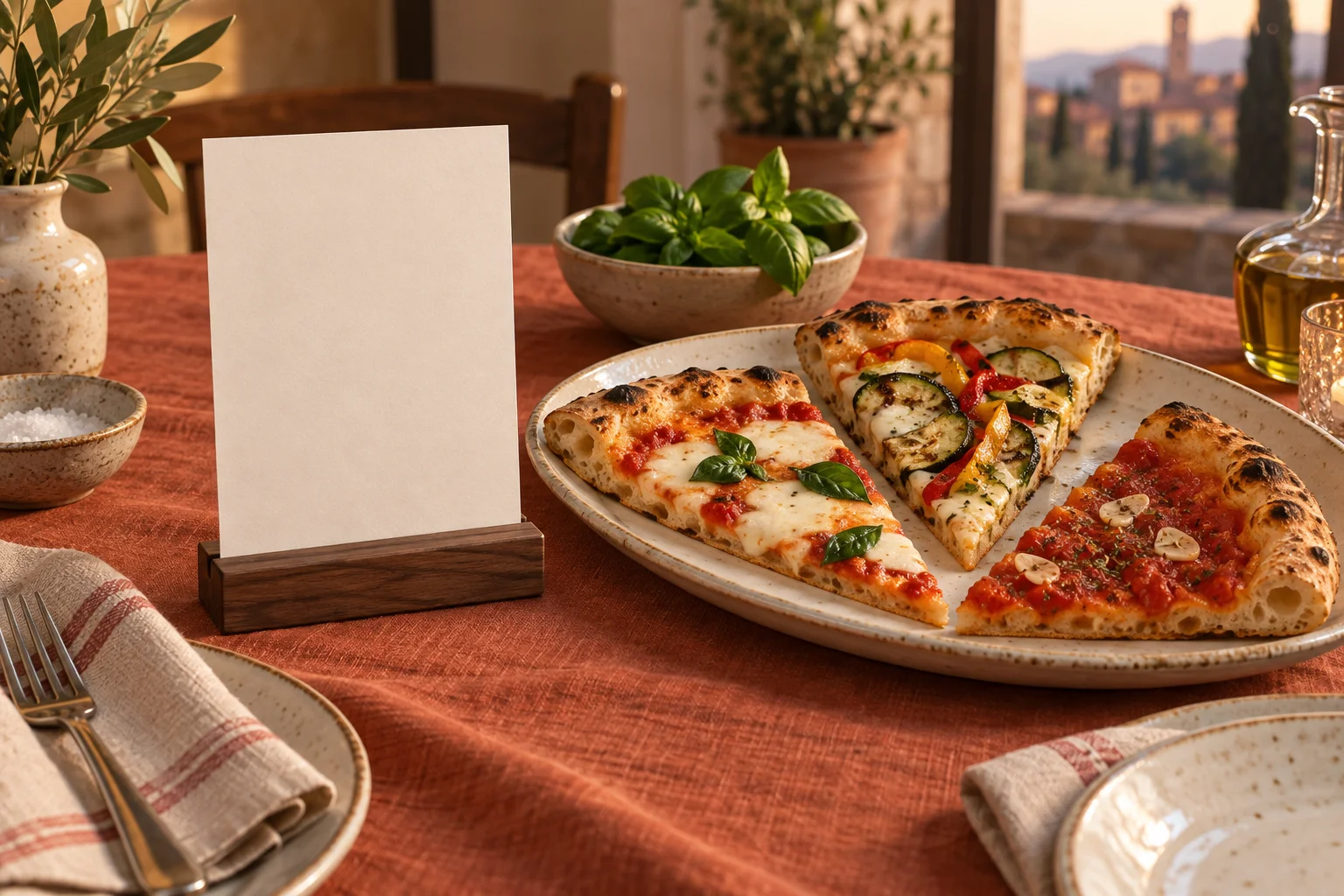
Show the pizzas you will actually serve
Start by listing the pizzas you are preparing. For a small private gathering, three suitable choices are often easier to follow than a long wish list. Give each version a distinct name, then list the ingredients guests need to make their choice. For a mushroom pizza, tomato sauce, mushrooms and mozzarella say more than an invented description full of Italian adjectives.
Use the same names on the card and when announcing the finished pizza. If the pizzas come out of one oven in successive batches, explain that. "We will bake several rounds and share the pizzas in slices" describes the meal more clearly than precise serving times you cannot maintain. A menu for shared food does not need order numbers unless you are assigning individual pizzas to people.
Make the ingredients clear
You can use familiar names such as Margherita and add the actual ingredients. Descriptions such as vegetarian or vegan must fit everything you use, including sauce, cheese and toppings added after baking. Cheese made with animal rennet, for example, is unsuitable for a pizza explicitly described as vegetarian. Removing the salami is not enough to establish the suitability of the remaining ingredients.
For allergies, a short ingredient line on a private menu card is not a guarantee. Discuss requirements directly beforehand and keep the product information available. Gluten-free dough alone says nothing about whether shared preparation is suitable. Do not call a pizza allergen-free without being able to substantiate that. The card should provide real information rather than promise conditions your kitchen cannot deliver.
Adapt a sample to your menu
Here is an original wording example: "From the oven tonight: Margherita with tomato sauce, mozzarella and basil. Vegetable pizza with tomato sauce, courgette, peppers and mozzarella. Marinara with tomato sauce, garlic, oregano and olive oil. We will share the pizzas in slices and bake several rounds." Keep only the pizzas and ingredients you will actually serve, and change the names to match your selection.
List anything added at the table separately. This might be rocket or a hot sauce for those who want it. If a pizza changes, replace the relevant card instead of serving something different beside an outdated description. Simple ingredient pictures or a short second-language version can help children or guests who do not read the main language. Colours alone do not explain an ingredient or dietary description clearly.
Make the card easy to read and find
A readable card in a small table stand is enough. Use dark lettering on a plain, light background and leave space between the pizzas. A decorative heading should not crowd out the ingredients. Read the printout from the distance at which guests will see it. A decorative photograph of the menu on a phone is less useful if everyone has to zoom in.
Put the card at the serving point or on the dining table, away from the oven, hot trays and wet work surfaces. On a buffet, it stays beside the food it describes. When pizzas are passed around for sharing, one card for the whole menu may be enough. The person serving also names the pizza currently available, so guests do not have to identify it through the melted cheese.