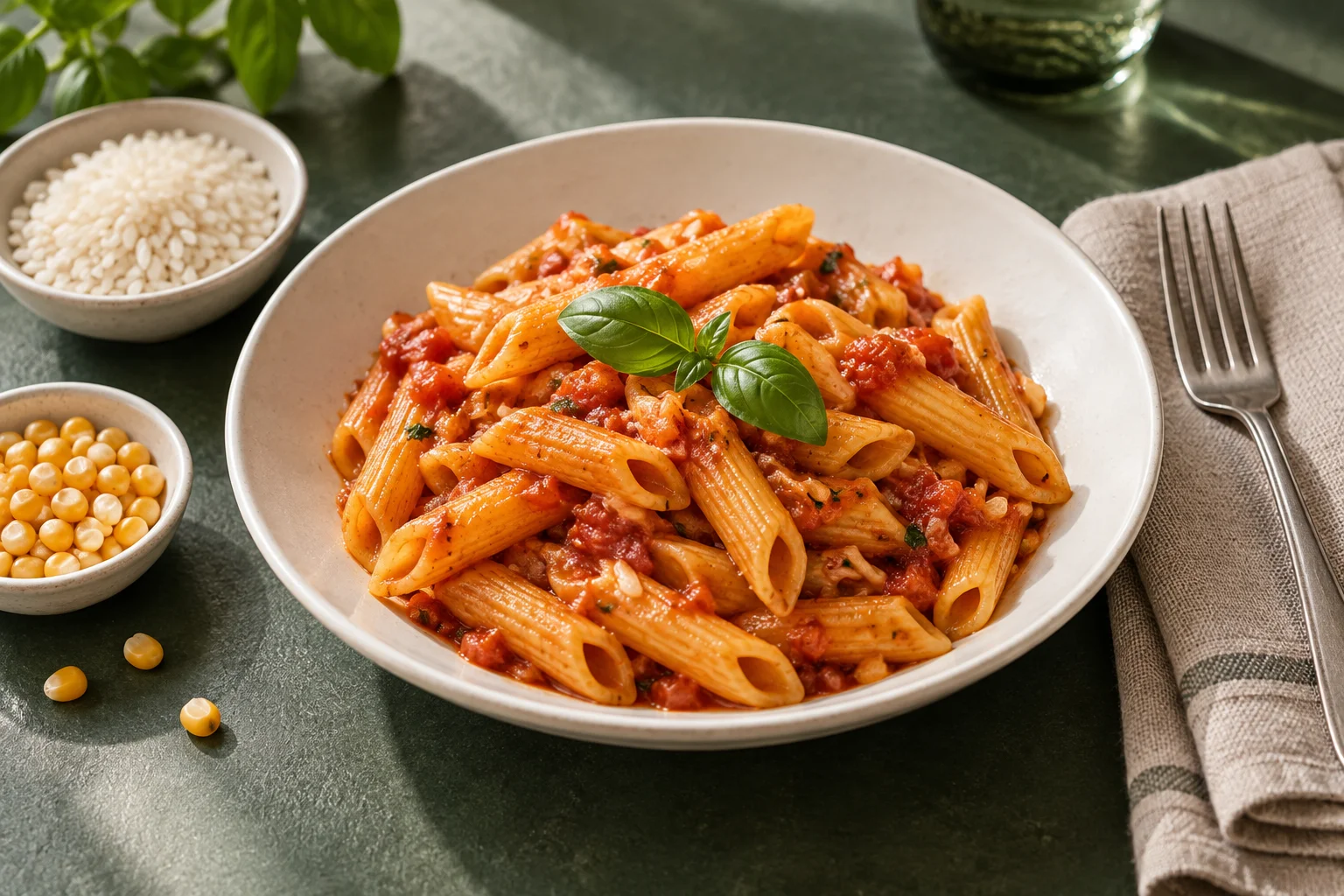
Ingredients determine the cooking method
Gluten-free pasta is not a single type of noodle. Some products consist mainly of rice and maize, while others use chickpeas, lentils or blends with additional starches. That composition affects flavour, surface texture and behaviour in cooking water. A packet that worked well on the first attempt therefore does not provide a reliable cooking time for the next brand. Before cooking, read the ingredients and preparation instructions together. What matters is the guidance for that particular shape and recipe, rather than just a prominent number on the front. Even two similar-looking types of penne can cook quite differently.
When the meal needs to be gluten-free, choose products labelled accordingly. A prominent ingredient such as rice or lentils on the front does not by itself establish that the whole recipe is gluten-free. Spelt is a type of wheat and is not a suitable replacement for this purpose. If there are other intolerances or allergies, also check the ingredient and allergen information: gluten-free does not automatically mean free from egg, soya or pulses, for example. Establish what your guests actually need to avoid and choose the ingredients on that basis. Suitable pasta becomes a suitable meal only when the sauce, garnish and preparation also meet those requirements.
Prepare the work surface and cooking equipment
Get the work surface, saucepan, stirring spoon, colander and serving bowl ready before the pasta goes into the water. For gluten-free preparation, they must be clean and free from flour dust or remnants of foods containing gluten. If wheat pasta is cooking at the same time, use separate cooking water and separate utensils. A shared spoon moving between the two pans defeats that separation. Set aside the clean colander so that it is not used for the wheat pasta in the meantime. Heating or rinsing later does not replace this preparation. Keeping the equipment separate is much easier when it is ready beforehand than during the rush to drain two pans.
This does not mean buying every kitchen utensil again. Thorough cleaning matters, along with a condition that allows food residues to be removed. Deeply scratched or cracked wooden and plastic utensils previously used with gluten-containing dough are poor choices; use suitable separate equipment. Clean the work surface with a clean cloth and cover prepared ingredients if flour is being used nearby. When making two different pasta dishes, it may be easier to finish the gluten-free portion first and place it on a clean plate. Plan that sequence around the sauce and serving time instead of trying to manage two pans without a clear order.
Plan portions, saucepan and water
Weigh dried pasta before cooking. For two adult main courses, 200 g can be a useful starting point, for example; appetite, side dishes and substantial sauce ingredients such as beans or vegetables will affect what is needed. This is a practical kitchen guide, not a nutritional rule. Fresh filled pasta cannot be planned using the same dried weight. Nor is the final weight of cooked pasta a fixed multiple: different recipes, shapes and degrees of doneness absorb different amounts of water. The starting weight from the actual packet is therefore the more useful measure when you want repeatable portions.
Choose the water quantity and pan according to the preparation instructions. If the packet calls for two litres for your planned 200 g, for example, the pan still needs room above that level for pasta and foam. Reducing the water is not a reliable shortcut: it changes the starch concentration and can encourage pieces to stick together. Salt the water with the sauce and product guidance in mind. A strongly salted cheese or olive sauce calls for less than mild vegetables. Have a cup ready for any cooking water you may need. That avoids searching for a container while the finished pasta continues to cook.
Follow the packet and move the pasta gently
Bring the water to the boil as directed, add the pasta and stir gently at first to stop it resting against the bottom of the pan. Do not force long shapes beneath the surface. Let the submerged ends soften, then ease the rest into the water. Check the required heat after that. Some manufacturers specify a continuing rolling boil, while others reduce the heat to a gentler simmer after adding the pasta. These differences are one reason to follow the instructions instead of applying one cooking method to every kind of gluten-free pasta.
Stir occasionally during cooking so that the pieces separate, without repeatedly knocking their softening edges with the spoon. If the water foams, adjust the heat appropriately and make sure there is enough space in the pan; stay nearby. Oil is not a reliable remedy for sticking and replaces neither sufficient water nor stirring. Pulse-based pasta in particular can produce noticeable foam without this indicating that something has gone wrong. What matters is preventing a boil-over while continuing to cook according to the instructions. Do not suddenly pour in a large amount of cold water to change the process; keep the intended cooking conditions as steady as possible.
Judge doneness from an actual piece
Set a timer using the printed time range and begin checking towards its lower end. Lift out one piece, let it cool briefly to an edible temperature and check its bite. A thick penne rim may need longer than a thin broken edge of the same piece. Assess the thickest part: it should suit the intended dish without an unpleasantly hard or floury centre. Colour alone is not enough. Some gluten-free recipes remain paler or more opaque when cooked than you might expect from wheat pasta. Use the texture of the piece alongside the packet's instructions rather than treating a particular shade as proof of doneness.
If the centre is still too firm, continue cooking in short stages and check again. When the outside is already soft, more vigorous stirring will not help; it is more likely to break the surface. Maintain the heat specified on the packet and watch how the texture develops. For next time, you can note the time that suited that exact brand and shape. This is more useful than a blanket claim that gluten-free pasta always needs longer, or always cooks faster. If it will subsequently spend time in hot sauce, allow for that extra step. It should not accidentally take several minutes while you start cutting vegetables or looking for cheese.
Decide whether to rinse from the product instructions
For many pasta dishes, drained noodles go straight into the sauce. With gluten-free products, however, there is no universal rule about rinsing. Banza explicitly recommends rinsing certain chickpea pasta products with water after cooking. That specific instruction takes precedence over a general kitchen rule that pasta should never be rinsed. Check whether the instructions specify a water temperature and whether you are preparing a warm meal or a cold salad. Guidance for one brand or formulation cannot automatically be transferred to every maize or rice pasta. Reading this step before cooking helps you prepare the right equipment and have the sauce ready at the right moment.
Drain the pasta carefully into the prepared clean colander. If rinsing is required, do it without leaving the pasta standing unnecessarily and let it drain well afterwards. Do not shake soft pasta vigorously against the sides of the colander. For a warm dish, the sauce should now be ready so that you can combine them promptly and gently. When the product instructions do not call for rinsing, prolonged washing is not an extra quality measure. It changes the temperature and surface without making overcooked pasta firm again. Very forceful rinsing will not restore stuck or damaged pieces to their original shape either.
Use cooking water selectively in the sauce
When it suits the preparation, scoop out roughly 100 to 150 ml of cooking water shortly before draining. This is a reserve, rather than an amount that must all go into the sauce. Gluten-free cooking water can have quite different thickening effects depending on the formulation and water quantity. Start with a tablespoon, move the pasta and sauce gently, and only then decide whether to loosen it further. A thick bean cream may need several small additions, whereas a loose tomato sauce may already contain enough liquid. Aim for a smooth coating, without either a pool on the plate or an unusually sticky, thick layer.
If the cooking water is very viscous or noticeably salty, a little fresh, hot, unsalted water may be more suitable for loosening the sauce. It dilutes the sauce but does not supply the same starch. Avoid adjusting several ingredients in large quantities at once. For a meal that needs to be gluten-free, reserved water must come exclusively from its own pan; water from wheat pasta cooking alongside it is unsuitable. Sauces that are finished away from direct heat still need that treatment. Herb pesto, for example, should not be brought to a vigorous boil simply because you are using a different pasta. The needs of both components have to work together.
Include the whole sauce and garnish in your planning
A simple tomato sauce, cooked vegetables or a suitable bean cream offer plenty of ways to serve gluten-free pasta. The actual ingredients are what count. Check the labelling of stock, ready-made sauces, seasoning blends and soy sauce instead of assuming they are gluten-free from their names. A conventional béchamel thickened with wheat flour is unsuitable without adjustment. For these dishes, use an explicitly gluten-free recipe with an appropriate thickener; an arbitrary flour swap can change the quantity needed and the resulting consistency. Starting with a sauce that already meets the requirements makes the first meal with an unfamiliar pasta easier to manage.
The garnish remains part of the meal when it reaches the table. Ordinary breadcrumbs or croutons would change a dish that had previously met the requirements. If needed, provide suitable alternatives in separate bowls with their own spoons. For guests, a clearly separated portion is often more practical than a shared large pan into which different ingredients are added later. Fold delicate pasta carefully with a broad spoon instead of tossing it forcefully. If the sauce is very thick, loosen it slightly before adding the pasta. You then avoid having to work fragile pieces for a long time just to coat them evenly.
Plan pasta salads and oven dishes differently
For pasta salad, doneness while warm is not the only consideration. Some gluten-free pasta changes firmness noticeably as it cools. Follow any salad guidance for the particular product and, if its cold texture disappoints, choose a variety intended to suit that use next time. A general instruction to drain every pasta two minutes early would be too crude. Concentrate on the required doneness and rinsing instructions. Prepare the dressing and vegetables beforehand, drain the pasta thoroughly and cool the finished dish promptly in shallow portions. Leaving it for a long time in a warm, densely filled saucepan is a poor way to do that.
For baked pasta, sauce moisture and oven time also come into play. Gluten-free lasagne sheets may have different requirements for pre-cooking and liquid than the wheat sheets used in an existing recipe. Do not simply borrow that recipe's timing and layering; use suitable directions for the actual product. Similarly, delicate pasta that is already fully cooked can become very soft during a long bake. A dish designed around that pasta avoids those detours. For prepared cold meals, storing pasta separately from its sauce can make sense when the manufacturer recommends it. It is not a universal requirement for every completed pasta dish.
Serve promptly, chill leftovers and identify problems
Serve warm gluten-free pasta as soon as practical after combining it with the sauce. When noodles become sticky in the colander, a missing next step is often part of the problem. If they break while stirring, overcooking or rough handling may be involved. If the sauce is too thick, loosen it sparingly with suitable liquid before mixing further. Avoid cooking different brands and shapes together when their required times differ. One could already be overcooked while the other remains firm. A clear sequence with a finished sauce, prepared plates and an appropriate cooking endpoint solves many problems without adding more ingredients.
Divide leftovers promptly into shallow containers and chill them. Keep the refrigerator at no more than 7°C, preferably below 5°C, and follow any stricter requirements for individual ingredients. A little oil or an acidic taste does not replace refrigeration. When reheating suitable leftovers later, bring every part to at least 70°C for two minutes and allow for the pasta becoming softer. That texture change is not a reason to warm it only to lukewarm. For the next meal, you can cook smaller quantities of pasta from the outset and portion the sauce separately. Only the amount of pasta actually going to the table then needs to be freshly cooked.