Choose the kind of sauce first
Before cooking, decide whether you want a light tomato sauce, a creamy coating or a chunky vegetable accompaniment. That determines which ingredients make up the main part. Passata contributes liquid and tomato flavour, mashed beans provide a softly thickened base, and fried mushrooms remain recognisable pieces. Using large quantities of all three together does not automatically produce a balanced sauce. Choose a main ingredient first, then add a measured amount of fat, suitable seasoning and liquid if needed. This makes the final texture easier to assess and adjust without having too many competing components.
For the whole meal to be vegan, choose suitable pasta and other ingredients too. Dried durum-wheat pasta often contains semolina and water, while fresh tagliatelle commonly contains egg. Pesto, stock and prepared seasoning sauces may also include ingredients of animal origin. Check the actual product rather than drawing a conclusion from its name or colour. Each of the following preparations uses 200 g dried egg-free pasta for two main portions. They are separate sauce options: you do not combine the complete quantities of both in a single pan or use both batches for the same 200 g pasta.
A small tomato sauce as a starting point
For the tomato version, gather 300 g passata, 40 g finely diced peeled onion, one small peeled garlic clove weighing approximately 3 g, 1 tablespoon olive oil, four basil leaves, salt and pepper. Heat the oil over medium heat and soften the onion for roughly 5 minutes. Add the finely chopped garlic and stir for about 30 seconds without allowing it to brown. Pour in the passata and simmer gently over low heat for around 15 minutes. Stir occasionally and keep the initial seasoning restrained, since the sauce will become more concentrated as some water evaporates.
Meanwhile, cook the 200 g pasta in salted water according to its packet. Before draining, reserve around 150 ml cooking water. Combine the drained pasta with the finished sauce, adding cooking water only as needed, a tablespoon at a time, to coat it evenly. Wash and pat dry the basil, then tear it into the mixture at the end. Allow approximately 25 minutes altogether. Very thin passata may need a little longer to reduce, whereas a sauce that is already thick may need some water sooner. Assess texture and flavour together rather than judging readiness solely by elapsed time.
Preparing a pale bean sauce without cream
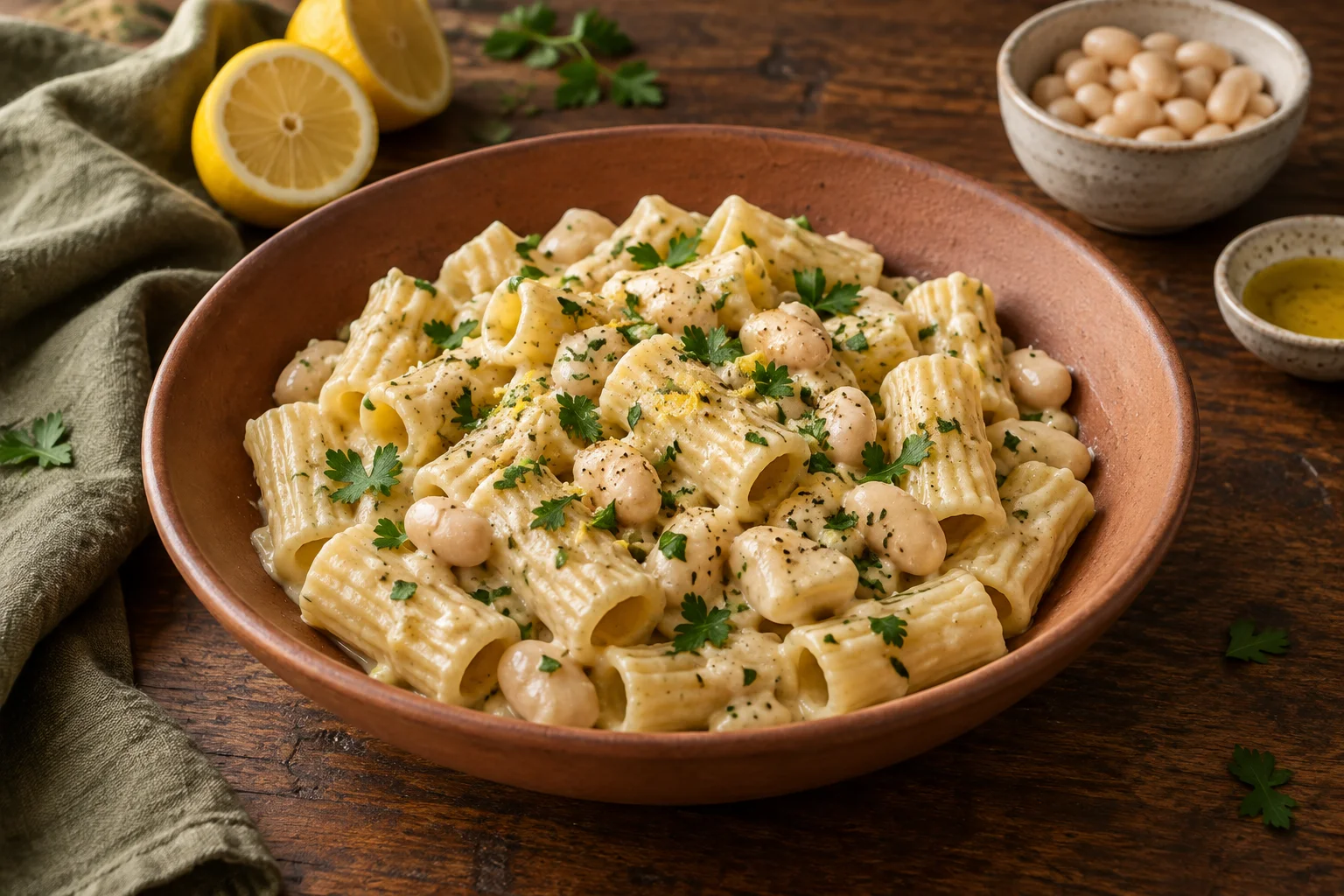
For the second option, use 240 g already cooked and drained white beans from a jar or tin, 30 g finely diced peeled onion, one small peeled garlic clove of about 3 g, 1 tablespoon olive oil and an initial 100 ml water. You also need 1 teaspoon lemon juice, 1 tablespoon finely chopped washed parsley, salt and pepper. The 240 g explicitly refers to drained beans, not the total package weight including liquid. Dried beans cannot replace them directly. They require a separate complete soaking and cooking method before they can be used in this preparation.
Soften the onion in the oil over medium heat for around 5 minutes. Add the finely chopped garlic for approximately 30 seconds, then add the beans and 100 ml water. Simmer gently for roughly 5 minutes until the beans are thoroughly hot and soft. Transfer about half the beans with a little liquid to a bowl and mash with a fork. Return this mixture to the pan. Some beans remain whole while the mashed portion thickens the liquid. This deliberately slightly rustic sauce does not require a blender, and a completely smooth purée is not its intended texture.
Combining the bean sauce with pasta
While making the sauce, cook the specified 200 g dried pasta according to its packet. Again, reserve approximately 150 ml cooking water before draining. Add the pasta to the hot bean mixture and fold gently so that you do not break up all the remaining whole beans. If the mixture clings too thickly, add cooking water a tablespoon at a time, moving the pan or stirring carefully. The initial 100 ml water belongs to the sauce base. The later reserve of pasta water provides an additional means of adjustment and does not have to be used in full.
Take the pan off the heat and add the initial teaspoon of lemon juice and the parsley. Only then adjust salt and pepper. You may prefer more acidity, but avoid overwhelming the mild bean flavour. A little finely grated yellow zest from a washed lemon with edible peel is an optional addition. Serve immediately, because the bean mixture firms as it stands. Allow about 25 minutes in total. For four people, double the ingredients and choose a correspondingly larger pan, without automatically doubling the cooking time. Continue to assess tenderness and sauce texture as you work.
Cook vegetables before combining them with pasta
A chunky vegetable sauce works best when its individual ingredients are cooked by serving time. Cut carrots small and start them before delicate pieces of courgette. Mushrooms may initially release water in a spacious pan; allow that liquid to evaporate uncovered before stronger browning develops. When everything goes into a small pan at once, the result is closer to steaming than frying. That is not necessarily wrong, but it produces a different flavour. Decide whether you want soft, juicy vegetables or lightly browned surfaces, then choose the available space and cooking order to suit that aim.
Jarred roasted peppers can be useful too, provided their flavour suits the sauce. Drain them and check whether they were packed in oil or an acidic liquid. The entire jar's liquid does not automatically belong in the pan. With home-roasted vegetables, the ready-to-eat cooked weight likewise cannot simply be replaced by an identical raw weight. Watery courgettes, firm pumpkin cubes and drained peppers produce different results. Add a manageable amount to a prepared base sauce first, then check whether enough sauce remains to coat the planned pasta evenly rather than leaving it surrounded by unconnected vegetable pieces.
Creaminess from nuts, seeds or plant drinks
Cashews and nut butter can create creamy sauces when processed finely enough and combined with suitable amounts of liquid. They provide a different foundation from the mashed beans above. Begin with a complete recipe specifying quantities and preparation rather than throwing an arbitrary handful of nuts into finished pasta. Whole nuts may require soaking and thorough processing depending on the method; prepared nut butter behaves differently. When blending hot liquid, follow your appliance's temperature and filling limits. A closed blender that is unsuitable for hot ingredients is not a safe shortcut for turning a cooked mixture into a smooth sauce.
A plant drink on its own is generally thinner than a prepared cooking cream. Unsweetened products without vanilla flavouring tend to suit savoury sauces better, although oat, soya and nut products differ in flavour and how they behave when heated. Use a preparation suited to the particular product. After adding lemon, assess the texture carefully and start with only a little acid. A vegan cooking cream may be convenient, but neither the tomato sauce nor the bean sauce above requires one. Choose it because it gives the result you want, rather than treating it as a compulsory replacement for every dairy ingredient.
Building herb sauces and pesto deliberately
A vegan pesto needs more consideration than simply removing a large quantity of cheese from an existing formula. Cheese contributes weight, salt, flavour and solid material. Omitting it changes those proportions. A balanced vegan recipe might instead combine herbs, seeds, oil and suitable seasoning. Nutritional yeast is one possible ingredient for a savoury flavour, but it is neither compulsory nor a gram-for-gram cheese replacement. Its intensity also varies by product. Start with a small amount and assess the sauce again once combined with pasta, rather than trying to make a concentrated spoonful taste exactly like a different original recipe.
Wash fresh herbs, dry them carefully and then process them. A little warm cooking water can loosen a strong herb paste in the serving bowl without another vigorous boil. Take only the quantity needed for the current meal; keep the rest undiluted and refrigerated. Covering homemade pesto with oil does not make it suitable for storage in a cupboard. A vegan version still needs the same practical care with fresh herbs and garlic as other freshly prepared sauces. Choosing plant ingredients changes the composition, but does not turn a fresh preparation into a preserved product with an unlimited storage life.
Add seasoning and texture selectively
Olives, capers, sun-dried tomatoes or a little soy sauce can make a sauce more intensely savoury. Do not automatically add them all: each has a distinct flavour and often contributes substantial salt. Oil clinging to preserved tomatoes also becomes part of the mixture. Choose one suitable accent first and taste the whole sauce before adding further salt. For a soft, savoury lentil ragù, use a recipe balanced for that dish. Cooked lentils and dried lentils differ considerably in water requirements, cooking time and weight, so exchanging identical quantities without changing the method is unlikely to give the intended consistency.
For crunch, sprinkle separately toasted breadcrumbs over the plated pasta, checking that their ingredients suit a vegan meal. Watch them while toasting because small pieces darken quickly. Add them on the plates so that they do not immediately soften in the sauce. The same principle applies to toasted seeds. These additions are toppings, rather than a dependable way to thicken an excessively watery sauce. Establish the basic consistency in the pan first. The extra texture can then remain noticeable during eating instead of being expected to compensate for an unrelated decision about sauce reduction or liquid quantity.
Plan pasta quantity, sauce and timing together
The amount of sauce that suits a portion depends on the sauce itself. A concentrated herb paste needs different quantities from a loose tomato sauce with vegetables. Comparing the weight of two prepared jars alone is therefore not enough. Start with a coherent recipe and scale the pasta and sauce ingredients together for the number of diners. Doubling the pasta while keeping the same small batch of sauce can leave the meal feeling dry. Extra cooking liquid alone cannot restore the missing flavour or the missing solid ingredients that were supposed to accompany that larger quantity of pasta.
For hot dishes, the sauce can wait for the pasta if it is kept appropriately warm and loosened when needed; drained pasta should not wait dry for a long period. Before draining, have the pan, serving bowl and cooking-water reserve ready. For a cold or delicate herb sauce, plan to combine everything away from strong heat. Taste a cooled spoonful of the finished mixture. Pasta and sauce together reveal whether salt, acidity and liquid are balanced. That small check during normal cooking is more useful than several forceful additions of seasoning made in quick succession without assessing their combined effect.
Storing leftovers and choosing ingredients for diners
For later meals, preparing the sauce separately from the pasta can be practical. Cool cooked sauces promptly in shallow containers and refrigerate. No more than 7 °C, preferably below 5 °C, is the general guide, with stricter ingredient instructions taking priority. Where suitable, package cooled sauce portions for freezing and label them. Thaw in the fridge. When reheating cooked leftovers, all parts should reach at least 70 °C for two minutes. A bean or vegetable sauce that has become thicker during chilling can then be adjusted with a little water to regain an appropriate consistency for serving.
Vegan does not describe the absence of every allergen. Nuts, soya, sesame and gluten-containing pasta may still be present. When cooking for others, select ingredients according to their actual requirements and check stock, plant drinks and toppings as well. A nut-based cream is not suitable for someone who needs to avoid nuts simply because it contains no dairy. The two preparations above offer comparatively straightforward ingredient lists as a starting point. Choose between them according to flavour, available products and the people eating the meal, rather than according to how many different replacement products you can add.