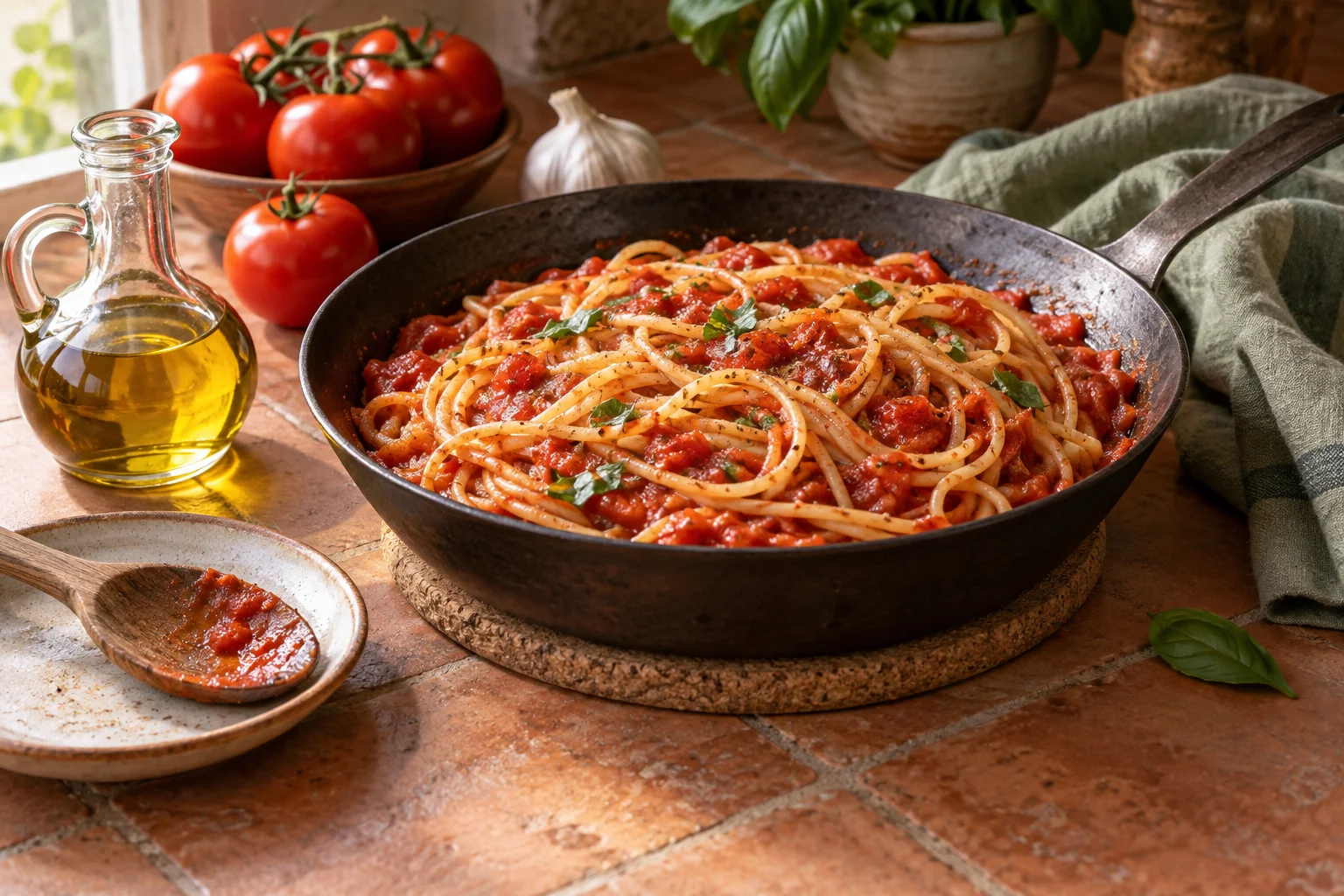
Why oil does not replace stirring
Oil does not mix evenly into cooking water or form a reliable protective coating around every piece of pasta. Adding a splash therefore does not prevent strands or shapes from sticking together. Oil can also reach the pasta during draining and affect how it combines with the sauce.
Begin instead with enough space for the quantity you are cooking. Add pasta to boiling water and stir carefully, particularly at the start. Gently separate strands lying against one another and continue stirring occasionally during cooking. Follow the product's packet instructions and cooking time.
Have the sauce ready before the pasta finishes
The sauce should already be prepared when the pasta is ready. Reserve some cooking water, drain the pasta and promptly combine it with the sauce. Leaving a large quantity of dry, drained pasta in a colander for a long time is not a useful plan, even if oil was added earlier.
With a hot tomato sauce, the recipe may call for briefly finishing the pasta and sauce together. Pesto and delicate egg-and-cheese mixtures require a different temperature sequence. Having the sauce ready is the common principle; additional strong heat is not appropriate for every pasta dish.
Oil in the sauce is a separate choice
Olive oil can be useful for cooking vegetables, making aglio e olio or preparing pesto. Its quantity there is matched to the dish. That differs from an arbitrary splash added to several litres of cooking water, most of which will later be poured away.
Combining oil, a little starchy cooking water and thorough mixing can also help produce a cohesive sauce. Add liquid gradually. An oily puddle under the pasta does not mean that it needs still more oil: first consider the proportions and how the sauce is being combined.
Plan cold pasta dishes separately
Some pasta salad recipes call for tossing already drained pasta with a little oil or part of the dressing. That is a separate step after cooking, rather than a reason to put oil in the cooking water. Follow the complete salad recipe for the amount and subsequent cooling method.
Do not leave cooked pasta to cool in a large warm heap. Where the method calls for it, spread it in a thin layer, cool promptly and refrigerate without delay. Oil does not preserve cooked pasta or replace refrigeration. For a hot pasta meal, promptly combining it with the intended sauce remains the simpler sequence.