Plan a batch around the meal
For a small batch, use 50 g fresh basil leaves, 60 g extra virgin olive oil, 40 g finely grated Parmesan, 15 g finely grated Pecorino Sardo, 25 g pine nuts and one small peeled garlic clove weighing approximately 3 g. Begin with only a small pinch of salt. Before the losses left on the bowl and utensils, these quantities produce just under 200 g pesto. This is an individual combination of the usual ingredients in basil pesto, rather than a mandatory standard formula. Depending on the desired intensity, it can dress four portions made with a total of 320 g dried pasta.
The oil quantity is a weight, not a volume: weigh 60 g into a small container rather than assuming that it means 60 ml. The basil quantity refers to picked leaves, and the cheese weight excludes the hard rind. Wash and dry the herbs before starting to crush or chop them. Allow approximately 20–30 minutes overall, potentially longer with a mortar depending on its size and your familiarity with it. If pasta is part of the meal, make the pesto first and then put on its cooking water. That keeps the final stage at the hob straightforward.
Wash the basil and dry it thoroughly
Discard wilted, slimy or clearly spoiled parts of the plant and pick off the usable leaves. Wash them gently under cold running water. Drain, then pat dry with a clean cloth or kitchen paper without squeezing the entire quantity into a wet bundle. A clean salad spinner can help with larger quantities when used gently. The aim is to remove surface moisture, not to leave the leaves lying around until they dry out. When measuring oil and later thinning the pesto, you want control over how much additional liquid enters the mixture rather than adding water unintentionally on the leaves.
A pot of basil does not provide a fixed weight of leaves. The size of the plant, its growth and previous harvesting all make a difference. Weigh the picked leaves and make a proportionately smaller batch if necessary. Replacing 10 g missing basil with another 10 g oil does not create an equivalent sauce; it changes the balance. Thick stems should not simply be counted as leaf weight either. Small tender leaf stalks need not complicate preparation, but larger stems make an even texture harder to achieve. Process the prepared leaves promptly rather than leaving them wet or crushed for an unnecessarily long time.
Prepare cheese, garlic and pine nuts
Finely grate both cheeses and set them aside separately or already mixed. Parmesan contributes a different flavour from the stronger sheep's milk cheese. The small amount of pecorino seasons the batch without requiring much extra salt at the outset. Pecorino Sardo and Pecorino Romano are not identical products, so season particularly carefully if changing the variety. For a vegetarian version, choose hard cheeses specifically labelled as suitable, since traditional products can contain animal rennet. With a similarly firm alternative, the other quantities can initially remain a guide, although flavour and texture may need adjustment at the end.
Peel the small garlic clove, removing a prominent central shoot if needed. The amount is deliberately modest because the garlic remains raw and its flavour becomes noticeable throughout the dressed pasta. A large clove may weigh several times the intended amount. Use untoasted pine nuts for this batch. Toasting would be a deliberate variation with a stronger roasted flavour; if you choose that version, cool the nuts completely before adding them to the herbs. Check ingredients for their normal smell and condition before processing. Basil will not restore rancid nuts or oil that already tastes unpleasant.
Build the paste gradually in a mortar
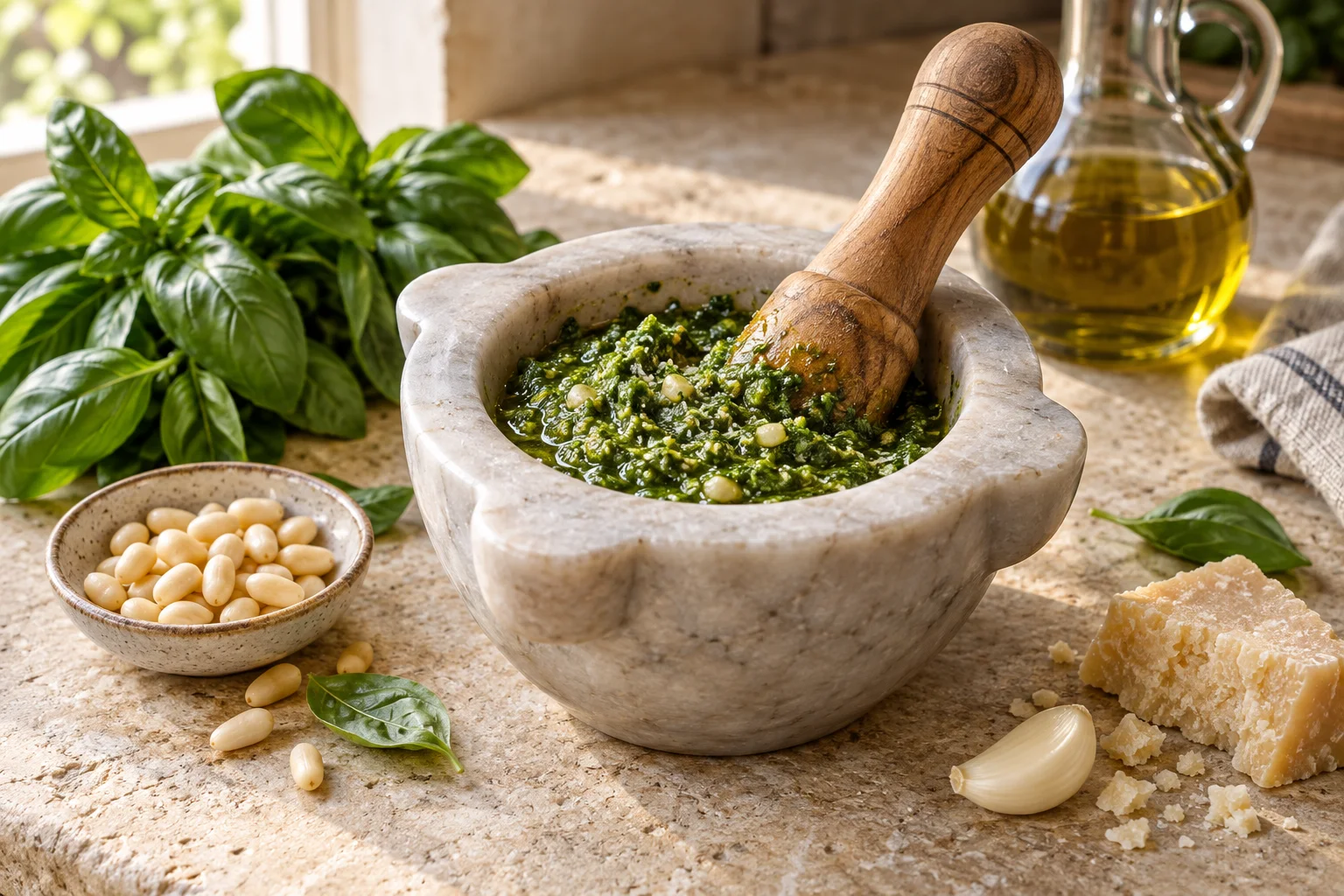
Use a sufficiently large, stable mortar. First crush the garlic with the small pinch of salt until it forms an even mixture. Add the pine nuts and work them into a soft paste that can retain a little graininess. Add the dried basil leaves in several small portions, pressing and grinding them against the mortar wall with circular movements. Heavy blows that send leaves and nuts flying out are unnecessary. Working with small amounts of leaves makes it easier to see whether a connected green mixture is forming or whether whole bundles of leaves remain beneath the pestle.
Use a spoon to bring the mixture down from the sides occasionally. When the leaves are sufficiently broken up, stir in the finely grated cheese. Add the measured oil gradually while continuing to combine everything. The finished pesto may contain fine pieces of leaf and nut; a completely smooth cream is not the aim of this method. If the mortar is too small, divide all the ingredients into two manageable batches beforehand and combine them afterwards in a bowl. Filling a mortar to the rim saves neither time nor effort and makes even grinding unnecessarily difficult.
Use short pulses in a food processor
A small food processor or chopper is useful if you do not have a suitable mortar. Follow the appliance instructions and its minimum working quantity. A very large jug may throw a batch of just under 200 g onto the sides while the blades spin beneath it. Briefly chop the garlic and pine nuts first. Add the dry basil leaves and approximately 20 g of the measured oil. Work in short pulses with pauses until the leaves are finely distributed. Transfer to a bowl and stir in the cheese and remaining 40 g oil by hand.
Do not run the machine continuously for several minutes just to remove the last visible leaf fragments. That warms the mixture and often produces a finer texture than pasta needs. Before opening the container to scrape down ingredients with a suitable spatula, switch off and disconnect the appliance, following its instructions. If the blades struggle to reach the mixture, a smaller suitable container is more useful than repeatedly pouring in extra oil. A processor produces its own texture; it does not need to reproduce every characteristic of pesto ground with a pestle. Stop when the mixture is evenly combined and workable.
Assess flavour and texture before thinning
Undiluted pesto should be easy to scoop with a spoon and spread. It can be soft without flowing like a finished pasta sauce. Taste a small amount with a clean spoon, considering the garlic, cheese and salt together. Add more salt only if needed at this point. A particularly strong olive oil or salty cheese influences the flavour more than one additional sprig of basil. If the pesto is going straight onto pasta, judge the final seasoning after combining them: cooking water and pasta spread the concentrated flavours through a considerably larger quantity of food.
Bitterness does not have one reliable explanation. It may already be present in the oil or other ingredients, and heavily toasted or old nuts can contribute an unpleasant flavour. Further blending is not a targeted solution. Distinguish the deliberate slight bitterness of an olive oil from a clearly unpleasant or rancid taste. An overpowering raw garlic flavour can only be diluted by adding more of the other ingredients, increasing the entire batch. Starting with the small weighed clove is therefore easier than later extending a very pungent mixture with repeated additions of cheese and oil in an attempt to soften it.
Dress pasta away from direct heat
For the serving example, cook 320 g dried pasta al dente according to its packet. Long linguine and short shapes with accessible surfaces both work; the actual cooking time depends on the product. Before draining, reserve approximately 150 ml cooking water. Put the pesto intended for this meal into a large bowl and begin by stirring in about three tablespoons of warm cooking water. This loosens the concentrated paste so it can distribute between the pieces or strands. Keep the rest of the water reserve beside the bowl and add it only as needed during the final mixing.
Add the drained pasta and turn it thoroughly through the pesto. Add further cooking water a tablespoon at a time until every piece or strand is coated. Do not then boil the mixture in a hot frying pan: the heat of the pasta is sufficient for this way of serving. Excess water is difficult to remove without unnecessarily heating the herb sauce. Conversely, an oily surface does not automatically mean that more oil is required. A stiff cheese and herb mixture, or pasta clinging together, often needs a little water. Plate as soon as the sauce is evenly distributed and serve immediately.
Make deliberate variations
Replacing pine nuts with walnuts or almonds changes the flavour substantially. The oil requirement and graininess may change as well. Treat that batch as a separate variation and begin with modest oil additions rather than automatically blending in more liquid. Ingredient changes also matter to guests: replacing one nut with another does not fulfil a request for a nut-free dish. Check the specific ingredients and suitable products when dietary restrictions are involved. A vegan version additionally needs an appropriate cheese-free formula; simply removing 55 g cheese changes the salt, flavour and firmness of the pesto at the same time.
Replacing some basil with rocket or parsley may be welcome, but it produces a different herb pesto. Name those ingredients clearly so that everyone knows what is being served. Lemon juice is not automatically part of every basil pesto either. It contributes acidity and additional liquid and should be measured as a deliberate flavour adjustment. A small squeeze also does not reliably preserve a homemade batch. For pizza, add small amounts of pesto after baking or follow a recipe designed around that topping. A thick layer of herbs in a very hot oven behaves differently from pesto freshly mixed through pasta.
Use it fresh and keep it cold
Plan the freshly made quantity mainly for the forthcoming meal. If there is a gap between preparation and eating, transfer the pesto to a clean, closable container and refrigerate promptly. Keep the refrigerator at no more than 7°C, preferably below 5°C, and follow any stricter instructions for individual ingredients. Remove only the required amount with a clean spoon. Thin only that portion with warm pasta water. Leave the rest undiluted and refrigerated rather than keeping an open jar on the table throughout the meal, where its temperature and handling become harder to control.
A layer of oil on top does not turn fresh herbs and garlic into a product suitable for a cupboard. It may reduce direct contact between the surface and the air, but it replaces neither refrigeration nor a suitable preservation process. Do not treat homemade pesto like an unopened commercially produced jar. The straightforward plan for this method is to make it fresh, eat it promptly and freeze the portion not intended for that meal straight away. Smell and green colour alone cannot demonstrate safe storage. Careful washing also does not make raw ingredients sterile, so it does not justify an arbitrarily long keeping period.
Freeze the portions you do not need
Pack pesto that is not needed for the forthcoming meal into small freezer-safe containers while it is fresh. Choose sizes that will later provide a useful amount without requiring the whole stock to be thawed. Leave approximately 1.5 cm headspace below the lid, close the containers and label with the contents and date. Freeze promptly, normally at minus 18°C. If using glass, choose jars specifically suitable for freezing and observe their filling limits. Keep the pesto undiluted for freezing; cooking water will be added at the later meal when the desired sauce consistency can be judged.
Thaw the required portion covered in the refrigerator and plan to use it for the following meal. Stir it after thawing because the ingredients may separate slightly. Combine it like fresh pesto with warm pasta and small additions of cooking water, away from direct heat. Freezing does not preserve every quality unchanged: colour and aroma can diminish during storage. Small labelled portions make it easier to use older batches first without wondering where they came from. The amount actually used also gives you a practical basis for deciding whether the full recipe or half a batch will suit your next freshly prepared meal.