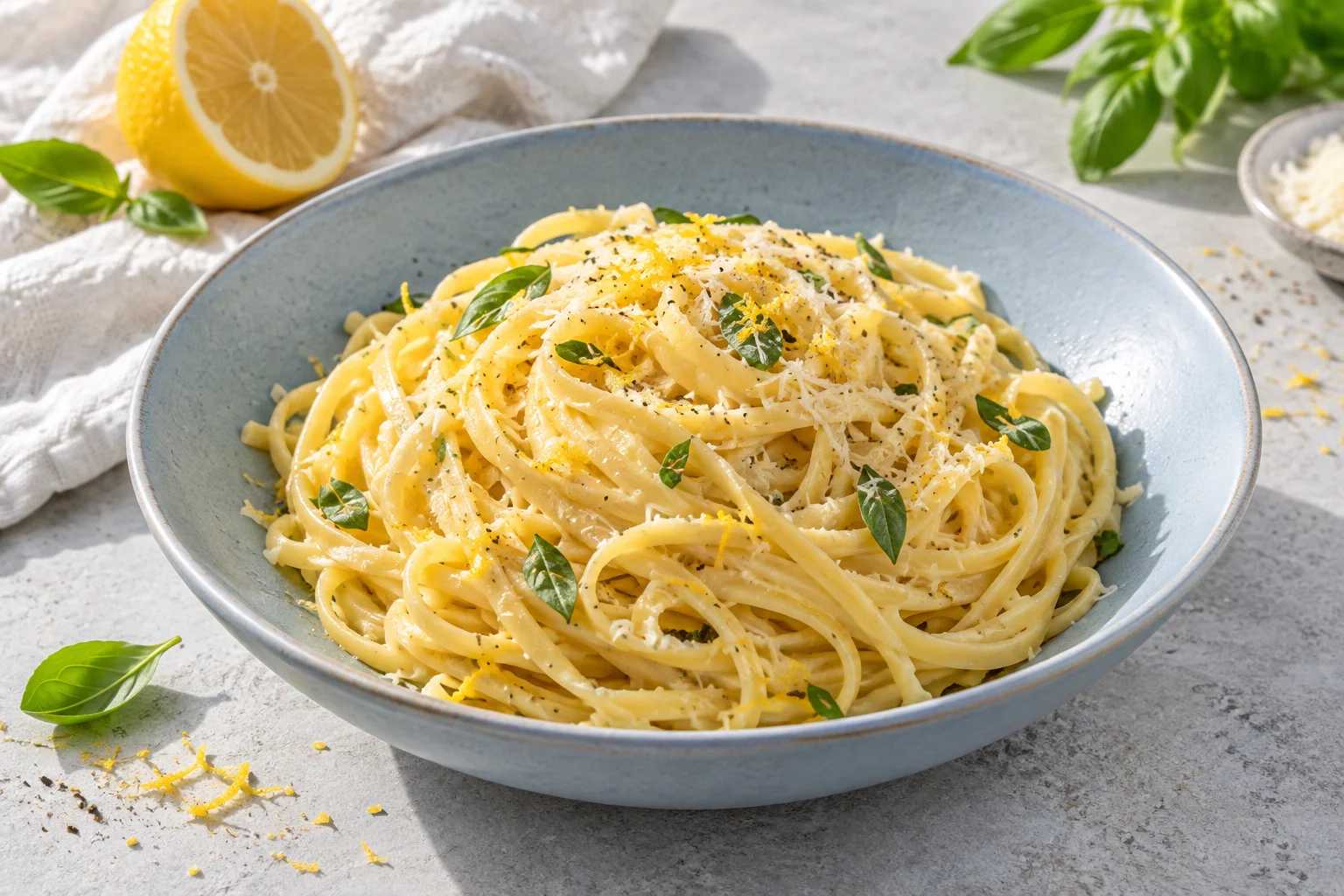
The recipe
Ingredients
- 180 g linguine
- 1 lemon with edible peel: 1 tsp zest and initially 1 tbsp juice
- 30 g butter
- 35 g Parmesan, finely grated
- 50 ml hot pasta water, plus more as needed
- 4 basil leaves
- Salt and black pepper
Method
- Wash and dry the lemon. Finely grate one teaspoon of yellow zest and squeeze the juice separately. Finely grate the Parmesan.
- Cook the linguine in salted water until just short of your preferred bite. Reserve a cup of cooking water before draining.
- Melt the butter over low heat and warm the zest in it for thirty seconds. Add one tablespoon of lemon juice and 50 ml hot cooking water.
- Finish the linguine in the pan for about one minute, tossing to coat. Add cooking water a tablespoon at a time if needed.
- Take off the heat, wait about thirty seconds and fold in the Parmesan in portions. The sauce should no longer be boiling.
- Season with pepper, salt and, if needed, another one or two teaspoons of lemon juice. Tear over the basil and serve immediately.
Measure zest and juice separately
Choose a lemon with a peel suitable for eating. Wash it thoroughly and dry it. Start by finely grating one teaspoon of the yellow outer layer, leaving the white pith on the fruit as far as possible. Squeeze the juice separately and remove any seeds. For two servings, this recipe starts with one tablespoon of juice. You can add another one or two teaspoons after tasting.
Keeping the measurements separate makes the sauce adjustable. More zest increases the lemon fragrance, while more juice mainly increases acidity. A particularly large or juicy lemon therefore need not go entirely into the pan. Freshly grate 35 g Parmesan as finely as possible. Coarse pieces are harder to distribute in the short time available at the end. Have everything ready before the pasta finishes cooking.
Build a smooth sauce with gentle heat
Melt 30 g butter in a wide frying pan over low heat. Warm the zest in it for about thirty seconds without browning the butter. Add one tablespoon of lemon juice and 50 ml hot pasta water. Swirl briefly, then add the linguine while they are still just short of your preferred bite. After about one minute, the pasta should be cooked and glossily coated. Add further liquid only as needed.
Take the pan off the heat, wait about thirty seconds and fold in the Parmesan in portions. The sauce should no longer be bubbling vigorously. If it becomes sticky or too thick, add one or two tablespoons of warm cooking water and mix gently. Add pepper, taste, then adjust salt and lemon juice. A little torn basil works well at the end. Serve straight away because the sauce continues to thicken as it stands.