Identify the problem first
A well-finished pasta sauce forms an even coating on the noodles. It leaves neither a large puddle of water nor a rim of pure oil on the plate. You do not automatically need cream, flour or extra cheese to achieve this. The final minutes often decide the result: a little cooking water, appropriate heat and enough movement in the pan. Which adjustment helps depends on the sauce. Thin tomato sauce needs a different correction from clumped Pecorino or stiff pesto.
Draw a spoon through the sauce and watch what flows back. Very thin tomato sauce immediately fills the trail with watery liquid. An over-reduced sauce barely moves and may catch on the pan. A separated oil-based sauce shows fat droplets or a clear layer of oil beside the watery portion. These differences matter. Treating every sauce with the same remedy can turn a small problem into a larger one.
Check whether the pasta is already in the sauce. While they remain separate, you can adjust the sauce without rushing. Once the noodles are nearly done, there is less time for reduction. Remove them temporarily if necessary rather than boiling them soft for several extra minutes. The desired result is not a thick paste. Sauce should coat the pasta moistly and come with it when eaten. The amount needed depends on shape, portion size and the other ingredients.
What cooking water contributes
Pasta releases starch into its water as it cooks. This water can loosen a sauce and help fat and liquid stay together during mixing. It is not a ready-made thickening sauce, however. Very dilute cooking water mainly adds liquid. Its effect depends partly on the ratio of pasta to water and the cooking duration. A fixed rule such as always adding one full ladle is therefore of limited use.
Scoop some cooking water into a heatproof mug towards the end of cooking. Start with one or two tablespoons when combining pasta and sauce, then observe the result. For a pan containing two portions, you might reserve around 150 to 200 millilitres. That is the amount available, not a compulsory addition. If you lift dripping pasta directly from the pot with tongs, water is already coming with it. Account for that before pouring in more.
A specific method with tomato sauce
For two portions, use 200 grams of dried pasta and the sauce from our pasta al pomodoro recipe. It uses 400 grams of tinned tomatoes with oil, garlic and basil. Before adding pasta, reduce the sauce until it looks cohesive without an obvious watery area around the edge. Taste the pasta a little before the end of its packet time. It should be slightly firmer than you want to eat it, without an unpleasantly raw centre.
Transfer the pasta to the sauce and begin with two tablespoons of cooking water. Toss or stir over moderate heat for approximately one minute. Check the bite and the coating. If the sauce is too thick, add another tablespoon of water. If plenty of free liquid remains, continue moving it briefly, provided the pasta can tolerate further cooking. Season at the end and serve immediately. The method follows the condition in the pan rather than a fixed number of ladles.
Combine oil and water into a coating
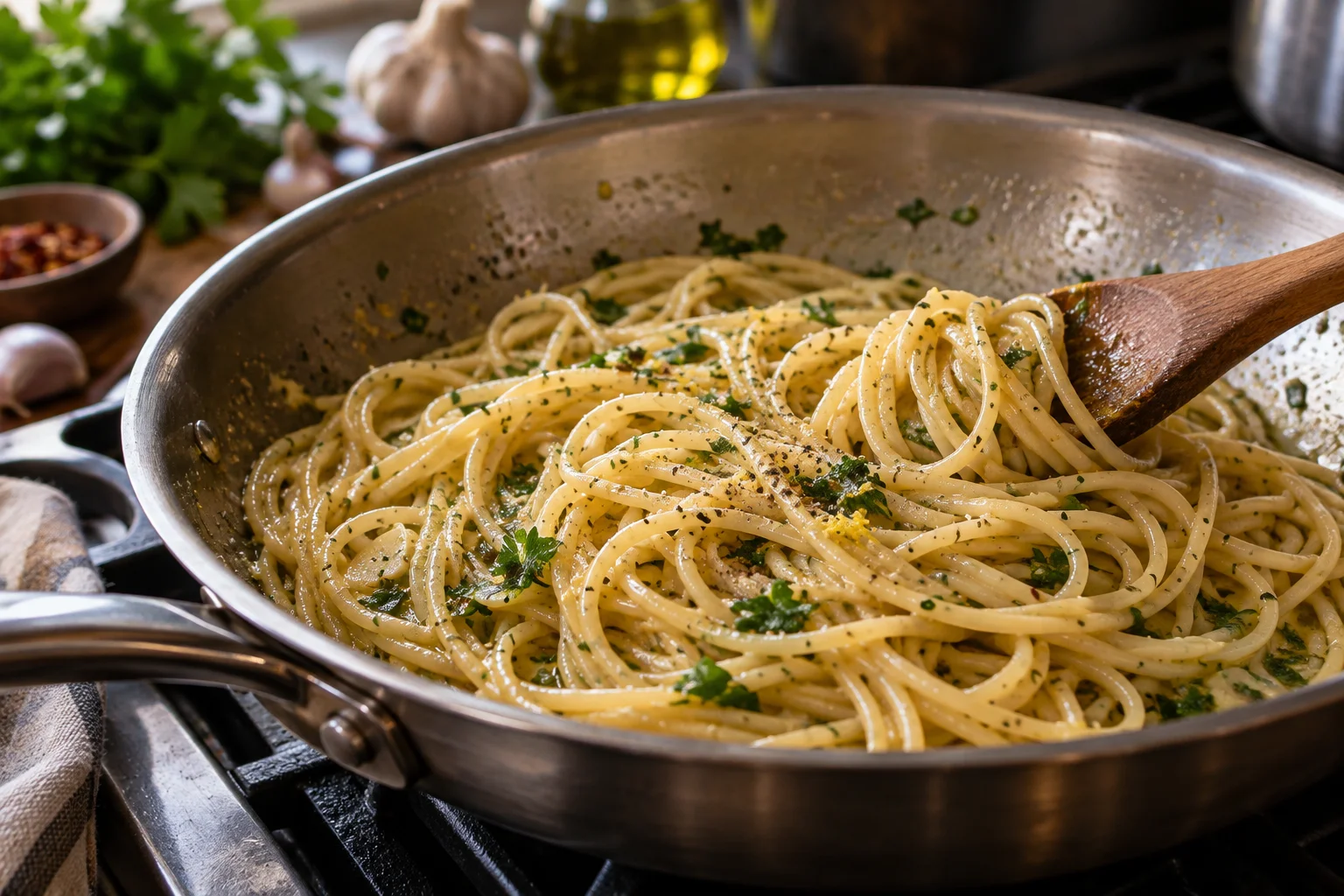
Aglio e olio initially consists mainly of oil with garlic and chilli. A little cooking water and movement with the pasta turn it into a more even coating. Our recipe uses three tablespoons of oil for 200 grams of spaghetti and two portions. Cook the garlic gently without letting it darken. Lower the heat before adding water. Pouring cooking water into very hot oil can cause serious splashing, so add small amounts carefully.
Lift in the pasta and move it with tongs or by tossing. Start with three to four tablespoons of cooking water, as in the recipe, and add a little more if needed. The mixture should look lightly cloudy and coat the strands coherently. If much pure oil remains, extra oil will not help. First check whether it needs a little water and more movement. If the pan sizzles dryly and the noodles stick, the heat may be too high or the liquid may already have evaporated.
Cheese needs different treatment
Finely grated hard cheese distributes more easily than large pieces. It adds flavour and can thicken a sauce, but responds poorly to unsuitable temperatures and insufficient liquid. For simple cheese-and-water sauces, do not add it to a fiercely boiling, nearly dry pan. Remove the pan from the heat and let vigorous bubbling subside. Stir in the cheese in portions, adding a little warm cooking water if needed. Particular cheese sauces require the quantities and steps of their own recipes.
Once tough cheese lumps have formed, increasing the heat usually does not turn them back into smooth sauce. Stop heating first. A little water and gentle stirring may improve minor unevenness, but a completely separated mixture cannot reliably be rescued. Next time, use more finely grated cheese, less heat and a deliberately prepared amount of liquid. Treat cheese as a chosen ingredient rather than a generic thickener for every sauce that seems too thin.
Loosen pesto without boiling it
Pesto can look quite stiff in its jar or bowl. Combined with hot pasta, a little cooking water helps distribute it as a thinner coating. Put the pesto in a sufficiently large bowl or a pan removed from the heat. Begin by stirring in one tablespoon of warm cooking water. Fold in the hot pasta, then judge whether it needs more water. The exact quantity depends on the pesto and portion size.
Do not boil the mixture vigorously just because the pesto is initially difficult to distribute. Extra heat can change the desired freshness of the herbs and leave the sauce looking oily. More oil is not always the answer either. When pesto already contains enough fat, it often needs a little water instead. Taste after combining. Cheese, nuts and other ingredients bring their own flavours and often salt. Follow the particular product or recipe for storage and use.
Judge cream and vegetable sauces separately
Cream sauce thickens during reduction as water evaporates. Once it has the desired consistency, it does not need a large precautionary addition of cooking water. A small splash may still help it combine with pasta. Avoid endlessly boiling a finished sauce while the noodles wait. In a heavily reduced sauce, fat and the remaining ingredients can separate. Use moderate heat and check consistency before adding pasta.
Puréed vegetables can also give a sauce body. For broccoli sauce, for example, mash or blend some of the cooked vegetable with a little liquid and leave the rest in pieces. That creates substance without automatically adding cream. Introduce liquid gradually. A purée that glues the noodles together needs loosening. Conversely, a thin vegetable soup will not become a clinging sauce merely because you choose a particular pasta shape.
Coordinate movement, pan size and heat
You need room to move pasta and sauce together. In an overcrowded small pan, the centre is hard to reach while the edges may already be drying. Two suitable vessels are often easier for larger batches. Stir sturdy short pasta gently. Lift and turn long strands with tongs. Delicate ribbons and filled pasta require softer movements to prevent tearing.
Tossing is neither a performance nor a requirement. Its purpose is to combine the ingredients without scattering sauce across the hob. If a spoon or tongs gives you better control, use that instead. Watch the heat at the same time. Tomato sauce may simmer gently if it still needs reduction, while a delicate cheese mixture should not boil hard. The right movement cannot fully compensate for the wrong temperature. Set the pan beside the cooking zone briefly when you need more control.
Too thin, too thick or too salty
If sauce is thin but the pasta remains very firm, continue cooking carefully while moving it. If the pasta is already done, remove it and reduce the sauce separately. Check again before combining them. An overly thick sauce often needs only a little liquid. Cooking water is convenient provided it is not too salty. Unsalted hot water can also be useful when salt levels are already high and your main aim is dilution.
Excess salt does not disappear during reduction. Evaporation makes it more concentrated. Dilute with suitable unsalted ingredients, such as extra tomatoes for a tomato sauce, and adjust the total quantity. A potato is not a reliable salt filter that quietly solves the problem. Sugar does not remove salt either. If a sauce is heavily oversalted, using a smaller amount in a new unsalted base often makes more sense than repeatedly adding different seasonings.
Use the final moment before serving
Put a small tasting portion on a plate. Movement and heat can make sauce look looser in the pan than it will when eaten. The noodles should separate from each other while carrying some sauce on every surface. Add a small final splash of cooking water if needed immediately before serving. Account for pasta continuing to absorb liquid on its way to the table. A slightly mobile sauce is generally preferable to a mixture that is already dry in the pan.
To learn the method, begin with a simple tomato sauce and the same pasta quantity each time. Change just one thing on the next attempt, such as water quantity or when you add cheese. This makes it easier to see what actually helps. Our pasta-shape guide covers choosing suitable noodles, and the guide to cooking for guests explains quantities for a larger group. For the sauce itself, the most useful observation is in front of you: does it coat evenly, and does a combined bite taste the way you want to eat it?