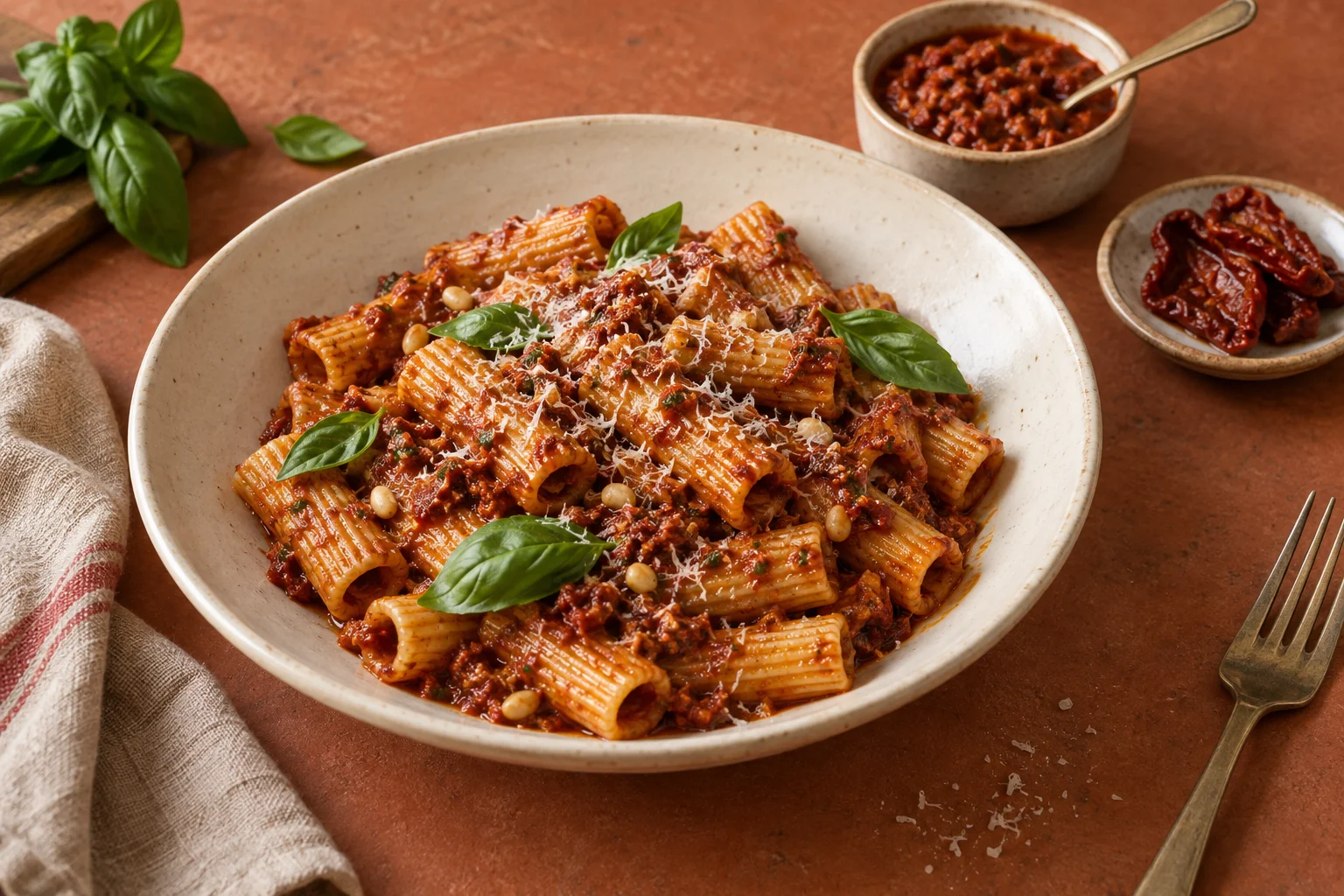
The recipe
Ingredients
- 180 g rigatoni
- 60 g sun-dried tomatoes in oil, drained
- 15 g pine nuts
- 15 g Parmesan, finely grated
- ½ small garlic clove
- 6 basil leaves
- 1 tbsp olive oil, salt and pepper
Method
- Heat salted water. Drain the tomatoes and weigh out 60 g. Wash and dry the basil, peel the garlic and grate the Parmesan.
- Toast the pine nuts in a dry pan over medium heat for about 2 to 3 minutes, stirring until lightly golden. Transfer to a plate and cool.
- Cook the rigatoni al dente according to the packet. Meanwhile, briefly chop the roughly cut tomatoes with 10 g pine nuts, 10 g Parmesan, garlic, 4 basil leaves and the olive oil.
- Reserve a cup of pasta water. In a large bowl, stir the pesto with an initial 3 tbsp of hot cooking water.
- Drain the rigatoni and immediately combine with the pesto. Add further cooking water by the tablespoon as needed until the sauce loosely coats the pasta.
- Season with pepper and salt if needed. Divide between two plates and scatter over the remaining 5 g pine nuts, 5 g Parmesan and 2 basil leaves.
Drain the tomatoes and add salt only at the end
Use soft sun-dried tomatoes from a jar of oil and weigh out 60 grams after draining. Firm, dry tomatoes from a packet need different preparation first and are not a direct substitute here. Measuring the olive oil separately controls the quantity independently of the liquid in the jar. Depending on the product, the tomatoes may already contain plenty of salt and seasoning. Taste a small piece before deciding on garlic or additional salt.
Briefly toast the pine nuts and let them cool. Ten grams go into the pesto and five grams remain for sprinkling. The Parmesan follows the same split: blend in ten grams and distribute five grams over the plates. Four basil leaves flavour the sauce and two are added fresh. This small mixture of our own contains cheese, distinguishing it from entirely plant-based tomato pestos. For a vegetarian version, use an appropriately labelled hard cheese instead of Parmesan made with animal rennet.
Turn the pesto into a sauce with cooking water
A small chopper suits this quantity better than a very large blender. Roughly chop the tomatoes first so that the blades catch them evenly. Blend in short bursts and, with the appliance switched off, scrape down sticking pieces with a spoon or spatula. Fine pieces can remain in the pesto; it need not become as smooth as a cooked tomato sauce. If the blades spin without catching the mixture, first check the container size rather than pouring in unlimited oil.
The pesto is not fried in this recipe. Stir it in a large bowl with an initial three tablespoons of hot pasta water, then add the rigatoni once cooked al dente. Further water loosens the mixture gradually without making it increasingly heavy through extra oil. The sauce should cling to the ridges rather than remain as a firm lump at the bottom of the bowl. Taste it together with a piece of pasta before adding salt. Make this quantity for the immediate meal; this is not a method for preserving pesto at room temperature.