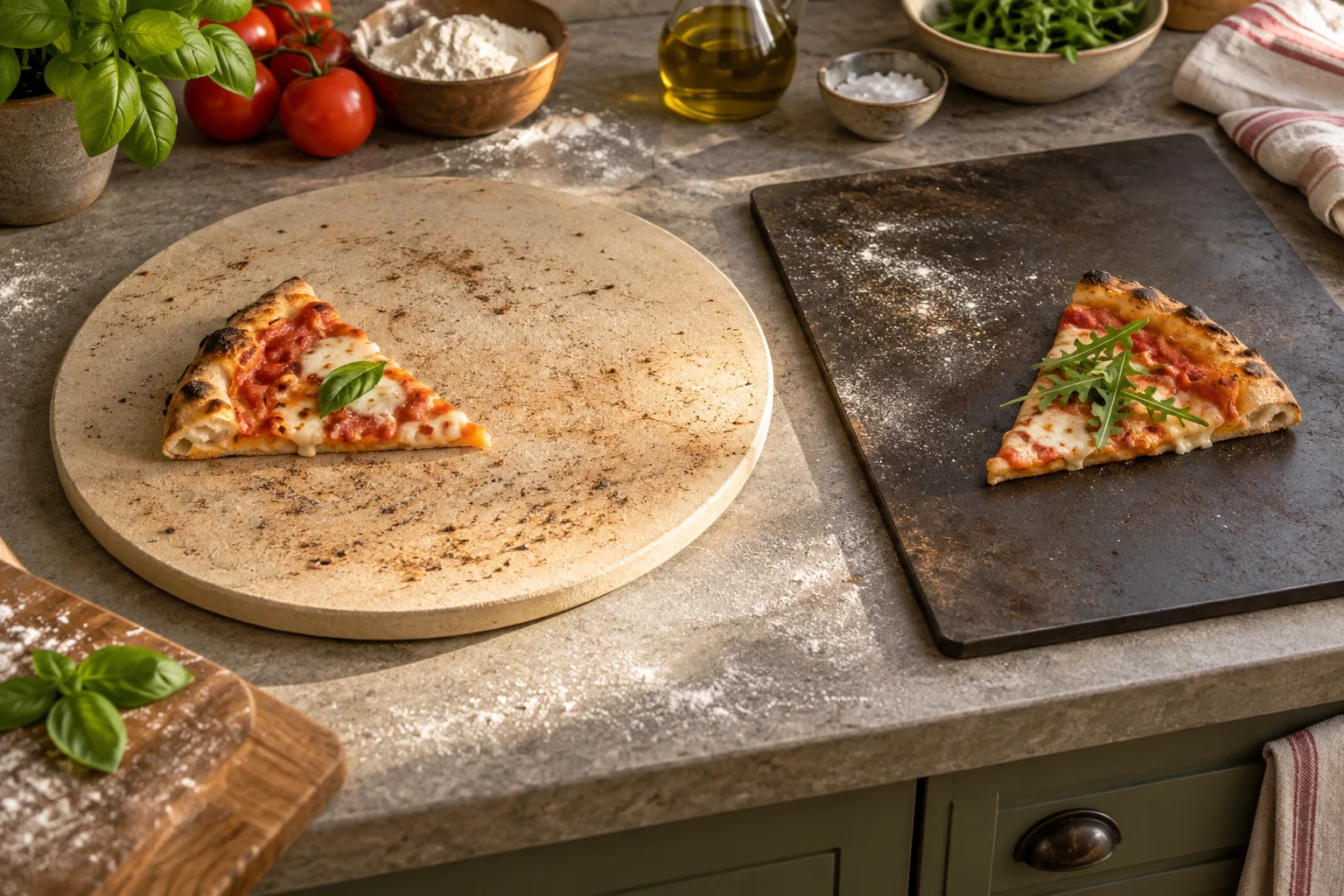
Preheat the baking surface
The stone or steel itself needs to become hot. The oven’s temperature display is only a limited guide to its surface temperature. Follow the accessory and oven instructions for preheating.
Put the accessory in before heating. Check dimensions, weight limits and permitted rack positions. A heavy plate must not rest on unsuitable runners or fragile surfaces.
Consider heat transfer
Steel conducts heat faster than a typical pizza stone. This can help brown the base in a domestic oven, but can also darken it too quickly at high temperatures or during a long bake.
Stone releases heat more slowly and needs careful handling. Putting a cold stone into a hot oven, or cold water onto a hot stone, can create thermal stress. Follow its care instructions.
Balance top and bottom heat
A hot base alone is not enough if the topping remains pale. Rack position and, where appropriate, the grill setting affect the balance. Watch the first pizza and change the accessory’s position only when it is safe and cool.
Baking paper has a temperature limit. Use it at high pizza temperatures only when its stated rating allows it. A peel helps transfer dough directly onto the baking surface.