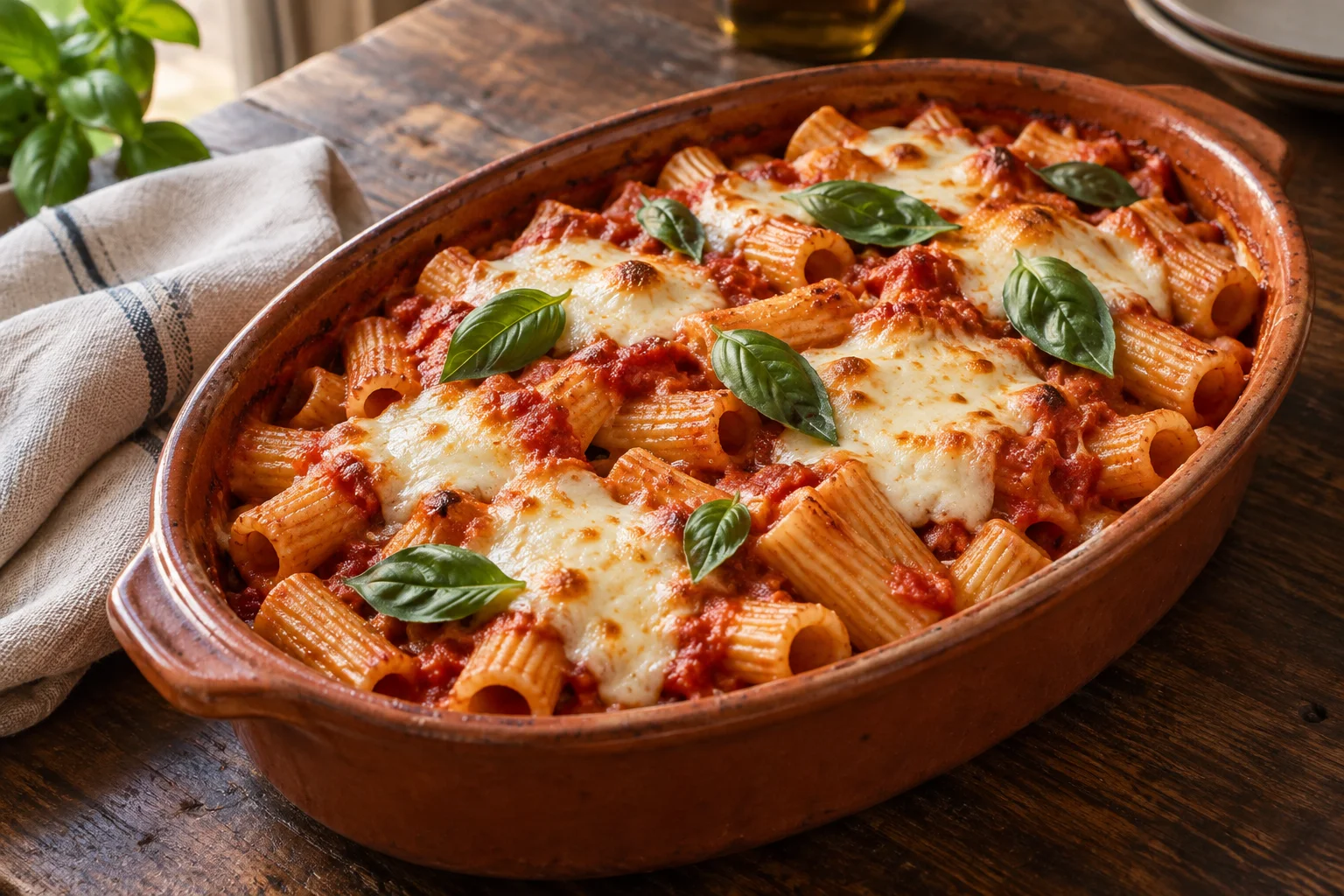
The recipe
Ingredients
- 320 g dried rigatoni
- 700 g passata
- 60 g peeled onion
- 1 garlic clove
- 2 tbsp olive oil
- 200 g well-drained or firm mozzarella
- 30 g finely grated Parmesan
- 8 basil leaves
- Salt, pepper and pasta cooking water as needed
Method
- Preheat the oven to 200°C conventional heat. Finely dice the onion and garlic. Drain and dice the mozzarella; wash and dry the basil.
- Heat the oil in a saucepan and soften the onion over medium heat for 5 minutes. Add the garlic for 30 seconds. Pour in the passata and simmer gently for 12–15 minutes, then season with salt and pepper.
- Meanwhile, boil the rigatoni in salted water for about 2 minutes less than the packet time for al dente. Reserve 150 ml cooking water, drain the pasta and immediately mix with the sauce. Add a little cooking water if needed.
- Mix in 100 g mozzarella and transfer to a baking dish of roughly 20 × 30 cm. Scatter over the other 100 g mozzarella and the Parmesan.
- Bake on the middle shelf for 20–25 minutes, checking from 20 minutes. The pasta must be cooked and the sauce hot in the centre. Bake longer if needed, covering if the top browns too strongly.
- Rest for 5 minutes, tear the basil over the top and serve in four portions.
The pasta continues cooking in the oven
Use dried rigatoni and initially boil them for about two minutes less than the packet gives for al dente pasta. The following oven stage counts towards cooking. Completely raw pasta does not suit this method: it would need a different liquid quantity and baking time. While the sauce simmers, heat the pasta water and preheat the oven. The pasta and sauce can then go into the dish while still warm.
A baking dish measuring roughly 20 by 30 centimetres, with sides at least five centimetres high, gives these four portions enough space. Spread the mixture evenly without pressing it down. Sauce should reach between the tubes. Use well-drained or firm mozzarella and do not pour its packing liquid into the dish. Half of the 200 grams of cheese goes inside and the other half on top.
Keep the tomato sauce loose enough
Passata gives an even sauce base. After simmering, it should still flow readily from a spoon because the pasta absorbs more moisture in the oven. If it is already very thick, add a few tablespoons of the reserved cooking water. Stir in a small amount first and check again. Aim for a moist mixture, not noodles sitting in watery liquid. Season cautiously, as the cheese and cooking water contribute salt too.
Bake on the middle shelf and check from twenty minutes onwards. Look for sauce that is hot throughout the centre, melted cheese and cooked pasta. A deeper or heavier dish may need longer. If the top browns strongly before the centre is ready, cover it with a suitable ovenproof lid. Resting for five minutes before serving makes portioning easier. Add fresh basil leaves after that rest.