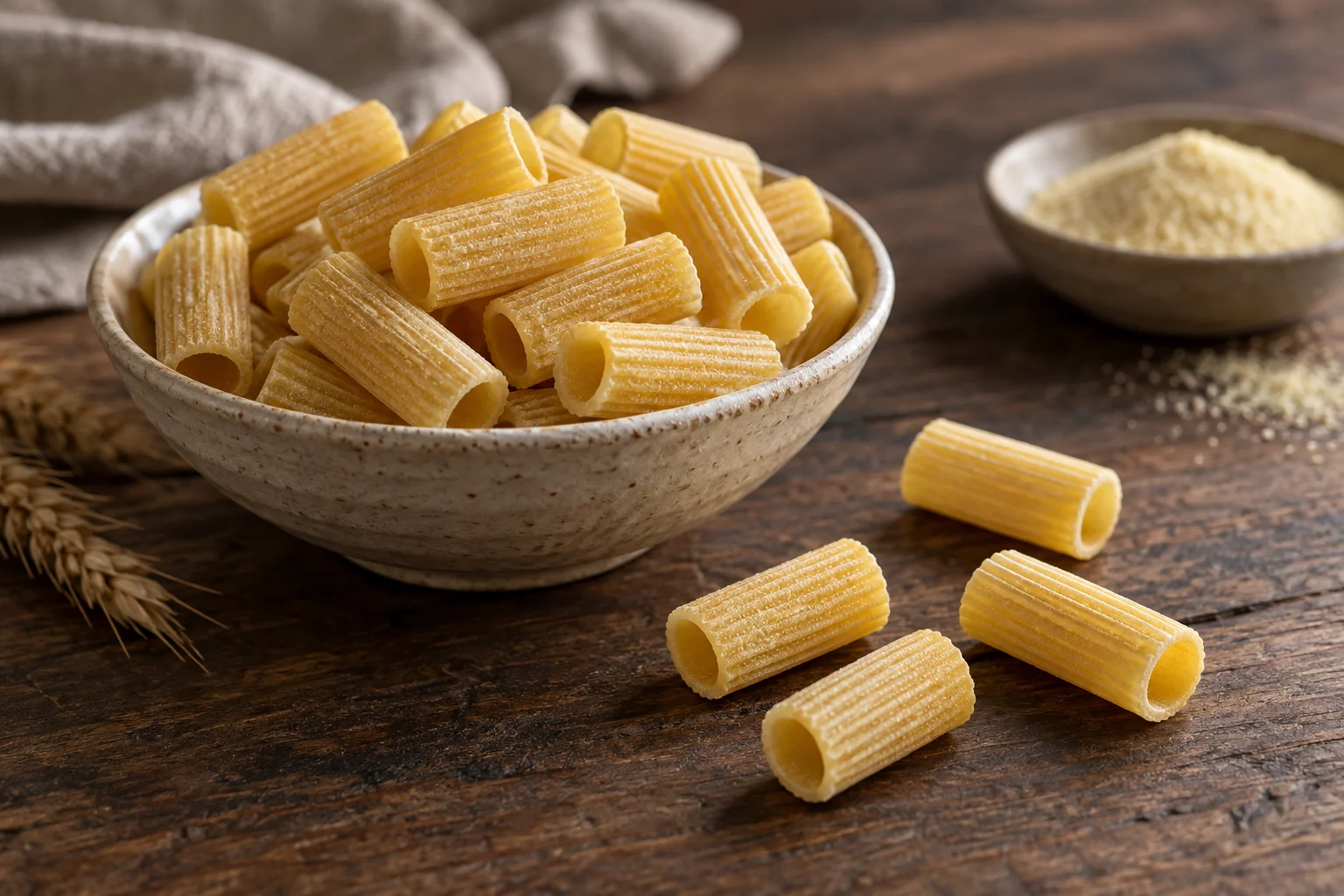
Dough is pressed through a shaped die
Extruded pasta is made by pressing dough through a die whose opening determines the shape. “Bronze-cut” refers to the material of that die. It does not mean that bronze is added as an ingredient or that the pasta must have a bronze colour. The description can apply to different long and short shapes.
Contact with the die affects the surface. Manufacturers use bronze dies to create a rougher texture. This is different from the large visible ridges of rigatoni: the ridges belong to the shape, while the finer roughness concerns the surface. Ridges alone therefore do not establish that a particular pasta was made using bronze dies.
Consider texture and sauce together
A rough surface can help sauce cling to the pasta. That can be useful when aiming for a thin, even coating. The sauce still needs a suitable consistency, followed by thorough, gentle mixing after cooking. A very watery sauce will not automatically become creamy simply because you choose a different pasta.
Keep some cooking water aside if needed and add it in small quantities. If enough liquid is already present, do not add more. The aim is pasta coated with sauce, rather than dry noodles above a separate puddle. How much water is useful depends on the particular dish, not on the words “al bronzo” on the packet.
Check more than one detail when buying
Read the manufacturer's information about shaping if this feature matters to you. Colour and photographs alone do not establish the production method. Ingredients, pasta shape and drying are additional characteristics; a statement about bronze dies does not specify a particular drying temperature, for example. Packaging with an artisanal appearance is not proof of quality by itself either.
A practical question helps narrow the choice: will the pasta carry a fine sauce or accompany larger pieces of vegetables? Choose a suitable shape first. Then compare packet weight and price per kilogram rather than just the shelf price of two differently sized packets. A higher price alone does not tell you which pasta will have the bite you prefer.
Cook according to the actual packet
Bronze-cut pasta does not share one cooking time. Thickness, shape and formulation still matter. Follow the packet, stir at the beginning and occasionally during cooking, and check a cooled piece towards the end. A rough surface is not a reason to keep cooking noodles that are already soft.
Have the sauce ready before draining. Combine the two according to the recipe, away from direct heat when the sauce requires it. You can then adjust the consistency deliberately. The production description is a useful shopping detail, but it replaces neither appropriate doneness nor a well-planned final step between saucepan and plate.