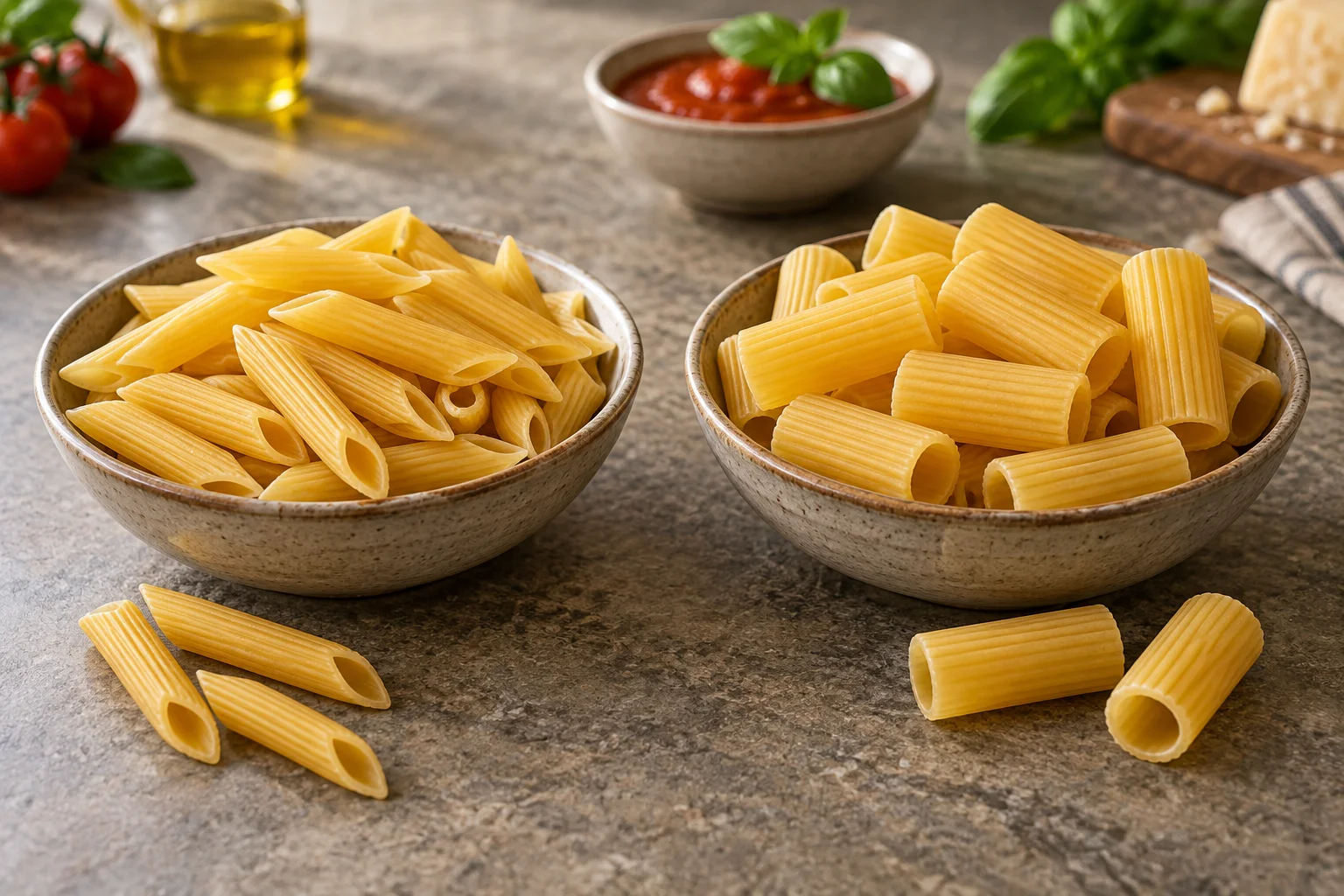
Recognise the cut ends
Penne has diagonally cut ends reminiscent of a writing quill. Penne rigate has lengthwise ridges, while penne lisce is smooth. Rigatoni is typically a wider, ridged tube with ends cut across its length. Size and wall thickness vary between manufacturers and individual products.
A wider opening does not automatically mean a longer noodle. Shortened shapes such as mezzi rigatoni also exist. Check the actual product if your recipe needs a particular size. Both basic shapes are hollow; the interior is as much part of the shape as the outside and can take up sauce during mixing.
Let the sauce guide your choice
Penne rigate is versatile with tomato, vegetable and creamy sauces. Its usually narrower shape is convenient for picking up small pieces of other ingredients on the same fork. It is a natural choice for arrabbiata, for example. The heat of that dish comes from its sauce, rather than from the pasta shape.
Broader rigatoni works well with a substantial ragù or a sauce containing mushrooms and other thoroughly cooked pieces. Still cut those ingredients into manageable bites; a large hollow centre does not replace that preparation. Both shapes also work with smooth sauces. What matters is having enough sauce for an even coating without trying to mix the dish while it is dry.
Weigh quantities and check each cooking time
When replacing dried penne with dried rigatoni of a similar formulation in a recipe, the same dried weight is a reasonable starting point. Do not count individual noodles: differences in size and wall thickness mean different numbers of pieces at the same weight. This simple substitution may not suit fresh, filled or substantially different pasta.
Use the cooking time on the actual packet and check the bite through a thicker section of the wall. Avoid casually combining two leftover packets with different cooking times in one saucepan. The thinner pasta may become soft while the thicker one still has a firm centre. Cooking them separately is easier to manage if you want to use both shapes in the same meal.
Follow the complete method for pasta bakes
Penne and rigatoni suit many oven dishes. Check whether the recipe uses pre-cooked pasta or is specifically designed for dried pasta with a suitable amount of liquid. Fully cooked pasta can become very soft during a further long bake. The required preparation method is therefore part of choosing the recipe.
Simply changing the shape does not turn an ordinary pasta dish into a workable bake. Use appropriate instructions and account for the sauce quantity, baking-dish size and oven time as well. For an ordinary pan-finished dish, a well-matched sauce, gentle mixing and prompt serving are enough. Choose according to the bite you want and the size of the ingredients in your sauce.