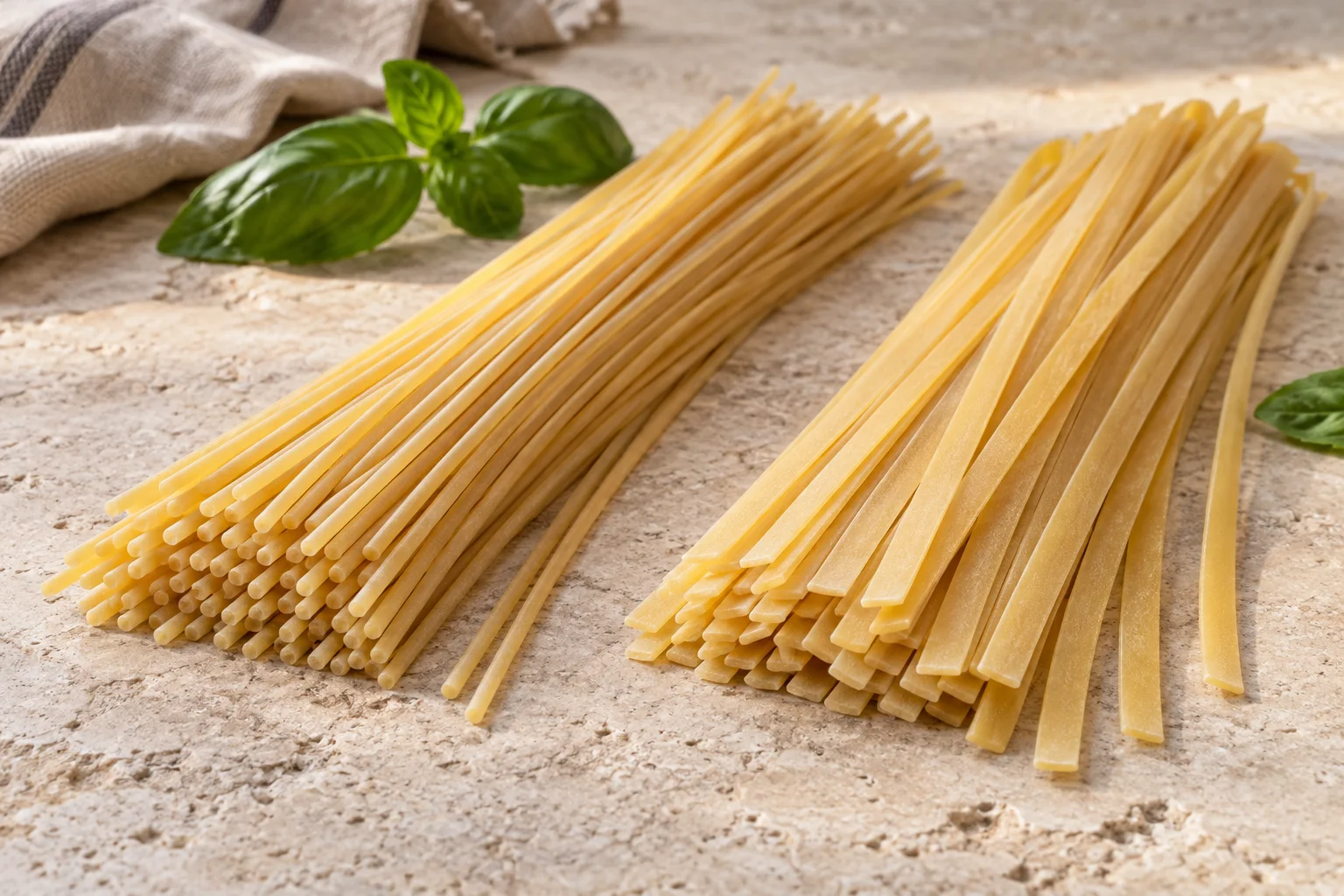
Round or flat
Classic spaghetti consists of long, round strands. Linguine is flattened and resembles narrow ribbons. It is not hollow tubular pasta and is normally narrower than broad ribbons such as fettuccine. Exact dimensions depend on the manufacturer, so the name alone does not establish a universal thickness or cooking time.
Compare the actual shape and packet information when buying. A number such as “No. 5” belongs to a manufacturer's own range; it is not a size standard shared by every brand. Wholemeal, egg and gluten-free variations also behave differently during cooking. To compare round and flat shapes fairly, choose products with similar basic ingredients.
Which sauces work well?
Spaghetti suits a loose tomato sauce, aglio e olio or carbonara prepared using an appropriate recipe, for example. Linguine is frequently paired with pesto and also works with tomato, oil-based and fish sauces. These combinations offer useful starting points without ruling out other pairings.
For either shape, the sauce should distribute easily between the long strands. Cut vegetables into suitably small pieces or narrow strips. Very large chunks can remain separate on the plate while the pasta is twirled onto a fork. With a chunky ragù, a short, wide tube may be more practical for picking up pasta and sauce together.
Recheck cooking time when substituting
In many everyday dishes, you can replace dried spaghetti with the same dried weight of linguine. Check the cooking time on the new packet, however, and prepare the sauce accordingly. Equal length does not mean equal cooking time. Fresh egg ribbons are a different substitution again and should not automatically be used at the same dried weight.
Place long pasta in boiling water and allow the submerged ends to soften before gently easing in the remainder. Stir particularly at the beginning to keep the strands separate. There is no need to force or break them for this purpose. A suitable saucepan and enough room make the process easier than additional pressure.
Combine carefully at the end
Reserve some cooking water if needed and add it sparingly to the sauce. Move the strands so that they become evenly coated. Kitchen tongs help lift and lower small amounts without pulling hard on individual noodles. The sauce should already be ready before you drain the pasta.
Keep the dish's temperature requirements: tomato sauce is finished differently from pesto or a delicate egg-and-cheese mixture. Changing from spaghetti to linguine does not alter those needs. Serve promptly and let the bite and ease of handling you preferred in that dish guide your choice when shopping next time.