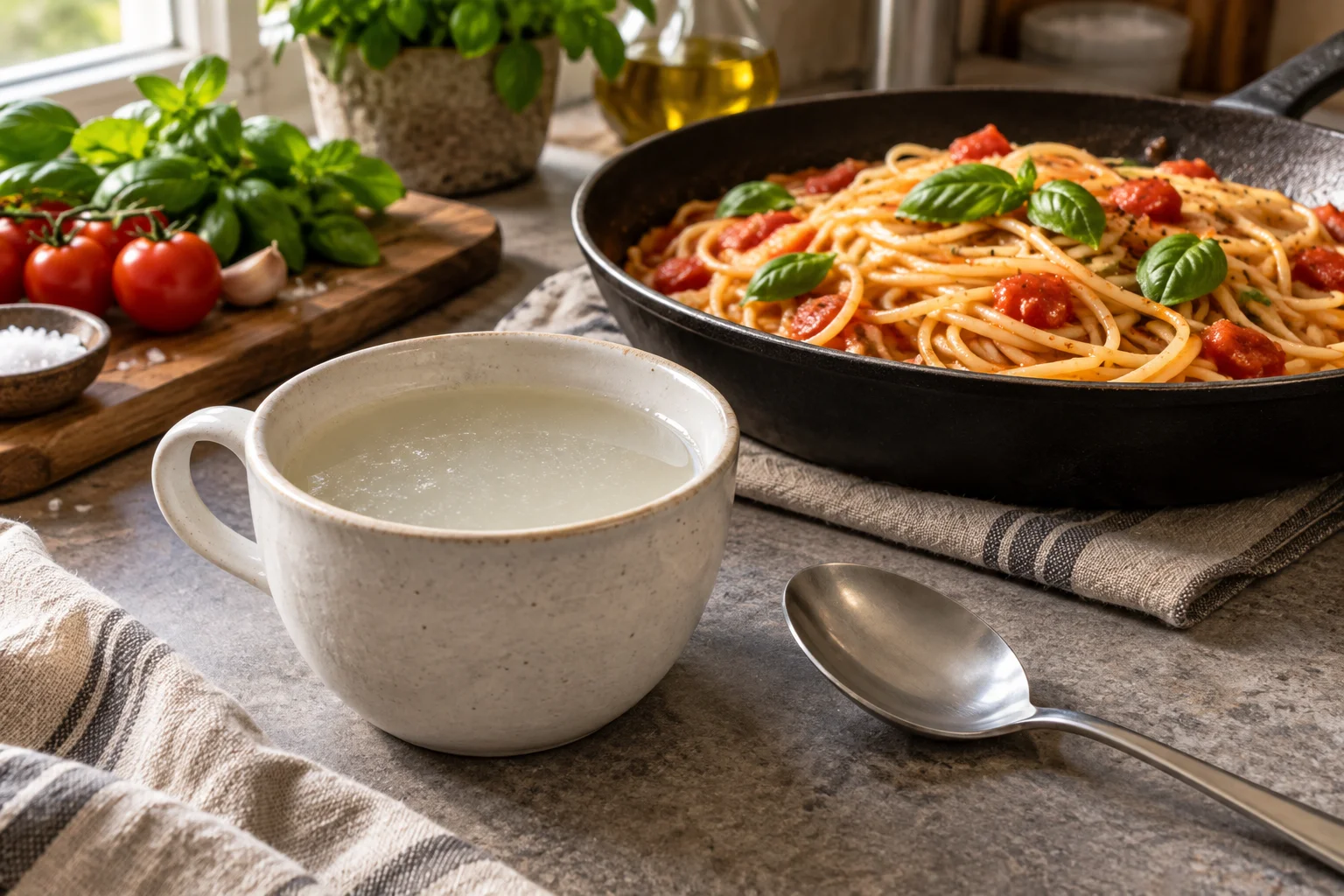
Collect it shortly before draining
Set out a clean, heatproof cup before cooking. Use a suitable ladle to collect water shortly before draining, once the pasta has released some starch. Keep your hands and the container clear of rising steam. For two portions, 150 to 200 ml is a practical reserve, for example; it is not an amount that must all go into the dish.
If your recipe specifies an amount of water, follow that guidance. For cacio e pepe or carbonara, temperature and order of preparation also matter. Do not simply pour the reserve at boiling temperature over a prepared egg or cheese mixture. Have the appropriate sauce ready in time so that the drained pasta can move straight to the next step.
Add a tablespoon at a time
Start with one tablespoon and combine the pasta and sauce. Then assess whether more liquid is needed. A loose tomato sauce may require very little extra water. A firm herb or bean paste may take several small additions. Mixing should produce an even coating without leaving a watery layer underneath.
The water's thickening effect depends partly on the pasta and the amount of cooking water. Cloudiness therefore does not represent an exactly measured dose of starch. If a sauce keeps getting thinner despite stirring, more water will not solve the problem. Stop adding it and follow the heat treatment appropriate to that sauce; delicate egg and cheese sauces cannot simply be boiled down at will.
Allow for salt and ingredients
Cooking water also carries salt into the sauce. Make the final seasoning adjustment after combining the components, especially when using pecorino, anchovies or strongly seasoned stock. Salt remains behind as water evaporates. Trying to rescue a salty sauce by reducing it further can make matters worse.
If the sauce is already sufficiently seasoned, a little fresh, hot, unsalted water may be suitable for loosening it. However, it does not provide the same starch. For gluten-free meals, use only water from the appropriate gluten-free pasta pan. The reserve from wheat pasta would be unsuitable, even if the sauce itself had been prepared without gluten.
Reserve it for the meal you are making
The simplest approach is to use the collected water straight away during preparation. Do not leave an unused cup on the worktop until the following day. Its salt content does not preserve starchy cooking water. The next batch of freshly cooked pasta will provide a new reserve anyway.
If you want to use some shortly afterwards in another preparation, cool it promptly in a suitable small container and keep it covered in the refrigerator at no more than 7°C, preferably below 5°C. Plan to use it for the next meal. If the water has spent a long time unrefrigerated, boiling it later is not a reliable remedy for that storage mistake.