Ask about the food needed before ordering the menu
Give guests a way to tell you about food requirements when you send the invitation. A short personal reply is often more useful than a public list beside everyone's names. Ask which foods need to be avoided and what discussion with the supplier is necessary. You do not need to diagnose anyone or collect medical documents. What matters is that the person can describe their actual requirements and knows who will handle the enquiry. For children, make these arrangements with the responsible parents or guardians. Gather the information before confirming the menu so a suitable solution can become part of the booking, rather than an unplanned request at service time.
Distinguish preferences from health-related requirements without pressuring guests to justify themselves. One person dislikes mushrooms; another needs to avoid a particular trigger entirely, which may require a very different preparation process. If the message only says without milk, ask what the guest means and pass the clarified requirement to the caterer. Do not promise suitability before the supplier has assessed the specific booking. Saying that you will check with the kitchen is more accurate than agreeing too quickly. The guest should receive the answer before the celebration, rather than waiting hungry at the counter for someone to decide whether there is a meal they can eat.
Keep menu terms distinct
Vegan, lactose-free, gluten-free and wheat-free describe different properties. A vegan dish can contain wheat or soya. Lactose-free dairy products are not automatically suitable for someone with a cow's milk allergy, because that requirement concerns milk protein. Conversely, do not turn lactose intolerance into a complete milk exclusion list of your own invention. Germany's allergy and asthma association, DAAB, distinguishes cow's milk allergy from lactose intolerance and recommends individual clarification. For a host, the practical question is which specific property the ordered dish needs to have. The guest's answer is more precise than a presumed shared category covering every special request on your list. Keep that distinction when speaking to the supplier.
Coeliac disease and wheat allergy are also different. DAAB explicitly notes that spelt is not a general substitute for wheat allergy and that gluten-free products are not automatically suitable for everyone with a wheat allergy. Do not therefore assign an existing gluten-free menu option without checking to a guest who needs to avoid wheat. Discuss the actual product and ingredients with the supplier and guest. An apparently similar dough name is not enough. These distinctions do not necessarily make a celebration complicated: a suitable portion can often be prepared when the required property is named correctly from the start. Vague umbrella terms, however, can lead to an order that misses the actual need.
Consider the whole dish, including small additions
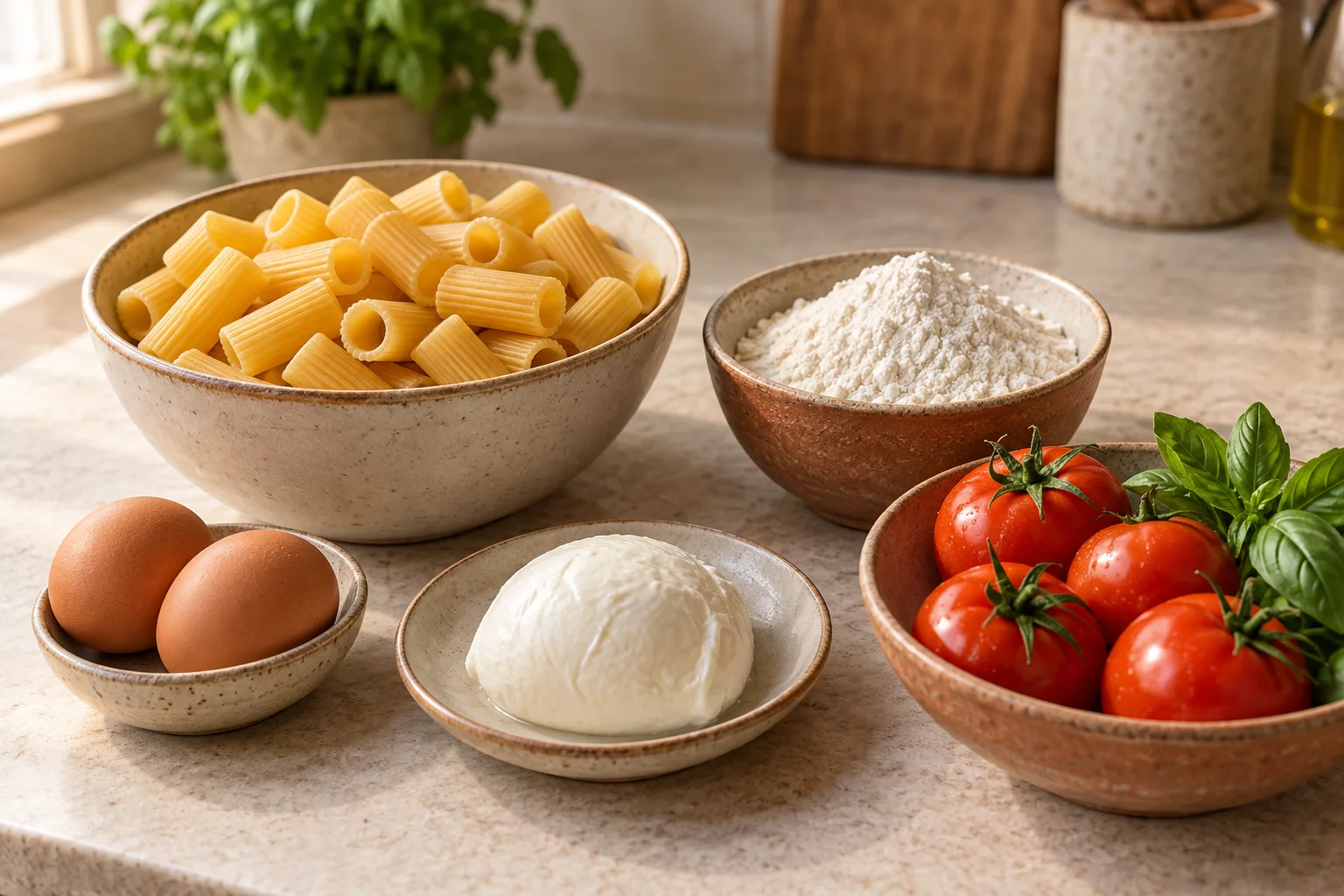
A pizza recipe contains more than the visible toppings. Ask about dough, sauce, cheese, seasonings and ingredients added after baking. A tomato pizza can have an unexpected composition if it uses a prepared seasoning product or an additional pesto, for example. With pasta, consider the noodles, filling, sauce, garnish and any cheese provided for serving. A vegetable dish is not automatically free from other relevant ingredients. The information must describe how the food is actually made. A photograph or familiar Italian name cannot supply that information, because different businesses use different recipes under the same names. Keep the enquiry attached to the proposed dish, not to an imagined standard version.
Compound products deserve particular attention. Depending on the recipe, pesto can contain different seeds or nuts and cheese; a salad dressing may include mustard and a seasoning base may contain celery. These are possible examples, not claims about every product of those types. Ask the caterer to check the specific ingredient information, including bought-in components. Do not expect a server to guess every detail from memory. If the recipe may change, establish how the information will be updated. Small finishing touches count too: cheese sprinkled over every portion afterwards changes the dish previously agreed. The suitable portion therefore needs the same clear connection to its recipe as the rest of the order.
Make information understandable and accessible
In Germany, section 4 of the LMIDV regulates allergen information for commercially supplied unpackaged food. It must be available before purchase and handover. Oral information is possible under conditions including informed staff, accessible written or electronic records and a clearly visible notice. Agree with the caterer which method will actually be used at your event. A menu that clearly matches information to dishes can help guests, as can current records held by a reachable service person. The practical requirement is that information is available before selection and unambiguously belongs to the particular food. A notice discovered only after eating does not accomplish that task for the guest.
Check readability from your guests' perspective. If letters or numbers are used, their meanings must be easy to find. Colour coding alone is of little help when nobody explains it or guests cannot readily distinguish the colours. For an international audience, translate the terms actually needed clearly. Keep ingredient names precise; wheat should not become an unspecified cereal in translation. The legally required allergen information is also not a complete description of every possible individual intolerance. A guest may need details about another ingredient. Direct those specific questions to the person who reliably knows the recipe, rather than treating an empty marking as evidence that the food is suitable.
Ask about unintended contact
Ingredients and contact during production are two different questions. A recipe may omit a trigger while a shared surface, previously used tool or open supply still allows it to enter the food. DAAB explicitly describes such contact, including through hands and utensils. At a pizza station, flour, dough residue and shared working equipment can also matter. Ask the supplier not only whether cheese can be omitted, but how the agreed portion will be handled from preparation to service. Removing an ingredient afterwards does not reliably remove everything already in contact with the food. Preparing a new suitable dish is a different process from rearranging a finished plate. Establish which one is actually being offered.
Trace warnings also need to be understood correctly. DAAB explains that information about unintended traces operates differently from mandatory declarations of intentionally used allergenic ingredients. The absence of a trace warning therefore does not automatically prove that every contact has been excluded. Equally, a host cannot deduce individual suitability from a general warning. Pass the actual information to the affected guest and clarify unresolved questions with the supplier. The decision needs an understandable connection to the product and working process. A blanket assurance that it should be fine because there is only a little of something is not a useful basis for placing the order or reassuring the guest.
Ask for an explanation of the planned working process
A supplier should be able to describe how the suitable portion will be prepared. Ask about ingredient storage, cleaned surfaces, appropriate equipment and separation from other food. A separate bowl means little if the same previously used tongs are subsequently used again. With pasta, cooking water, the colander and serving utensils may belong in the discussion; with pizza, dough handling, the baking surface and handover after cooking may matter. The issue is the actual process the business can provide. You do not need to design its kitchen system yourself. If the proposed setup cannot achieve the required separation, that should be stated openly before the booking is confirmed.
A particular baking temperature is not a blanket demonstration that previously unsuitable food or equipment now meets a guest's needs. Nor does an improvised piece of paper underneath solve every preparation question; any liner must also be approved for the appliance concerned. Rely on an agreed process with suitable ingredients instead of presenting individual kitchen tricks as guarantees. Germany's coeliac society, DZG, emphasises careful, safe preparation of gluten-free food in communal catering. Caterers may organise this differently according to their facilities. Have the necessary limits communicated clearly and arrange another suitable provision where needed. A realistic refusal of a requirement that cannot be met is more useful than an unsupported promise.
Organise handover to the right guest
A suitably prepared portion needs a route that prevents confusion with other dishes. Agree on a recognisable identification and a responsible server. A previously agreed order reference or personal handover can be enough. Medical details do not need to appear on a plate label visible to everyone. The responsible people need to know which meal is meant and keep the identification unambiguous. For children, agree collection with the adults supervising them. A coincidentally similar plate at the normal buffet should not become a substitute when the reserved portion cannot immediately be found. First clarify with the responsible supplier where the agreed meal is and how it will be handed over.
At a self-service buffet, guests can swap utensils, add cheese or approach the food with used plates. Discuss whether a separately protected handover is more suitable for the agreed portion than unrestricted collection. An extra spoon at the buffet does not automatically prevent those contacts. Explain the agreed identification to helpers and keep clean service separate from crockery returns. If the planned portion has been confused or mixed with other food, nobody should guess its identity. The responsible server needs to clarify the situation. This keeps the carefully agreed preparation understandable through the final step, including when the counter is busy and several people are collecting food simultaneously.
Coordinate changes to ingredients and quantities
Agree in advance what happens if a planned product is unavailable. A different cheese substitute, pasta or pesto can contain different ingredients. The original information does not automatically remain valid. Before serving, the caterer should assess the change and update the affected information and individual agreement. An improvised shopping trip by a helper must not bypass that check. If the new composition remains unclear, the portion is not yet confirmed. An early message makes another arrangement possible; an unannounced substitution makes the prepared menu information unreliable even when the dish looks the same. Keep this process clear to everyone who can change or supplement the food order.
Include suitable individual meals in the overall order. Consider an assumed example: for 50 guests, you plan three individually agreed meals and 47 other first portions. Together, that makes 50 first portions. Whether additional servings are needed depends on the meal format and agreement; the three suitable dishes should neither be forgotten nor accidentally counted twice. Suitability for another course must also be clarified separately. A suitable pizza says nothing about the dessert served later. When additional guests join at short notice, their requirements need new confirmation. An earlier commitment concerning a particular person and recipe cannot be extended indefinitely to other meals, products or guests without checking what has changed.
Agree a suitable alternative where necessary
Some requirements do not fit the planned mobile setup or menu. In that case, arrange another provision with the guest and supplier, such as a suitable separate preparation by a business able to provide it. Food brought by the guest can also be an agreed possibility when storage, any reheating and handover at the venue are settled. It is not a spontaneous obligation for the guest to solve the problem alone. Discuss the solution early and without pressure. A small tasting portion is not a way to test tolerance during the celebration. The person should be able to participate comfortably and know which food is actually intended for them.
The final information for those involved can remain concise: the confirmed dish, relevant ingredient information, intended process, contact and handover. If food is taken away, preserve its identification; the actual requirements for safe storage and transport still apply alongside it. A familiar name on a container does not replace those requirements. After the event, consider whether the arrangements worked and where questions arose. For a later celebration, products and recipes must still match the current offer. A good experience with an earlier dish is useful, but it is not a permanent commitment covering every future order under the same name. Keep the useful experience while checking the food actually being supplied next time.