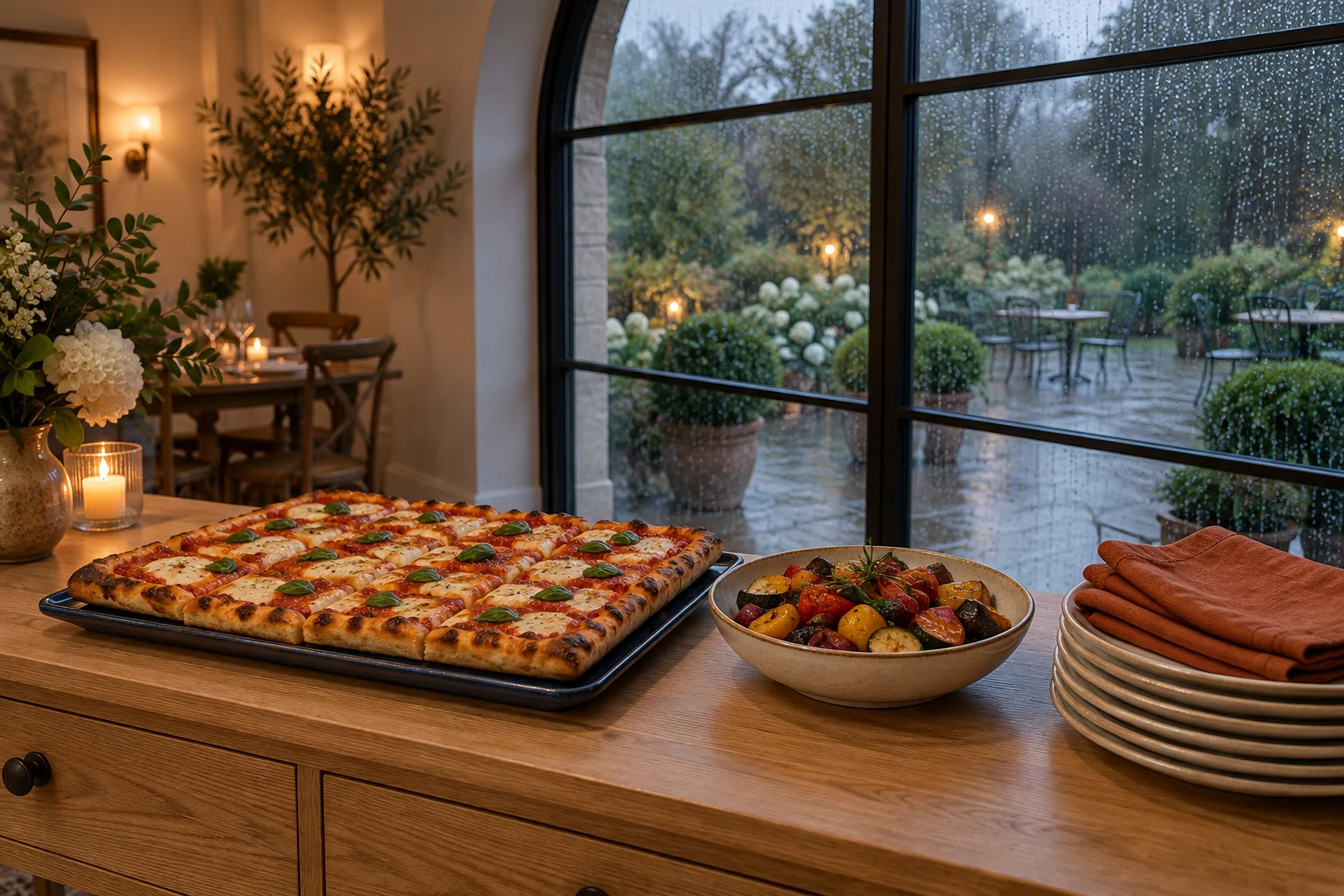
Describe the weather conditions you need to respond to
Bad weather is not one single condition. Light rain may mainly affect the route to the food and unprotected seating. Strong wind also changes conditions for hatches, umbrellas, structures and equipment. A thunderstorm introduces further dangers even if heavy rain has not yet reached the site. A cold evening can also make a long outdoor gathering less appealing. Discuss more than a generic rain option. Establish with the venue and caterer which conditions matter to your actual setup and what adjustment is planned for each. A statement that a business regularly works outdoors does not answer those specific questions or confirm that your event can run unchanged.
Consider the whole celebration. A protected cooking area does little if guests must cross puddles on an unmade path to reach service. Conversely, a dry dining room does not make an outdoor oven operable under any conditions. Record separately where food is cooked, served and eaten, and the routes between those places. Include delivery, refrigeration, crockery returns and departure. A simple sketch shows which point would be affected first by a weather change. You can then agree a specific alternative with the responsible people instead of searching simultaneously for another room, new connections and an extra helper shortly before the event. Resolve the dependencies while there is still time to organise them.
Confirm an alternative room that is genuinely available
If guests will eat indoors during rain, have the intended room explicitly confirmed. It must be available on the date and suitable for the actual use and number of people. A side room that looks empty in photographs may be booked elsewhere or intended only for storage. Ask whether tables, seating and an appropriate serving area can be arranged there and who will do it. Toilets and accessible routes belong in the plan too. A room does not become a useful alternative merely because everyone can somehow stand inside. Guests should receive and eat their meals comfortably without the queue blocking entrances or routes that need to remain clear.
Plan the room with the caterer. Where can prepared dishes arrive, where do clean plates stay and where does used crockery go? Delivery from an approved outdoor preparation area needs an appropriate handover route. If cooking will happen indoors, that specific preparation and equipment must be permitted and suitable there. Permission to use a room for dining does not automatically cover arbitrary cooking appliances. Establish when access begins and when the room must be cleared. Preparing the alternative during normal setup can make a later change easier. However, it must actually be agreed rather than resting on an informal hope that the room and staff will somehow be available when needed.
Agree the equipment location for the actual setup
Ask the supplier to describe the conditions under which the booked appliance may operate. A mobile pizza oven, serving trailer and kitchen within an enclosed vehicle are different installations. Intended use, ventilation, clearances, ground and supplies are among the relevant factors. An arbitrary gazebo or awning does not automatically create an appropriate covered workspace. Follow the requirements for the actual appliance and its installation at the venue. An oven intended for outdoor use cannot simply be placed in a garage, corridor or side room. An open garage door is not approval for indoor use either. Make the decision with the people responsible for the equipment and location.
Suitability cannot be inferred solely from the energy source. Electric does not automatically mean appropriate for every interior or outdoor space. Storage covers are not operating covers for a hot oven. Extra side panels, windbreaks or improvised alterations may change conditions considered in the original setup. Ask beforehand about the weather arrangement actually approved for the installation. If the supplier cannot work in certain conditions, include that limit in the agreement. It may lead to another menu, another suitable preparation location or a pause. An unsuitable equipment position does not become acceptable because guests are already waiting for their first pizza. Keep that distinction clear when discussing the fallback.
Check the pitch and routes when wet
A courtyard may look straightforward in sunshine and behave differently after rain. Unmade ground may soften, water may gather at narrow points and smooth surfaces may become slippery. Establish with the owner and caterer whether the actual vehicle can still arrive, stand and leave safely in those circumstances. Vehicle weight and ground conditions must be compatible. Do not make hastily placed boards or unchecked ramps the standard solution. If suitable ground protection or other measures are planned, they must fit the site and load and be arranged before setup. An improvised intervention during arrival does not replace that agreement or establish that the underlying ground is suitable.
Imagine the guests' route while carrying a plate. Where does water collect, where are there steps or narrow passages, and can people using a walking aid, wheelchair or pushchair reach the intended eating area? Short, adequately lit routes are particularly useful in wet weather. Service should not occupy the spot where everyone enters with dripping coats while also returning used crockery. Connections and cables must be installed appropriately for their actual use; damage or water ingress calls for the responsible qualified people. A host should not alter wet electrical connections to rescue the schedule. Another suitable serving arrangement may be the more practical response while the original problem is properly assessed.
Decide who watches the weather and makes decisions
Choose a reachable person to follow developing conditions before and during the event and communicate with the venue and caterer. Use current official warnings and information for the location; a general forecast from several days earlier is insufficient for the decision on the day. Germany's weather service, DWD, describes how summer thunderstorms can develop quickly over small areas. A neighbouring place remaining dry is therefore not reliable evidence of safe conditions at your site. A single app display also does not replace observation or directions from the responsible authorities. The designated person needs a clear reporting route, rather than a continuous debate involving the entire guest group.
Agree several useful decision points suited to the booking. An early check can settle the room and staffing, with another before travel confirming setup. New conditions during the celebration also need to be reported. The timing depends on travel, installation and agreed possibilities for changes; there is no universal correct number of hours beforehand. Record who authorises a switch and who can stop operations for technical or safety reasons. Do not confuse a commercial deadline with a later safety decision. If conditions become unsuitable, the original plan does not remain appropriate simply because the final opportunity to change it free of charge has already passed. The two decisions serve different purposes.
Match the menu and service to the confirmed alternative
A different eating area may call for different service. If pizzas are baked under suitable conditions elsewhere and served indoors, coordinate that journey, including staff, containers and replenishment. In a small room, sliced pieces on appropriate serving surfaces may be easier to distribute than many whole pizzas placed down simultaneously. That depends on the guests, menu and space. Have the caterer confirm the actual process. Switching from pizza to pasta is not just a change of name either: cooking, holding, portioning, crockery and ingredient information can all change. The alternative should therefore be prepared in advance and fit the scope of the booking, rather than emerge as an undefined promise.
Plan temperature control and clean handling on the extra journey as well. Closed transport containers may form part of the system, but do not alone demonstrate an appropriate food temperature for any duration. Cold ingredients still need their planned refrigeration, and prepared hot food needs suitable treatment until service. Do not put large quantities of finished dishes out early simply because rain is forecast later. Coordinate cooking and replenishment with actual demand and the service that can be provided. For individually agreed dishes, preserve the recipe, preparation process and handover. Substituting pesto or a different pasta at short notice can change the existing ingredient information and must be clarified before the food is served.
Clarify additional costs and changes before booking
Ask which elements of the weather alternative are already included. Another room, a changed transport route or extra staff can create costs, but do not necessarily do so in every package. Have these items specified. Here is a freely assumed example: an agreed room option costs €250 and additional service costs €120. Together, that is €370 extra, provided both are actually charged in addition to the booking. These numbers only explain the addition and are not researched prices. If the room is already included, do not add it again. Keep unresolved amounts visibly open until there is a complete quotation rather than filling the gaps with assumed zero costs.
Agree who may order extras and the latest point at which they can be organised. Delays, shortened service, rebooking and cancellation also need the actual terms of the booking. This guide does not create a general right to cancel free of charge because of bad weather. Check the agreed arrangements with those involved and resolve uncertainties before booking. It also matters whether the alternative room is reserved exclusively or offered only if spare capacity remains. Those commitments differ both practically and financially. An option that might be available should not appear in the invitation and schedule as a firmly secured foundation for the celebration. Describe the real commitment when sharing the plan.
Inform guests and helpers in good time
Give guests information that affects their evening. If the entrance changes or food moves indoors, make this clear before travel or on arrival. A short message identifying the right access point is more useful than a lengthy account of appliances and weather models. Guests do not need a technical explanation of every decision. Participating helpers, however, need the current working process: where food arrives, who receives it, where plates are placed and who keeps the route clear. Avoid old and new instructions circulating at the same time. A reachable contact on the day can confirm the valid arrangement for everyone and resolve questions without involving the whole group.
Consider people for whom changing location takes more effort. A different entrance may introduce longer distances, steps or unsuitable ground. Establish a route that can actually be used with the venue, rather than inferring accessibility from the presence of a doorway. Groups of children need an agreed escort to the new eating area. During serious severe weather, reaching appropriate shelter takes priority over keeping the buffet running neatly. Nobody should remain outside for decorations, plates or one more pizza. The alternative arrangement is intended to help the event; when conditions go beyond it, follow the necessary protective measures and instructions from those responsible. Food service must fit those decisions.
Pause in time and assess any restart
During a thunderstorm or dangerous wind, moving plates under a roof is not enough. DWD recommends seeking shelter in substantial buildings during thunderstorms; an ordinary parasol or party gazebo is not an equivalent planned place of refuge. Agree with the venue which suitable areas the group can reach in time and how they will get there. Do not wait for a personally calculated last second before the next lightning strike. At larger events, this decision belongs within the organiser's actual safety arrangements. The caterer must be able to secure or end operations according to conditions and equipment requirements. Guests and helpers should not spontaneously carry hot appliances to another location.
After a pause, the intended operation needs to be viable again. Check with the responsible people whether routes, structures and supplies are suitable and whether food can still be used given its actual storage history. Rain ending does not confirm all those conditions. Also establish whether sufficient time remains before the agreed service end and venue closure. A shorter service or the agreed alternative menu may then fit better than trying to recover every originally planned minute. Afterwards, note which weather arrangement worked and what should be booked differently for a later event. That turns the experience into specific improvements to the next preparation rather than a general promise to manage somehow.