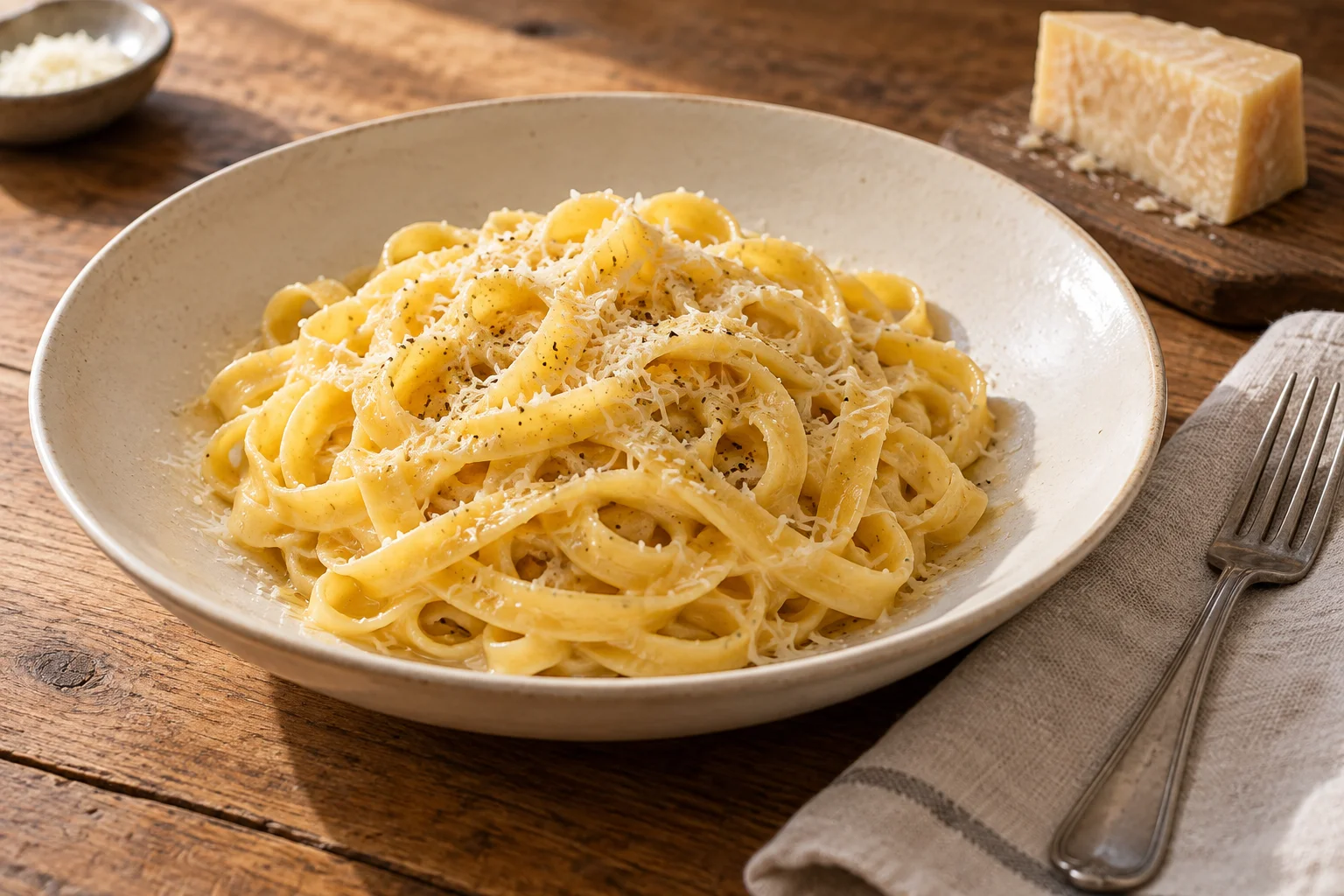
The recipe
Ingredients
- 250 g fresh fettuccine
- 50 g soft butter
- 60 g Parmesan, very finely grated
- 50 ml pasta cooking water, plus more as needed
- Salt and freshly ground black pepper
Method
- Dice the butter, finely grate the Parmesan and reserve 10 g of the cheese. Warm a large bowl with hot water and set out two plates.
- Cook the fettuccine in salted water according to the packet. Check thin homemade ribbons early: the thickest part must be cooked, without a raw, floury centre.
- Reserve at least 200 ml cooking water. Completely empty the water used to warm the bowl. Add the butter and stir with an initial 50 ml hot pasta water until creamy.
- Add the hot noodles directly and toss gently for about 30 seconds. Off the heat, mix in the remaining 50 g Parmesan in several batches.
- Add cooking water a tablespoon at a time as needed, until a thin, glossy sauce clings to the ribbons. Season with pepper and a little salt if needed. Serve immediately with the reserved 10 g Parmesan.
Prepare the ingredients before boiling
This recipe uses 250 grams of fresh fettuccine, not 250 grams of dried pasta. The timing starts with ready-made noodles; mixing, resting and rolling your own dough takes additional time. Set out two plates and grate the cheese before the water boils. Fresh noodles may be ready within a few minutes. Everything should then be within reach so that they neither cool down nor stick together while you dress them.
Grate the Parmesan very finely so that it disperses gradually. Coarse shavings are less suitable for this stage. The butter should be soft and cut into small cubes. Reserve 10 grams of the 60 grams of Parmesan for serving, leaving 50 grams for the sauce. If you cook vegetarian food, choose a suitably labelled hard cheese made with appropriate rennet instead of ordinary Parmigiano Reggiano.
Cooking water and movement bring the sauce together
A warmed large bowl keeps the noodles warm without a hob continuing to heat the cheese mixture from below. Pour in hot water to warm it, then empty it completely. First stir the butter with 50 millilitres of hot pasta cooking water. The hot noodles provide further warmth. After a brief toss, add the cheese in several small batches. Bringing the mixture to a vigorous boil after adding cheese would increase the risk of lumps.
The finished sauce should coat the ribbons thinly and remain loose at the bottom of the bowl. If it looks stiff, add cooking water a tablespoon at a time and toss again. If it seems too runny, mix a little longer before adding other ingredients. The mixture thickens as it stands. Divide the fettuccine between the plates immediately. This method is poorly suited to prolonged holding; for a larger group, prepare manageable batches instead.