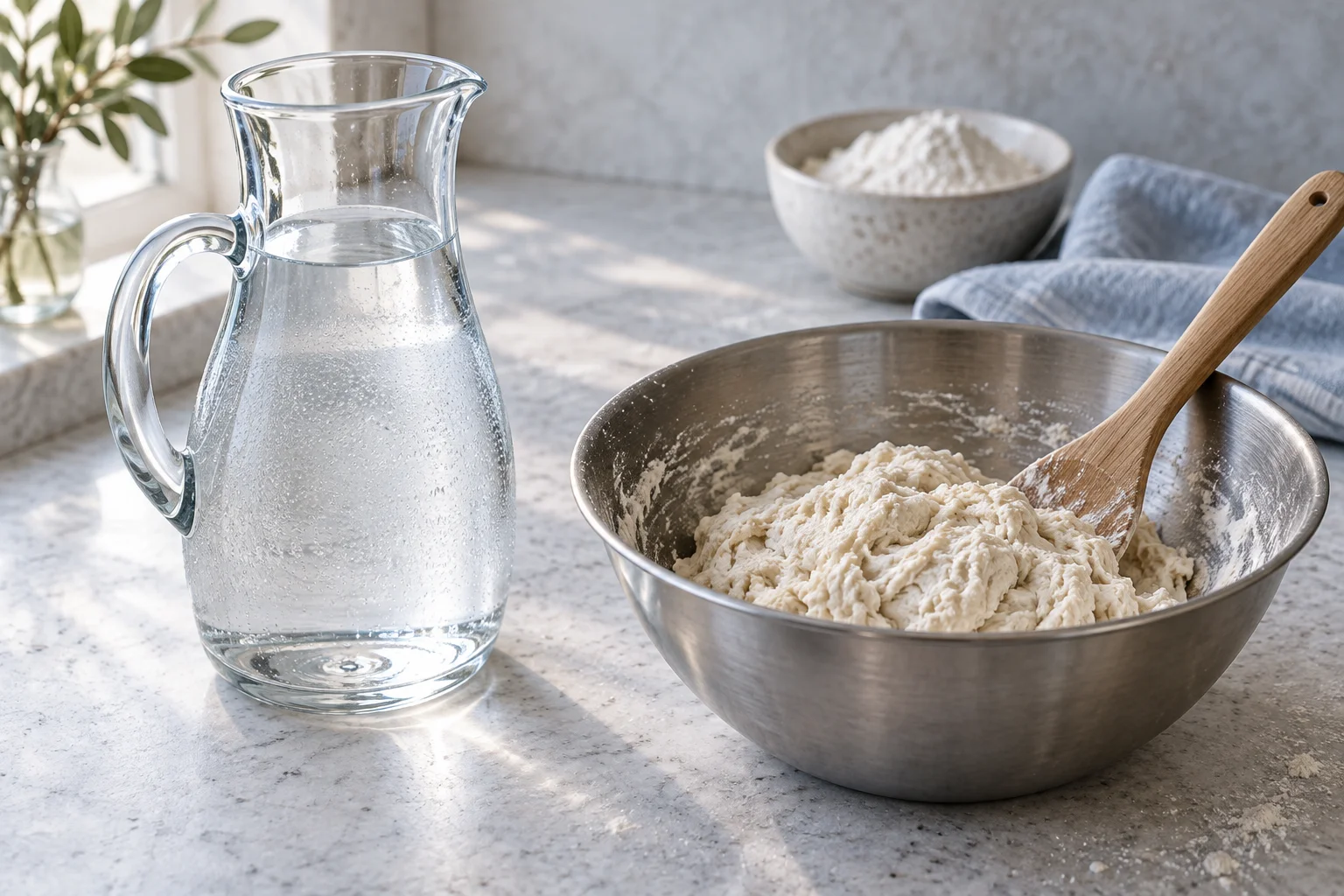
Water controls the starting temperature
On a warm day or during vigorous machine kneading, dough can become considerably warmer than expected. Cool water lowers its starting temperature and allows for heat generated during mixing. This can help prevent fermentation from moving too quickly after the dough is mixed.
In a cool kitchen with brief hand kneading, refrigerator-cold water is not automatically necessary. A very cold batch develops more slowly and can delay your planned baking time. Match the water temperature to the recipe and process.
Measure after kneading
Use a suitable clean food thermometer to measure the water before mixing and the dough after kneading. Also record room temperature, flour temperature and mixing time. The same water temperature can give a different result if the flour has been stored elsewhere or the machine runs longer.
Target temperatures refer to the finished dough. If a recipe aims for a dough temperature of 24 °C, for example, that does not mean the water should also be 24 °C. The influences combine, and the necessary water temperature depends on the actual process.
Incorporate yeast according to the product
If the packet allows instant yeast to be mixed directly with flour, distribute it evenly through the flour before adding cool water. Other dried yeasts may have different instructions for dissolving. Follow the actual packaging rather than a blanket rule for every yeast type.
If yeast needs to be dissolved in some warmer water, take that water from the calculated total. With 325 grams altogether and 25 grams used for dissolving, 300 grams remains for the rest of the dough. The warmer portion also affects the final temperature.
Cooling does not replace suitable dough handling
Cool water does not change the planned water quantity. Do not simply pour extra cold water into a finished warm dough without accounting for the formula. You would also change hydration and the way the dough handles.
For the next batch, adjust water temperature while keeping the quantity and kneading process consistent. If the dough remains too warm, check mixing duration and the machine’s instructions as well. Cold water is one useful adjustment; it replaces neither a suitable machine setting nor watching the dough’s condition during fermentation.