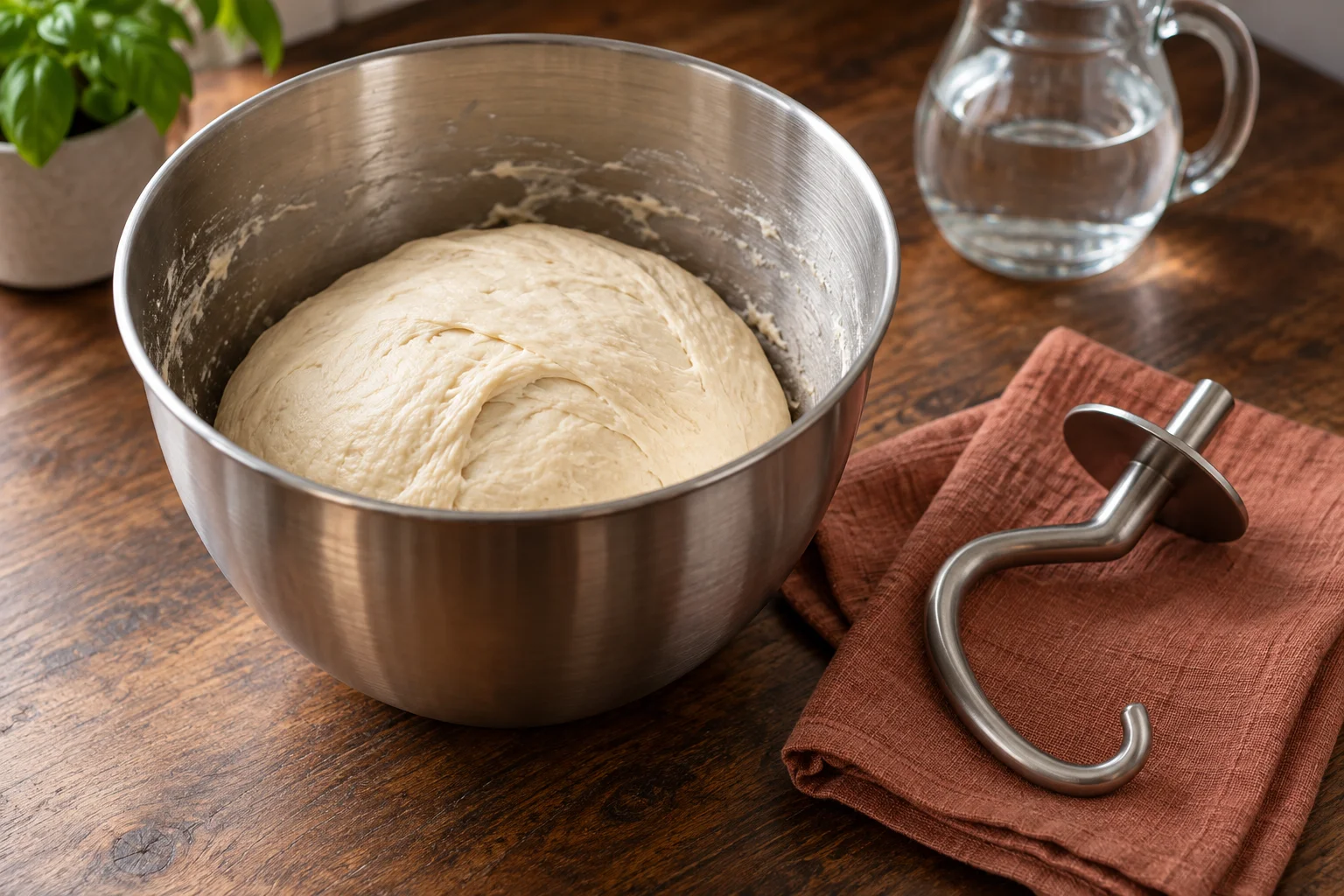
The mixer should produce manageable dough
A stand mixer takes over part of the physical kneading. Its value is combining flour and water evenly and producing dough that you can shape well after fermentation. A particular number of minutes or especially high speed is not an end in itself. Different machines move the same dough differently, and flour, hydration and batch size also change the process. Watch development in the bowl and treat timings as guidance within the instructions for your particular machine. The final consistency matters more than completing an arbitrary uninterrupted mixing cycle.
A straightforward white wheat dough is easier to begin with than an extremely wet specialist formula. It lets you recognise when a rough mixture becomes a cohesive mass. Choose the recipe and fermentation schedule before starting. The machine does not decide whether the dough should bake that afternoon or after two days in the fridge. Yeast, temperature and time must still work together. Kneading is a preparatory stage in that sequence, rather than a replacement for the maturation that follows. Keep the intended baking time in view while planning the machine work.
Check batch size and permitted load first
Consult the appliance instructions for the allowed quantity of firm yeast or bread dough. Bowl capacity in litres is not enough information. A machine may hold plenty of cake batter yet reach its working limit sooner with stiff pizza dough. Distinguish maximum flour weight from maximum total dough weight as well. If the instructions state 1000 g dough, that does not automatically mean 1000 g flour plus water and other ingredients. Calculate the entire recipe weight before filling the bowl, rather than judging the load only once kneading is underway.
For example, 500 g flour, 325 g water, 12.5 g salt and 2 g instant yeast make 839.5 g dough. Doubling the batch produces 1679 g. Whether your mixer may handle that amount depends on its instructions. Conversely, a very small portion may fall below a recommended minimum and be difficult for the hook to engage. Dough remaining at the bottom of the bowl therefore does not necessarily need more flour. A more appropriate batch size, or mixing that small portion by hand, may be the simpler solution for the equipment you have.
Use the appropriate hook and speed
For ordinary pizza dough, the machine's designated dough hook is the usual attachment. A balloon whisk is not intended for this task. Some manufacturers permit a paddle for initial incorporation, while others describe the whole process using the hook. Follow the instructions for your attachment and model. Secure the bowl and mixer head as directed before starting. If you later need to release dough from the tool or scrape the bowl, stop the machine completely. Hands, scrapers and thermometers should not enter the bowl while the attachment is moving.
Speed numbers are not directly comparable across brands. KitchenAid specifies speed two for kneading yeast dough in its relevant guidance, while Kenwood gives different sequences and settings for particular pizza methods. This does not establish one universal setting for every mixer. Begin at the manufacturer's intended slow mixing speed so flour is not thrown out. Increase only within the permitted range and when it helps dough development. If the appliance visibly travels across the counter, knocks unusually or appears overloaded, pause and check the batch size and setting before continuing.
Bring the ingredients together deliberately
Weigh all the ingredients and have them ready before switching on. Depending on the product, instant yeast can be mixed directly with flour; other yeasts or methods require preparation in water. Follow that instruction, using liquid from the intended total quantity. The order of flour and water also depends on the recipe and machine. Initially, the important result is an evenly moistened mixture. Dry flour pockets at the bottom do not always disappear by themselves merely because the hook has already gathered a ball in the middle of the bowl.
Stop after initial incorporation and check the sides and bottom. Use a scraper to bring dry material into the mass, then continue slowly. Small corrections are easier now than after prolonged kneading. Still, avoid adding extra water prematurely: a rough mixture needs a little time to develop its final consistency. With an unfamiliar flour, use a weighed water reserve if the recipe provides for one. Record how much you actually incorporate. An unmeasured splash changes the basis for the next batch and makes it harder to understand whether the flour or the process caused a difference.
Assess development at short intervals
After incorporation, the main kneading develops the dough. It should gradually become more uniform, cohesive and stretchable. A moderately soft wheat dough often releases at least partly from the bowl wall. This is useful evidence, but it is not compulsory at every hydration. A very wet dough can remain attached at the bottom while still being adequately developed. Adding flour until the bowl is completely clean may turn the intended formula into a much stiffer dough. Look at the whole consistency rather than treating a spotless bowl as the sole finishing criterion.
Within the permitted operating time, stop after a few minutes and examine a small piece with lightly damp fingers. It should increasingly stretch into a thinner sheet before tearing. Pull slowly and briefly allow a freshly worked piece to relax. Immediate ragged tearing can suggest insufficient development, but must be interpreted alongside flour type and consistency. Wholemeal particles, for example, change its appearance. Do not force every dough into a perfectly transparent, flawless windowpane. Pizza needs useful strength and extensibility rather than a demonstration of the thinnest membrane you can possibly stretch.
Keep track of heat development
Machine kneading adds heat to dough. During long runs or under substantial load, the final temperature may rise well above the starting water temperature. For recurring problems, measure with a clean probe while the mixer is stationary. A temperature around 23 to 25°C after mixing is a useful starting point for many simple wheat pizza doughs, though your recipe may specify something else. Temperature is not a reason to keep deliberately kneading dough that is already well developed. Assess structure and temperature together and stop when they suit the intended process.
If the dough regularly leaves the mixer too warm, use cooler water for the next comparable batch and check whether the kneading period is unnecessarily long. A pause may help limit further heating and let the dough relax; keep it covered meanwhile. Adding water or ice by guesswork to a finished batch changes the formula as well. Keep the total quantity constant and plan temperature beforehand. If the mass improves initially but then becomes increasingly smeary, loses support and tears more easily, additional high-speed mixing is not a reliable repair for the deterioration.
Incorporate reserved water and oil gradually
Some recipes add part of the water only after initial development. That reserve must belong to the total quantity from the beginning. For 325 g overall, for example, you might use 300 g initially and 25 g later if the chosen method is designed for it. Add the remainder in small portions, waiting for the dough to come together again. The surface may temporarily feel slippery. If it stops absorbing the liquid and simply slides around, pause and give it a short rest before reassessing its condition and deciding whether to continue.
Oil is also incorporated according to the recipe. It is not part of the usual hydration calculation based on water and flour. A dough containing 500 g flour and 325 g water therefore remains at 65 percent hydration even if, for example, another 10 g oil is added. Total dough weight increases by those 10 g, however. Add oil slowly where the recipe calls for later incorporation. A temporarily shiny, slippery surface needs time to recombine. Extra flour is not an automatic answer to that changed appearance either; first see how the mixture develops.
Diagnose common problems from the dough's movement
If dough persistently climbs the hook and receives little effective kneading, stop and carefully release it back into the bowl. Check quantity, consistency and the permitted setting. Some machines need this occasional repositioning with certain doughs, but constant climbing is not a reason to select an arbitrary faster speed. If the hook barely reaches a very small mass, a suitable batch size is more helpful than speed alone. Adjust tool height only where your model's instructions explicitly provide that adjustment. Not every attachment is set up or adjusted in the same way.
If the dough remains very sticky, distinguish an intentionally high hydration from an unexpected deviation. Check weights, flour and the work completed so far. Soft dough may become easier to handle after a short covered rest. Conversely, an excessively stiff batch that visibly strains the machine will not automatically become appropriate through longer kneading. Stop within the appliance's requirements and check the formula. Where permitted, smaller portions can be mixed separately. If the equipment is already overloaded, a safe interruption takes priority over reaching a stated number of minutes from a recipe.
Move into the intended fermentation
Remove the finished dough from the stationary machine and gather it into a cohesive mass with a few movements. Put it in a suitable covered container. The first rise and later proofing of individual balls follow the chosen recipe. Thorough kneading does not make the dough immediately ready to bake; yeast and time still need to aerate it. Equally, a well-developed dough does not need more intensive hand work merely out of habit. Use the subsequent rest and observe the increase in volume before dividing it into portions for the individual pizzas.
For a repeatable method, record flour, hydration, total batch weight, attachment, speeds, active kneading time and final temperature. Add whether a pause or releasing dough from the hook was necessary. These few details make machine recipes more useful in your kitchen than an isolated time without context. If you later double the batch, check the permitted load and actual development again. Kneading time does not automatically double with ingredient weight. The aim remains an even, appropriately tempered dough that you can move into your intended fermentation schedule with a manageable amount of work.