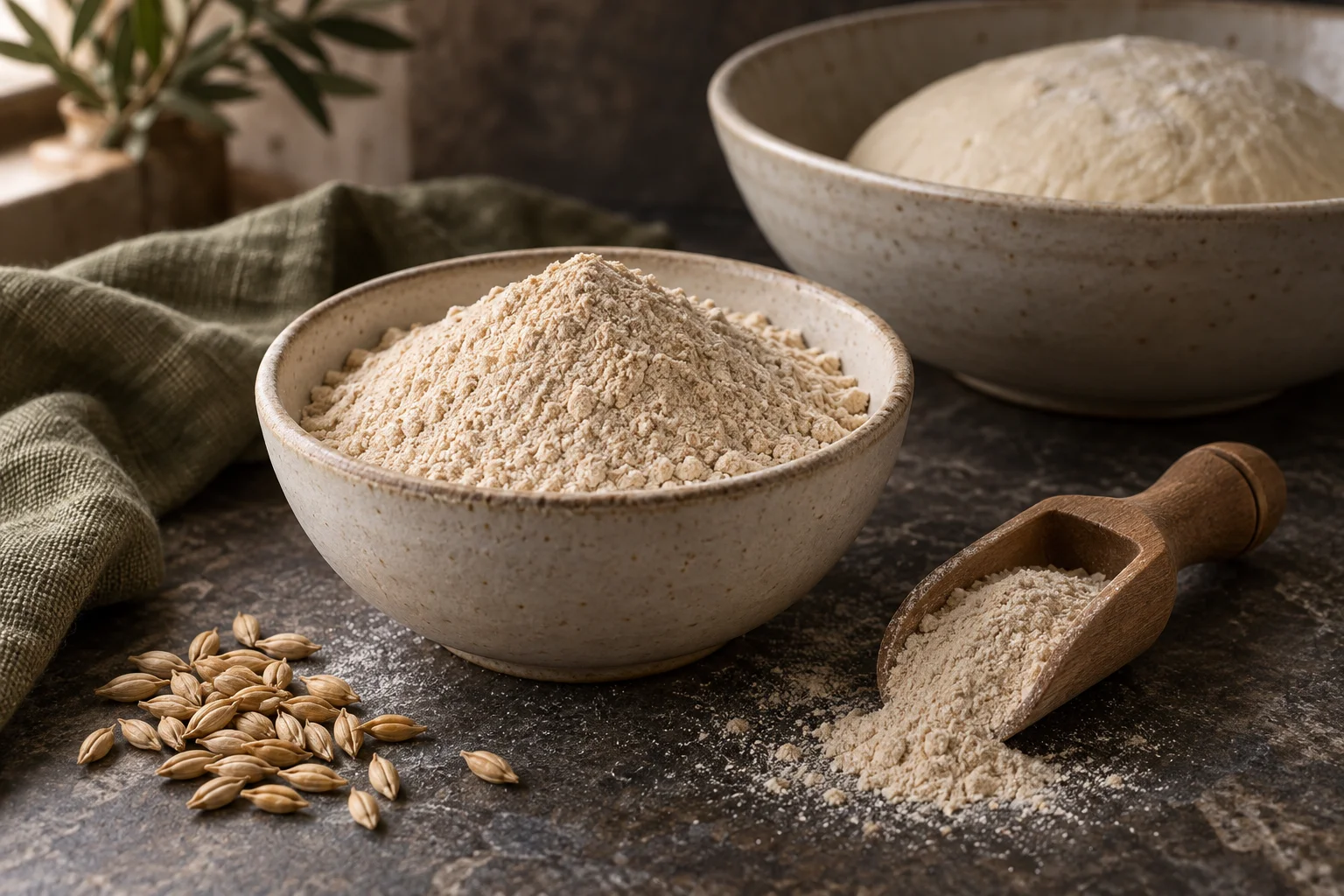
Diastatic malt acts on starch
Enzyme-active, or diastatic, malt retains functioning enzymes. These help break starch into smaller sugars that can become available to yeast, among other uses. This can change dough development. Malt is not yeast and does not replace it.
Too much diastatic malt can produce a sticky, unpleasantly gummy crumb. It is therefore not something to add by the spoonful to a slow dough on instinct. A longer fermentation does not automatically improve when malt is added either.
Non-diastatic malt has a different role
In non-diastatic malt, that enzyme activity has been deactivated. These products mainly contribute flavour and colour and can add sweetness. Active and inactive powders therefore cannot universally be substituted in equal amounts.
Malt syrup and malted milk powder are also distinct products. The latter may contain milk components and other ingredients. Read the complete description and ingredient list. Barley malt contains gluten and is not a gluten-free baking ingredient.
Use the instructions for the actual product
Use diastatic malt with a suitable recipe and follow the manufacturer’s dosage guidance. Different products cannot be assumed to have the same strength because a spoonful occupies the same volume. Check the flour packaging too: some flours already contain malted flour or added enzymes.
For example, if a suitable recipe calls for 0.2 percent, 500 grams of flour requires one gram of malt. Two percent would mean ten grams, ten times as much. This illustrates the calculation and does not prescribe a universal dose. Measuring amounts this small requires a sufficiently precise scale.
Identify the problem you want to solve
For pale pizza, baking temperature and preheating may be the more useful adjustments. For poor rise, check fermentation and yeast. With soft, difficult dough, investigate temperature, water and fermentation time before introducing another ingredient.
A dough that already works reliably is not deficient simply because it contains no malt. If you want to use a recipe containing malt, begin with the appropriate ingredients and process it specifies. You cannot reliably determine a powder’s enzyme activity from its appearance or smell alone.