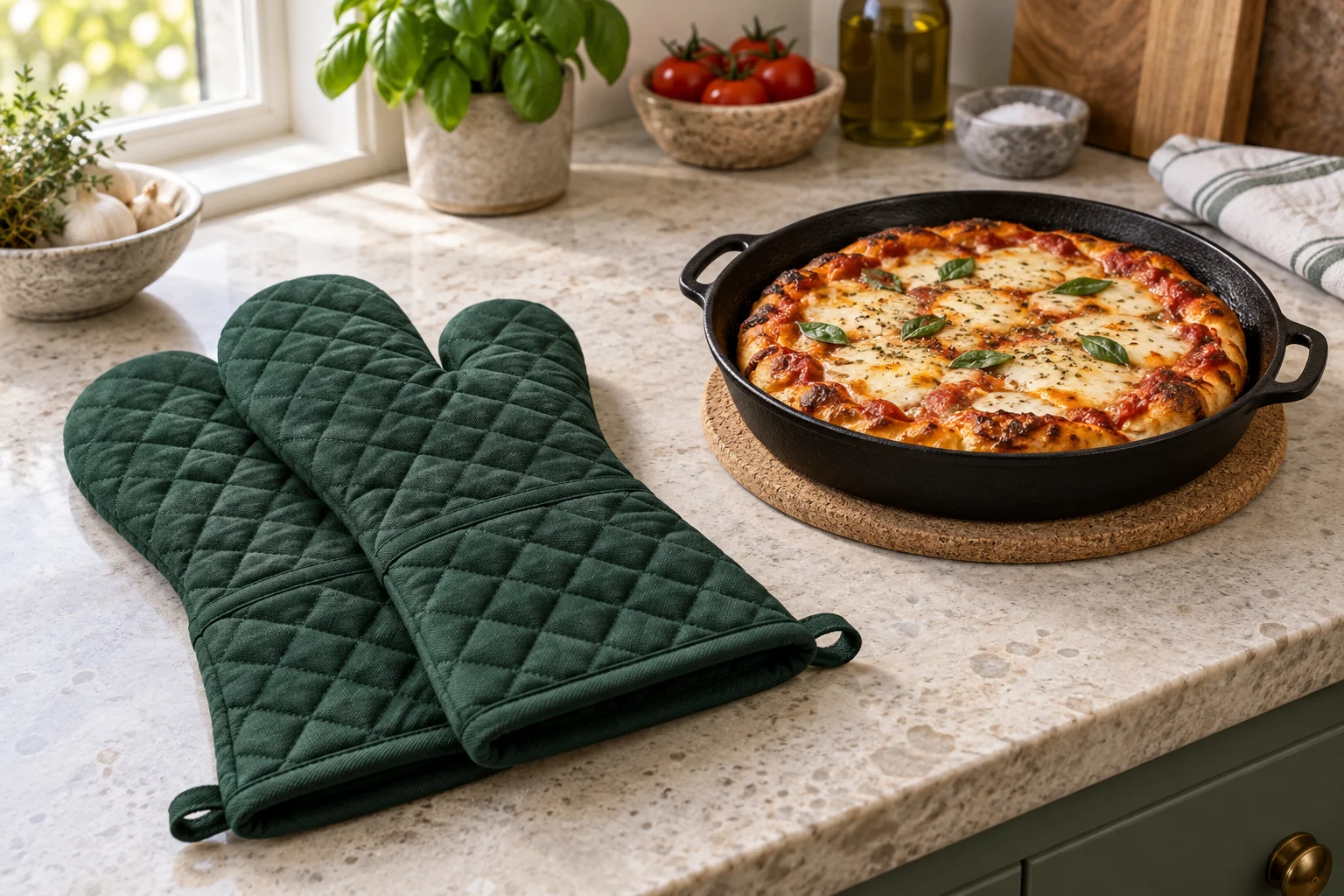
Temperature ratings come with conditions
Check the intended use and the conditions attached to the manufacturer's temperature rating. Contact with a hot pan differs from warm surrounding air. Contact duration matters too. A glove does not let you hold a hot component indefinitely.
For certain Premium Gloves, Weber specifies 250°C while expressly excluding prolonged contact and stating that they are not fireproof. This is not a universal limit for other products, but it illustrates why the accompanying conditions matter. The oven setting alone does not tell you a handle's actual temperature or how long you can hold it.
Check the fit with cold cookware
Practise gripping a cold pan while wearing the gloves. Can you securely grasp both intended handles without fabric slipping between your hand and the handle? Very thick or oversized gloves can reduce dexterity. Long cuffs help only if they stay in the intended position during the movement.
Allow for the weight of the filled cookware. A pizza in a heavy cast-iron pan handles differently from an empty tray. Use the cookware manufacturer's intended gripping points and both hands where required. Gloves do not replace a stable stance or adequate room in front of the oven.
Use them dry and undamaged
Before use, check for holes, open seams and damaged coatings. Do not use fabric or lined heat-protection gloves wet where the manufacturer excludes this. Weber expressly states that moisture reduces the insulation of the gloves described above. A wet tea towel is not a suitable improvised replacement.
Keep the gloves away from washing-up water and wet ingredients. If they become damp or damaged, interrupt the task and use suitable dry replacements. Dirty gripping surfaces can also be slippery. Clean and dry the material as instructed; an arbitrary hot machine wash is not suitable for every glove.
Prepare the resting place before lifting
Put a sufficiently large heat-resistant support in position before lifting the cookware. Keep the route short and clear. You should not have to find space, clear a table or open a door while holding a hot pan. Make sure other people know that the pan and its handles remain hot.
Use gloves only for their intended purpose. Do not reach directly into flames or grab a hot baking stone to move it during operation. Move pizza with suitable tools; rearrange the stone and oven only after they have cooled completely. Good protection supports a calm working sequence rather than removing its limits.