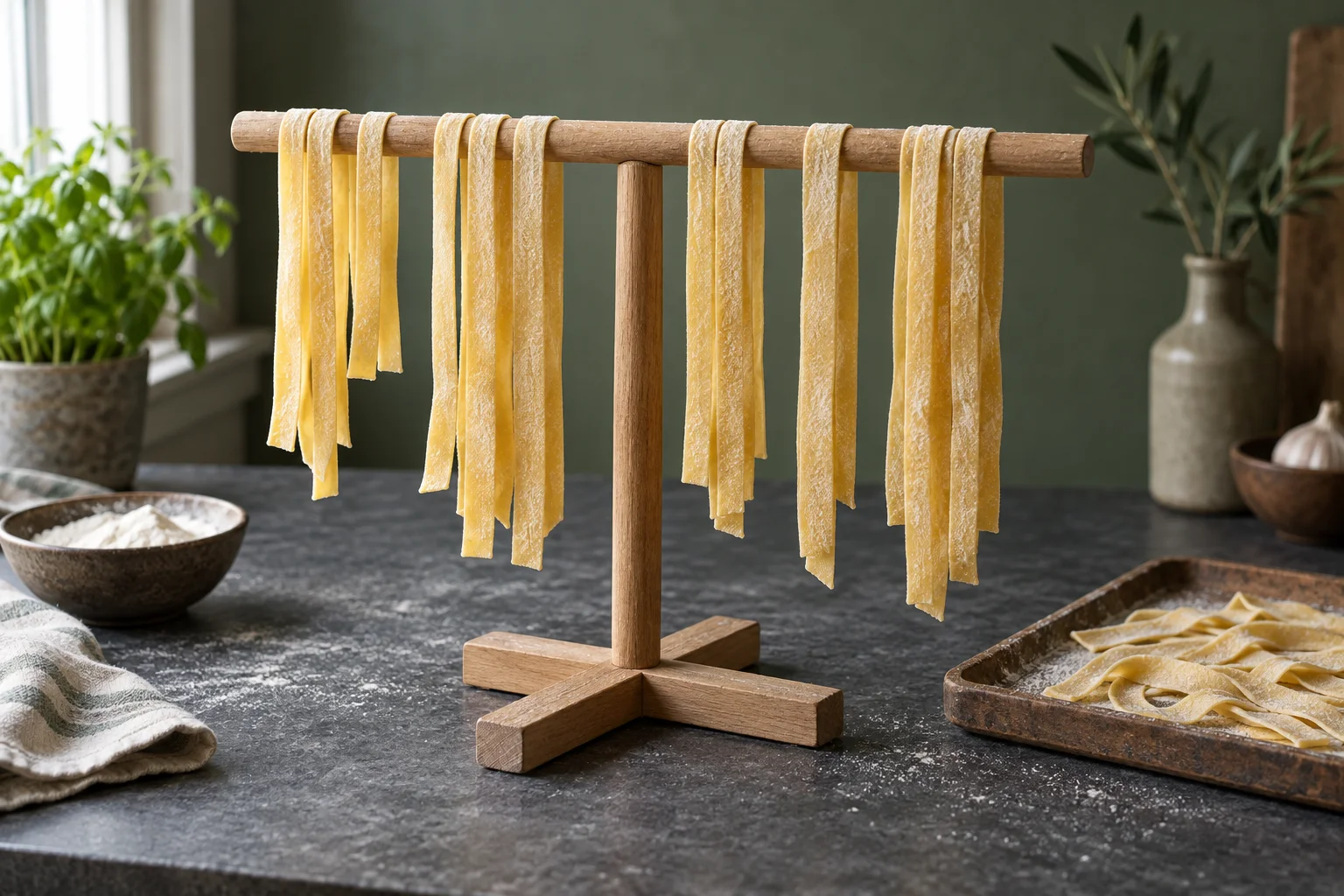
Decide why the pasta needs to dry
Drying can serve three different purposes when making pasta: reducing stickiness before cutting a sheet, keeping shaped noodles separate until cooking, or preserving a larger batch for later. These tasks need different methods. For the first two, a short period exposed to air may be enough. The noodles remain fresh, raw pasta. For longer storage, the whole production and storage process matters. A surface that feels dry does not by itself mean you can put the noodles in a jar in the kitchen cupboard for several weeks.
Before rolling, decide whether you are cooking today or saving portions for later. For today's meal, prepare the sauce and pot. For future meals, clear room for a tray in the freezer. This avoids having to find somewhere for a mass of sticky ribbons after cutting them. Plan for the actual quantity too: a small batch may fit on one tray, while twice as much requires more space. A dense pile saves room but makes both separation and even surface drying more difficult.
Dry a sheet only until it is ready to cut
Freshly rolled dough can cling to the knife, cutter attachment or itself. Lay the sheet flat on a clean, sparingly floured surface and check it after a few minutes. It should become less sticky while still bending without cracks. Turn it carefully if the underside remains noticeably damper. Lift as much of the sheet as possible instead of pulling at one corner. The precise waiting time depends on thickness and room conditions. A thin sheet in dry air may already be brittle while another remains soft.
Cut a small section first. If the strips separate cleanly, process the rest. If they stick together, a short further pause and a light dusting on the contact surfaces may help. If the sheet breaks when folded, more drying is the wrong response. Cut the usable part flat into strips or pieces without folding it again. Shorten the exposed pause for the next sheet. Surface drying is therefore guided by the dough's condition: you are seeking a surface that cuts well, not a fixed number of minutes on a timer.
Choose a rack, tray or mesh for the shape
Long ribbons can hang over a clean pasta rack designed for food contact. Space them side by side rather than draping a bundle over the same bar. Their ends should touch neither the table nor pasta hanging below them. Check that the rack is stable before loading it. A lightweight rack can tip if all the ribbons hang on one side first. Load it evenly and place it outside your immediate working path. Brief surface drying does not require a tall tower; the noodles mainly need to remain separated and easy to reach.
Short shapes such as cavatelli or orecchiette sit better on a suitable tray or food-drying mesh than on bars. Spread them in one layer where possible. On a solid tray, occasional gentle turning exposes the underside; suitable mesh allows air to reach it from below. The openings must not distort small shapes or let them fall through. For a few portions, a tray you already own is often enough. Avoid painted coat hangers, unsuitable furniture edges or used household cloths as improvised food surfaces. An easily cleaned surface also makes it easier to lift the pasta later.
Plan shape and working order together
A thin ribbon has different contact points from a loose coil or thick piece of dough. Folded or compressed shapes have touching surfaces that are difficult to reach from the outside. A nest may look dry on top while the inner turns still stick together. Loose nests are therefore a way to portion pasta for prompt cooking or freezing, not a shortcut to uniform drying for pantry storage. The contact point over a rack bar may also dry differently from the freely hanging ends. Check places where the noodles rest on something or touch each other, not just their visible tips.
When working with several pieces of dough, take each through to its finished shape in turn. Keep the others covered while rolling and cutting one portion. Cook finished ribbons promptly or move portions to the freezer. The first portion then avoids sitting exposed in the kitchen throughout the rest of the session. Filled pasta needs different handling: surface drying does not preserve the ricotta, vegetables or meat inside. Prepare ravioli for prompt cooking, or refrigerate or freeze them as appropriate to the recipe. A hanging rack is not a useful resting place for these filled pieces.
Room conditions explain different waiting times
A fixed statement such as ten minutes always being enough overlooks several influences. A thicker sheet contains more dough over the same area than a very thin one. Its surface dries more slowly in humid air than in dry air. Air movement and temperature also affect the process. A steaming pot beside the pasta creates different conditions from a clear worktop farther away. Observe the portion in front of you and shorten or extend the brief surface-drying stage according to its condition. The clock reminds you to check; it cannot replace looking at the sheet.
Arrange the trays so you can identify the first portion you processed. With several trays, place them in working order. This prevents a newly cut batch being cooked first while the oldest sits unnoticed. Increase the available area when many damp pieces touch, instead of leaving the whole pile out longer. A fan aimed directly at the pasta is a poor substitute: it can dry the outside unevenly and stir up dust. A manageable batch with enough tray space is easier to control than a large quantity exposed to an improvised stream of air.
Egg pasta remains raw food after surface drying
Dough containing flour and raw egg needs a short, planned working session. Do not leave egg pasta exposed in the kitchen overnight. At ordinary room temperature, plan for no more than about two hours in total outside refrigeration, and less in warm conditions. Include mixing, resting and shaping, not just time on the rack. A half-hour dough rest does not therefore start a fresh allowance for unlimited drying afterwards. If you need longer, work in smaller batches and refrigerate waiting portions under cover. Do not taste raw dough even when the outside already feels dry.
For longer pauses, a suitable closed container in the refrigerator is better than an open plate beside the cooker. Keep the refrigerator sufficiently cold: general guidance is no warmer than 7 °C, preferably below 5 °C, unless an ingredient requires a lower temperature. Refrigeration does not turn fresh pasta into a supply that keeps for weeks. Use it promptly or freeze it while fresh. Food with an unusual smell, mould or a doubtful storage history cannot reliably be made usable again by longer cooking. Freezing and heating are not ways to undo an unsuccessful extended period at room temperature.
Why drying for pantry storage is a different task
Removing enough water from food makes it harder for many microorganisms to grow. Drying does not automatically kill microbes, however. Even eggless flour-and-water dough contains raw flour and must later be cooked thoroughly. For dried pasta that keeps well, its ingredients, shape, drying process and subsequent packaging must work together. Commercial dried pasta is made through controlled processes. Its shelf life cannot therefore be inferred from the appearance of a homemade batch. A hardened tip initially tells you only that this thin area has lost water; thicker or hidden sections may behave differently.
There are methods for fully drying simple eggless dough. Do not transfer their timings and storage advice to egg pasta, filled noodles or dough containing spinach purée. An additional ingredient changes the starting conditions. For the home preparation described here, portioned freezing is the straightforward way to put pasta aside. You need neither infer weeks of shelf life from a snap test nor keep a suitable room available for complete air drying. If your specific aim is dried pantry pasta, use a reliable method intended for that exact dough and process rather than combining several general tips.
Ovens and dehydrators need an appropriate method
A warm oven can set the outside quickly while moisture remains inside. Higher heat is therefore not automatically better drying. A dehydrator must also suit the particular task: an appropriate method for that pasta, even loading and the intended storage afterwards all matter. A programme for apple rings cannot be transferred merely because both foods need to lose water. Nor does one noodle snapping after a short time prove that every thicker section has dried sufficiently. For fresh noodles intended for today's meal, this extra appliance stage is normally unnecessary.
Do not use a hot oven surface as a resting place during brief surface drying, or put a plastic tray into a warm oven as an experiment. Always check what an accessory is designed to do. If you already own a dehydrator, first establish whether its manufacturer describes a suitable use for the dough you have chosen. Without an appropriate method, cooking or freezing remains the simpler option for this batch. A general temperature without details of dough, shape and storage would not be a complete set of instructions. The appliance becomes useful only when these steps fit together and the pasta is stored accordingly.
Freeze fresh pasta separately instead of leaving it out
For future meals, prepare shaped noodles for freezing as soon as they separate adequately. They do not have to become fully dry first. Arrange short shapes with space between them on a freezer-safe tray. Lay long ribbons loosely in manageable portions without compressing them into tight balls. Put the tray into the freezer promptly. Once the pieces are frozen firm, transfer them to a suitable freezer container or bag. Close the packaging and note the shape, quantity and date. Later, you will not need to soften the whole batch simply to break off a portion.
As you make the pasta, plan the portions you will actually want to cook. Two smaller packs are easier to use selectively than one large, compressed bag. Protect frozen ribbons from the weight of heavy containers so they do not break. A flat, sufficiently sturdy container may work better than a full bag squeezed between other supplies. The time needed to freeze solid depends on quantity, shape and appliance; a fixed number of minutes is of little help. What matters is that the pieces are firm before transfer and remain frozen afterwards. Surface drying is only an aid to preventing sticking in this process.
Cook according to thickness and condition
Freshly cut noodles that have briefly dried on the surface can go directly into boiling salted water. Add shaped frozen pasta straight from the freezer too, instead of softening it on the worktop first. Move it gently at the start to help the pieces separate. The cooking time depends on shape and thickness and can change after drying or freezing. Check a thicker section rather than rigidly following the time for a different batch. There should be no raw, floury centre. For filled pasta, the filling must also become fully hot or cook through as required by the recipe.
Have the sauce ready before cooking. If the pasta will finish in a hot sauce, allow for that stage; pasta served with cold pesto should already be fully cooked. Reserve some cooking water and add it to the sauce in small amounts if needed. If noodles have stuck together firmly on the tray, avoid wrenching them apart. Gently separate contact points while still soft, and for the next batch plan to cut sooner, lay the noodles more loosely or work in smaller portions. Consistent handling and good preparation usually address sticking more directly than simply extending every drying time.