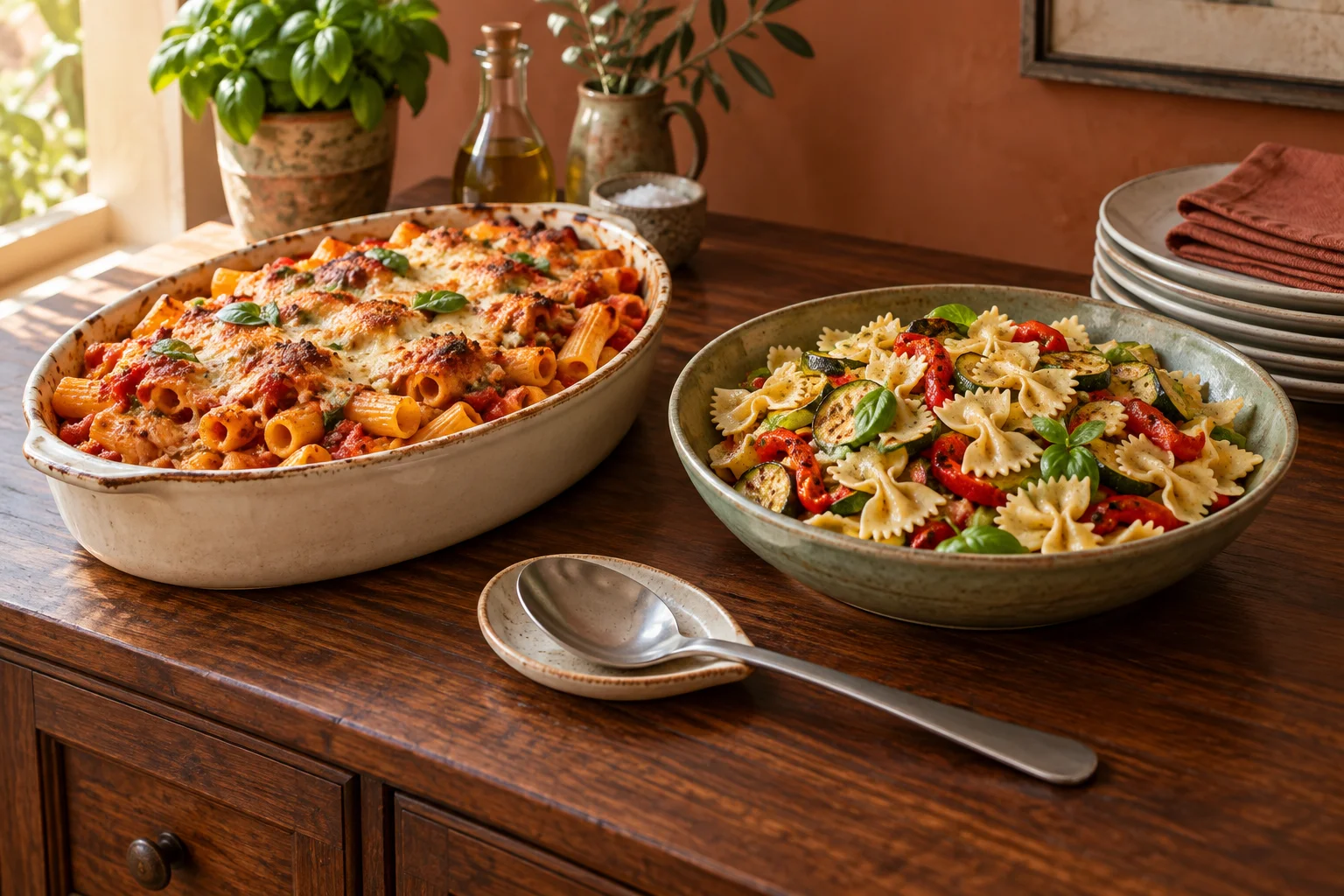
Choose between freshly cooked pasta, a bake and pasta salad
Three basic formats require different arrangements. Freshly cooked pasta is combined with sauce in batches and served promptly. Baked pasta comes from a fully cooked dish and can be divided into smaller portions. Pasta salad is cooled adequately after cooking, combined with its other ingredients and offered cold. Decide which format will form the centre of your buffet first. It determines pot size, oven use, refrigerator space and the jobs needed shortly before eating. A buffet combining several formats is possible, but each needs an appropriate process. Saying that everything can be prepared ahead would be too vague to organise the meal.
For a small celebration, one warm pasta with tomato sauce and an appropriately chilled pasta salad may suffice. If you want to spend less of the meal at the stove, a planned baked dish may suit you better. It does occupy the oven, however, which might also be needed for pizza or other food. Establish which dishes genuinely need to be ready simultaneously. Fresh carbonara or a delicate cheese emulsion has different requirements from a baked dish developed for that method. Do not treat such sauces as alternatives that can be held hot indefinitely. Choose dishes for the intended service and add variations only when their preparation genuinely fits the schedule.
Pair shapes and sauces for easy portions
Short shapes such as penne, fusilli or rigatoni are usually straightforward to serve with a suitable large spoon. Long pasta can also work but requires appropriate utensils and more attention when portioning. If guests stand while eating, an easily collected short shape is often more convenient than long strands clinging together. With filled pasta, plan for the filling, cooking and gentle serving. A large ladle can damage delicate ravioli, and floating to the surface does not establish adequate cooking for every filling. Use the complete suitable recipe and an appropriate way of serving portions.
Match the sauce to both shape and buffet. A tomato-based option, a suitable vegetable dish and a pasta bake can play different roles on the menu. Three very similar cream sauces provide little extra variety while requiring separate containers and attention. If serving meat, a clearly identified separate dish may be useful instead of adding the same meat topping to everything. Prepare sauces according to their recipes and observe their individual storage requirements. A vegan sauce does not automatically make a vegan meal when the pasta contains egg or dairy cheese is added at the end. Plan the complete combination, including finishing ingredients and serving arrangements.
Distinguish dry weight from the finished portion
For dried pasta, dry weight is a clear basis for calculation. After cooking, the pasta contains absorbed water; the finished quantity depends on shape, product and cooking. Sauce, vegetables and cheese add further weight to the complete portion. Do not treat these weights as equivalent. For fresh pasta or lasagne sheets, use the reference quantity in the actual recipe too. Specifying a kilogram of pasta in an order or arrangement is incomplete unless everyone knows whether it means dried goods, fresh noodles, cooked pasta or the finished dish. Preserve that distinction in the shopping list as well.
Here is a worked example: six guests want a portion for which, given your menu, you allow 100 grams of dried pasta each; six others prefer a smaller portion using 70 grams each. That totals 600 plus 420, or 1020 grams of dried pasta. These are assumptions for the example, not fixed portion standards. Dividing the starting amount 60:40 between two suitable dishes gives 612 and 408 grams. Add a reserve explicitly if needed. Without a further reserve, buying three 500-gram packages would leave 480 grams dry after the assumed use. Rounding up to whole packages does not mean the surplus needs cooking too.
Scale recipes and check equipment together
Derive sauce and other ingredients from the planned recipe portions. If a recipe makes four comparable portions and you want six, the initial quantity factor is 1.5. Calculate multiple dishes individually, then combine shared ingredients. A different pasta shape or sauce water content may require a change of method, however. Simply increasing every number is not the whole job, particularly with baked pasta: a dish filled twice as deeply does not automatically need the same baking time as two shallower dishes. Use suitable pan sizes and a recipe method that reliably cooks the entire dish through.
Check whether pots, cooking zones and colanders can handle the quantities safely. A large pot of water and pasta is heavy and needs a clear, short route for draining. Divide production into manageable batches if your equipment is too small for the total. Water quantity and usable fill level depend on the product, method and pot, rather than a desire to finish everything in one batch. Allow space for mixing with sauce too. A pot that just holds the cooked pasta may not permit safe stirring after vegetables are added. Include bowls and resting surfaces in the quantity plan before shopping.
Chill prepared components appropriately
Sauce, cut ingredients and, where suitable, pasta salad can move some work to before guests arrive. Follow each complete method. Cooked ingredients for a cold salad should cool adequately before raw or other cold components are added. Spread larger amounts in suitable shallow containers and arrange prompt cooling. A large warm pot in an already full refrigerator does not cool as reliably as manageable smaller quantities with adequate air circulation. Germany's Federal Institute for Risk Assessment, the BfR, recommends bringing heated food below 7°C within a few hours. Cooling completely at room temperature is not a necessary intermediate stage.
Barilla describes spreading pasta flat and using a light coating of oil to reduce sticking when preparing pasta salad. Whether oil suits your salad, and how much to use, depends on its recipe; it is neither a cooling method nor protection against spoilage. Do not apply a quoted brief cooling time to arbitrarily large quantities either. The pasta must actually become cold enough and remain appropriately chilled afterwards. For perishable food, the BfR recommends a refrigerator temperature no higher than 7°C, preferably below 5°C. Label prepared containers with their contents and preparation time to avoid confusing batches later. Prepare ahead only what your refrigeration can actually accommodate.
Serve freshly cooked pasta in suitable batches
When cooking fresh, size batches for the expected demand at the next serving. Have a suitable quantity of cooked sauce ready, then finish the pasta in it or combine the two immediately before serving, as the chosen method requires. This avoids placing a large quantity of plain pasta that has already clumped on the buffet while guests search for an appropriate sauce. Separate sauce remains possible when choice is the priority. The plain pasta then also needs suitable temperature control and a short, attended serving process. A large unheated bowl of cooked noodles is not a complete solution for a prolonged meal.
Plan cooking time from the package, recipe and actual quantity. Do not routinely shorten it by several minutes simply because the pasta will later sit at a buffet. A dish that finishes cooking in the oven or sauce needs the preliminary stage specified for that method. Pasta and sauce can lose or absorb further liquid during serving; where recipes permit, have a little appropriate hot liquid available for careful adjustment. Do not indiscriminately pour water or cold cream into an almost empty serving bowl. Adjust consistency when preparing the next fresh batch instead. This keeps ingredient quantities, temperature and flavour understandable across the portions.
Assign serving positions and dietary options clearly
Arrange the buffet so guests first take a plate and can easily reach the dishes. Give each dish its own suitable serving utensil and rest. Label and separate extra cheese, herbs or spicy additions where the dishes allow those finishes. A large mound of cheese directly above the only pasta pot makes both choice and clean separation harder. Put drinks and dirty dishes elsewhere. Hot pans need stable positions on suitable supports. Whoever brings replenishments needs clear access without reaching between closely gathered guests while holding a hot container.
Label dishes according to their actual ingredients. Depending on its recipe, pesto may contain dairy or nuts, for example; its green colour reveals little about that. The pasta itself may contain egg. For vegetarian dishes, cheese choice also matters, including whether animal rennet was used. Discuss allergies and other requirements with the affected guests beforehand. A separate sign or serving utensil cannot prevent every accidental contact at an open buffet. Where a separate portion has been agreed, prepare and hand it over with the separation actually required. Keep product information and recipes available for questions instead of inferring characteristics solely from the dish's name.
Maintain hot and cold dishes during serving
For hot-held food, the BfR recommends at least 60°C throughout. Food temperature is what matters, rather than the warming appliance's display or the temperature of a water bath beneath it. Use suitable equipment according to its instructions and an appropriate clean food probe. An appliance designed to hold food hot is not automatically suitable for heating cold food quickly and safely. For thorough cooking and reheating, the BfR recommends at least 70°C for two minutes throughout. A browned surface on a deep baking dish therefore does not establish that its entire contents have been adequately heated.
Replenish food in clean containers instead of adding fresh supplies to older leftovers. Start with a manageable amount of cold pasta salad and keep the remaining supply sufficiently chilled. Served cold does not mean it can stand unrefrigerated for hours; a version without mayonnaise still needs appropriate storage. Pasta deserves particular attention in this planning because of its starch content: the BfR identifies cooked noodles as a possible food associated with Bacillus cereus. Unsuitable storage can allow heat-stable toxins to form. Vigorous boiling later cannot reliably reverse that history. Small batches and controlled temperatures prevent replenishment from merely extending an uncertain period on display.
Finish according to demand and separate leftovers
Watch which dishes are popular and check towards the end before preparing another batch. Dry pasta does not need to be cooked simply because it was purchased. Unopened products, prepared refrigerated sauce and food already offered at the buffet are different kinds of leftovers. Their contents and previous handling determine further use. Packing up the buffet does not start a fresh storage period. Returned plate leftovers or visibly contaminated food should not go back into a storage container either. Arrange suitable clean containers and refrigerator space before the celebration if some prepared food is likely to remain.
Cool cooked food you intend to keep promptly in shallow portions, then maintain refrigeration. Do not combine warm leftovers into a large dense pot intended to cool slowly overnight. If safe temperature handling is uncertain, further storage is not sensible reuse. For the next comparable celebration, record the dishes actually eaten and the starting amounts of dried pasta. A heavy container of sauce alone reveals little about whether too many noodles were cooked. Perhaps one variation was less popular, or an additional pizza satisfied the group sooner. Adjust the distribution accordingly. These details make a manageable pasta buffet easier to plan than a menu that keeps growing.