What a pellet oven asks of its operator
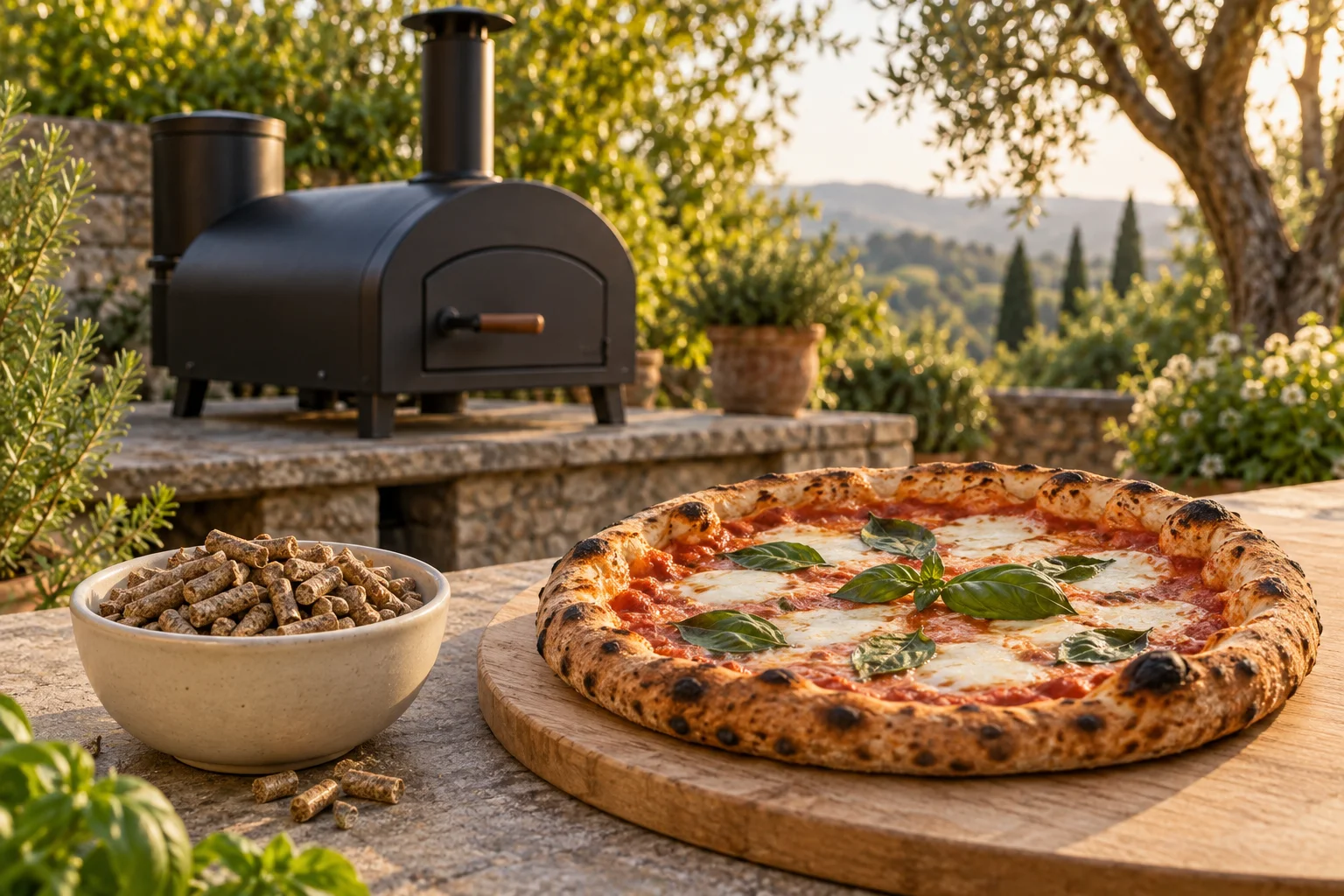
In a compact pellet pizza oven, fuel often drops from a hopper into the burning area. This differs from an electrically controlled pellet grill with an auger and temperature controller. A storage hopper alone does not maintain an arbitrary target temperature. Combustion, airflow and fuel delivery must work together as the oven was designed. The Ooni Fyra 12 is an example of an oven supplied through a pellet hopper. Its instructions describe gradually topping up the fuel during use. Plan for someone to watch the oven, fire and pizza, rather than filling the container once and spending an extended period at the dining table.
That can work well for an evening when cooking is part of the enjoyment. You prepare a pizza, watch the oven and serve slices in succession. If you want to manage several other dishes at the same time, the additional refuelling rhythm is an important buying consideration. Compare more than maximum temperature. Ask how you can see the fuel level, how easily you can reach the hopper and how the oven is supplied between pizzas. A modest cooking area may suit this working method. The largest available oven is not automatically the easiest to operate, particularly when one person is shaping dough and managing the fire.
Buy only suitable fuel
Use pellets specified by the oven manufacturer for that particular appliance and for cooking food. The Fyra manual calls for pellets made entirely from hardwood. Ooni describes its corresponding fuel pellets as food-safe. This does not approve every bag labelled wood pellets. Heating pellets are sold for a different purpose. Their colour, diameter or familiar woody smell does not establish that they suit your pizza oven. Check the fuel description together with the appliance instructions before buying a large quantity. Where information is missing, clarification from the manufacturer is more useful than an assumption based on a lower price per kilogram.
The permitted fuel format matters too. Do not fill a pellet burner with logs, charcoal or barbecue briquettes without explicit approval. These materials are not interchangeable simply because they burn. Fuel delivery and air passages are designed for a particular use. Begin with a quantity suited to your actual pizza evenings and dry storage space. A large stock saves nothing if some of it becomes damp or proves unsuitable. Flavour claims associated with a wood species are not a substitute for compatibility either. The first requirement remains clean, controlled combustion in the appliance for which the fuel was intended, rather than selecting a dramatic-sounding blend.
Keep pellets dry and the working supply protected
Pellets need to stay dry. For the Fyra, Ooni recommends an airtight storage container to prevent the fuel taking up moisture. Keep the sealed bag or container in a suitable dry location. A draughty garden shed is not necessarily dry just because rain does not fall directly inside. Check an opened supply before the next session. Swollen or crumbling pellets and noticeable moisture are reasons not to pour that fuel into a hot oven automatically. Establish whether it remains usable according to the manufacturer and replace unsuitable fuel. Do not try to compensate for poor burning by continually increasing the quantity.
For the cooking session, set out a manageable working supply away from the hot oven. The storage container does not belong on the oven body, beside the chimney or immediately next to a hot opening. The scoop used for refilling must also suit its purpose. Keep fuel separate from food: do not store pellets among dough balls, cheese and the cutting board. If another person is helping, agree who refills the oven and who moves the pizza. This makes reaching for fuel predictable, without the other person simultaneously working in front of the door or behind the table. A clear division of jobs matters more than having many tools within reach.
Check the site and assembly before lighting
The portable pellet ovens discussed here are used outdoors. An open window does not turn a garage or kitchen into a suitable outdoor location. The Fyra manual requires a stable, level, non-combustible support and separation from combustible materials. It also excludes strong or gusty wind. Follow the particular siting requirements for your oven and the local conditions. Alongside its external dimensions, check working height, space for the peel and door, and access to the hopper. Refilling should not require reaching over a hot opening or taking an awkward route behind an unstable table. Work through these movements while the appliance is cold.
Assemble the appliance completely as instructed and check its components before there is a fire inside. The grate, fuel tray, stone, chimney and any flame guide have different jobs. A forgotten part should not be installed during hot operation. For the Fyra, the chimney cap is removed for lighting and the specified vent is opened. This is a model-specific instruction, not a reason to adjust other ovens in the same way. Give the removed cap a fixed storage position. Keep children and animals out of the operating area and plan the evening so the hot oven remains supervised until it has cooled safely.
Start gradually and watch the fuel delivery
Begin with the amount of fuel and type of firelighter specified in the manual. The Fyra instructions give approximately 150 grams of hardwood pellets as the starting quantity and require these to become properly established before gradually filling the hopper. Do not transfer that quantity to a different burner. Spirits, petrol and improvised liquid accelerants do not belong in this process. A first attempt that has not caught properly is no reason to add liquid to a warm fuel tray. Use the manufacturer's procedure for problems and do not reach into hot components or parts that may still contain glowing fuel.
Continue refilling in the specified small stages. Do not force pellets down or load the container beyond its intended limit. Watch the flame and fuel delivery rather than looking only at the quantity visible near the top. Plenty of pellets in the hopper does not establish that combustion below is working well. Conversely, letting the supply run out during a pizza is avoidable when you check it between bakes. A manufacturer's approximate burn duration is guidance for that appliance, not permission to leave it unattended for exactly that length of time. Treat refilling as part of the cooking sequence rather than a separate task to remember only when the flame fades.
Assess airflow and stone temperature together
A pellet fire needs its intended air path. According to the Fyra instructions, the door stays closed during use except when food is being inserted or removed; the chimney vent remains open for the described cooking method. Other designs can have different requirements. Do not adjust several dampers at once by following an unrelated online guide. After opening the door to work, return it to the position specified for that step. Fuel delivery alone does not explain temperature. Airflow, wind, appliance condition and heat stored in the stone all influence what happens when the next pizza is launched into the oven.
Measure the stone surface at the intended cooking position with a suitable infrared thermometer. High air temperature or a visible flame does not show how much heat the floor can transfer to the pizza. Respect the measuring distance, material setting and spot size. Keep the thermometer itself outside heat beyond its operating limits. Use the requirements of your recipe and oven rather than trying to bake every pizza at the highest possible temperature. If the base stays pale while the rim darkens, consider stone heat, dough thickness and flame behaviour among the possible causes. Simply adding more pellets does not reliably correct that balance.
Organise a steady sequence of pizzas
Prepare sauce and toppings before cooking starts and set out only small working quantities of ingredients that need refrigeration. Keep dough balls protected according to their recipe. Open and top the pizza that will go into the oven next. Leaving several finished raw pizzas waiting on peels creates more opportunities for sticking and a longer handling sequence. Before launching, check that the pizza moves freely on a clean, dry peel that has not heated up. If it sticks, address the problem at the work surface. A forceful jerk at the hot oven opening is not a useful substitute for releasing it beforehand.
Once the pizza is inside, watch the bake and turn it only when the base has enough structure. The right moment depends on the pizza and heat, rather than a universally valid number of seconds. Between pizzas, check the fuel, flame and stone again. That brief interval can also be used to cut and serve the finished pizza. If you are working alone, start with a straightforward topping selection. With two people, assign one to the oven and one to shaping and topping. Several pairs of hands working around the oven at the same time can make a small workspace difficult to manage.
Smoke and deposits have a cause
If the flame is unusually weak, smoke becomes excessive or fuel delivery is uneven, first check the operating conditions specified for the appliance. Damp fuel, overfilling or restricted airflow can affect combustion. For the Fyra, Ooni highlights dry pellets, avoiding an overloaded hopper and keeping the chimney vent open. The manufacturer also describes dark sticky deposits around the hopper or chimney as a possible sign of incomplete combustion. That calls for investigating the cause and carrying out the prescribed cleaning. It is not a reason to dismiss such deposits in every oven or continue heating by adding yet more fuel.
Interrupt cooking when a fault occurs and follow the instructions. Do not dismantle hot feed components or improvise by poking into the fuel path. Maintenance and cleaning follow complete cooling. Remove ash only then and collect it in a suitable metal container with a lid, on a non-combustible support away from combustible items. Dispose of fully cold residues according to local requirements. Exterior surfaces, the interior and the stone need different care. Permission to wipe the housing with a damp cloth does not automatically permit soaking the stone. Check air passages and components again while cold before the next session begins.
Compare consumption and effort realistically
For a few of your own cooking sessions, record total pellet use, operating time and the number of pizzas baked. Use a consistent weighing method and include preheating and pauses. One particularly quick pizza cannot establish a meaningful consumption figure for an entire evening. As a purely hypothetical calculation, if a session uses 1.2 kilograms of pellets and your actual purchase price is 2 euros per kilogram, that fuel costs 2.40 euros. These are invented arithmetic inputs for illustration, not a Fyra measurement or a general fuel-consumption or market-price claim. Substitute quantities and prices that apply to your own use.
Allow for dry storage, cleaning and complete cooling when planning the evening too. A supply of pellets does not remove the need for maintenance, and an extinguished flame does not mean the oven can immediately be transported. If you enjoy tending a small fire and serving pizzas in succession, this design may suit you well. If your priority is a more uniform routine without refilling, compare other oven types approved for your intended location. The choice follows your site and working habits. An exceptionally high temperature specification or an impressive flame photograph does not answer either of those practical questions.