Flour weight is the reference
For 500 grams of flour, two percent salt is ten grams, 2.5 percent is 12.5 grams and three percent is 15 grams. Multiply flour weight by the percentage and divide by 100. Water, yeast and oil are not part of that reference weight.
Include flour in a preferment. If a poolish contains 100 grams of flour and you add another 400 grams to the final dough, the total remains 500 grams. At 2.5 percent, you need 12.5 grams of salt altogether. Subtract any salt already present in the preferment.
Salt affects more than flavour
Salt influences dough structure and slows yeast activity. A lower-salt batch can therefore develop differently with the same yeast quantity and temperature. Simply removing half the salt while treating every timing as unchanged may not work well.
Ooni suggests roughly 2.5 to three percent for Neapolitan pizza. This is not compulsory for every style or dietary advice. Begin with a complete recipe and also consider salt from cheese, olives, capers or ham when balancing the finished toppings.
Fine salt incorporates more evenly
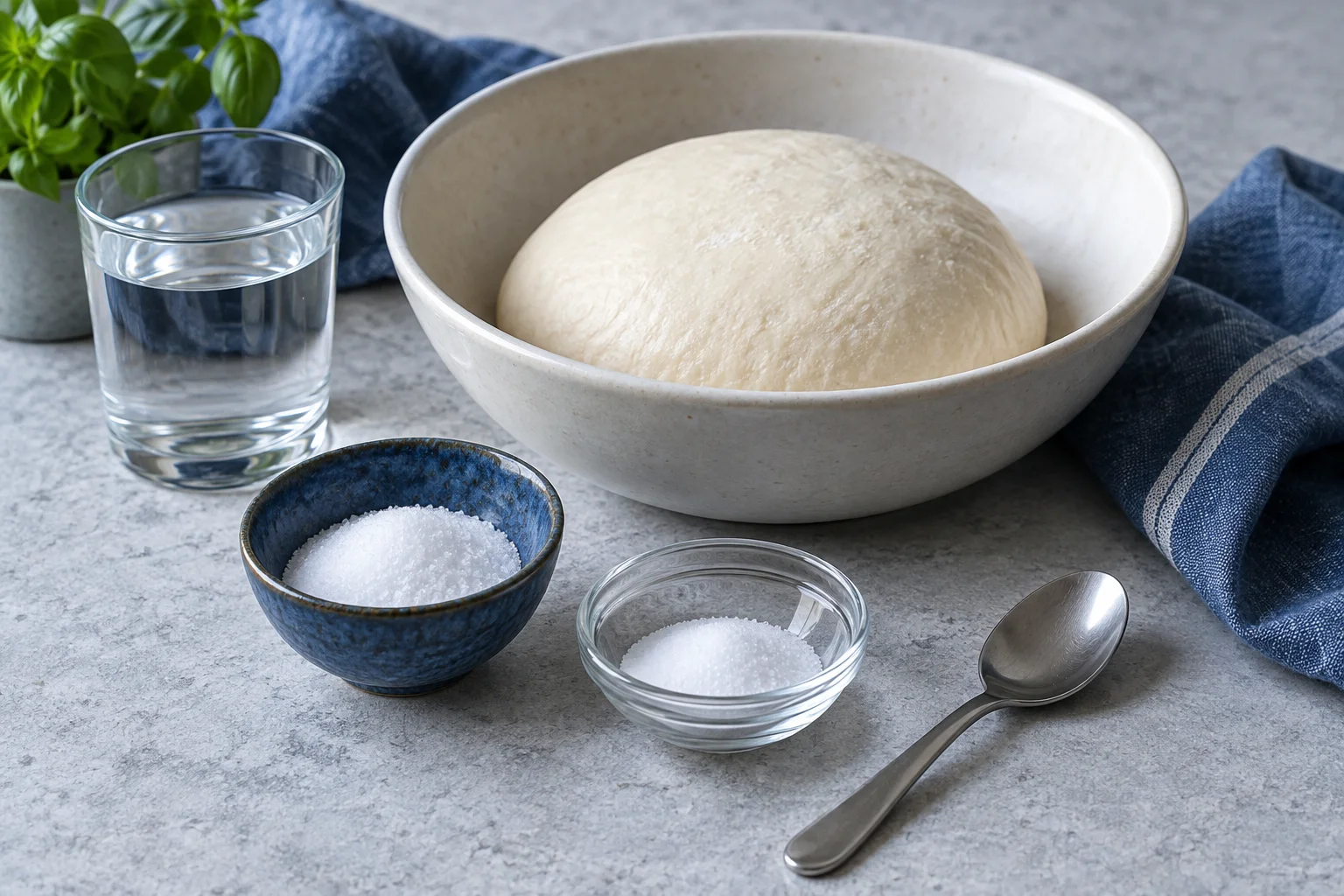
Fine table or sea salt is practical for dough because it distributes and dissolves more easily than very coarse crystals. Expensive flakes offer no essential advantage once incorporated throughout the mixture. The important point is to avoid leaving undissolved grains in the finished dough.
Weigh the salt. A teaspoon of fine salt and a teaspoon of loosely packed flakes can contain quite different masses. If the amount should stay consistent in the next batch, weight is more dependable than the apparent volume on a spoon.
Choose the mixing order and changes deliberately
Follow your recipe’s mixing sequence. Salt is distributed throughout the dough; leaving yeast in a highly concentrated salt mixture is different from incorporating both ingredients during normal kneading. Brief contact does not automatically mean all the yeast has died.
If you want to reduce salt, initially change only that percentage and watch the dough’s condition during fermentation. Record both the salt and flour weights. You can then tell whether a flavour difference came from salt or whether yeast, temperature and baking were changed at the same time.