Follow the limit on the packaging
Baking parchment is designed for particular baking conditions. Toppits, for example, rates its baking parchment and precut sheets for temperatures up to 220°C. That is a product specification, not permission to use every paper the same way. If your chosen baking temperature is higher, this product does not suit the job. A very short bake does not cancel its stated limit.
Check the oven instructions too. Paper may be suitable for a particular temperature yet still be prohibited on the intended baking surface. Ooni forbids paper directly on the stone in the Volt 2. A low setting alone therefore does not make that combination acceptable. Instructions for bread inside a covered dish cannot simply be applied to pizza directly on the stone either.
Prepare it on a suitable tray
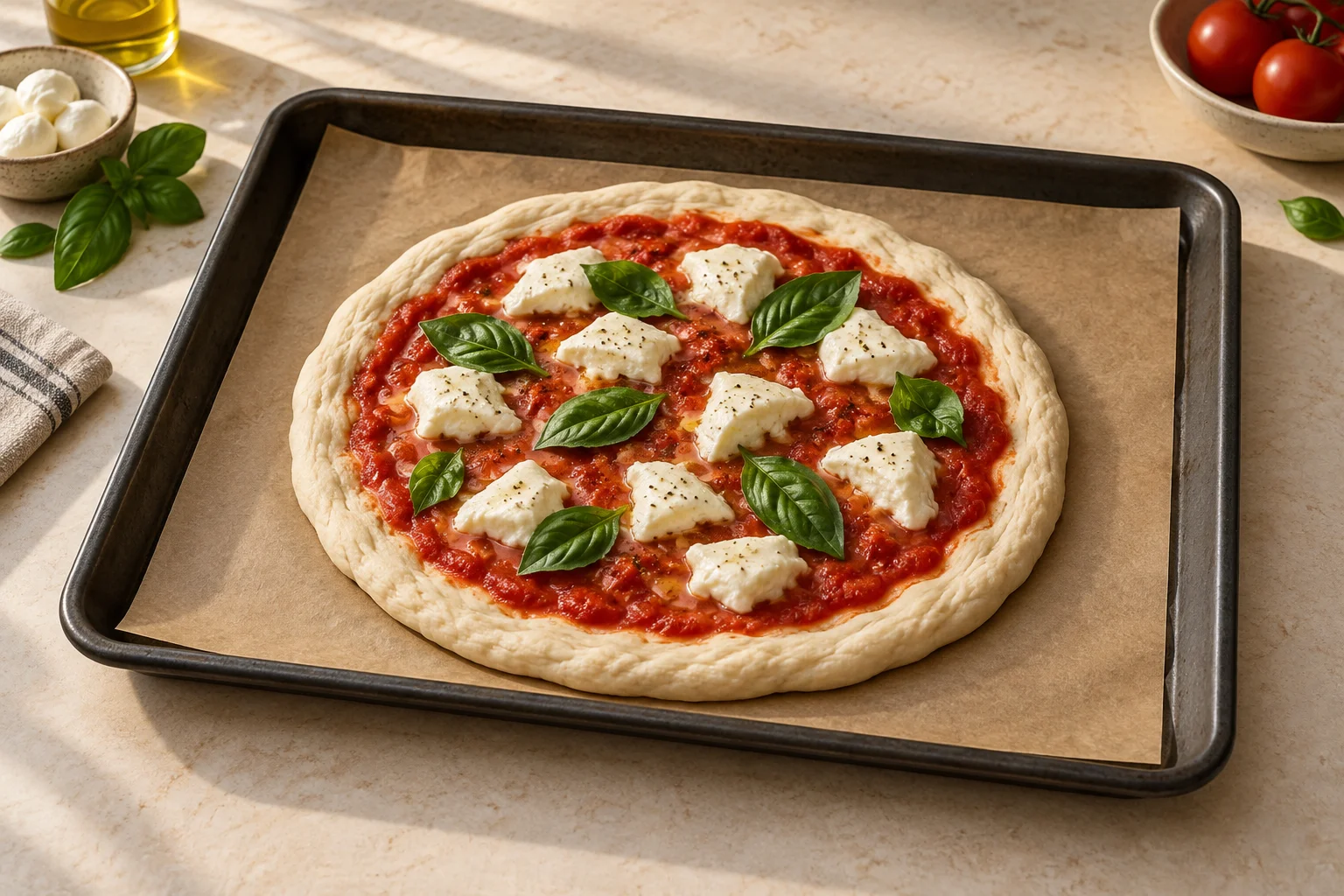
If both paper and appliance permit the use, trim the sheet so it sits inside the tray without loose edges hanging over it. Place the dough on it; do not preheat an empty, loose sheet of paper. Curling corners can reach heating elements, particularly in a fan oven. The paper must not touch heating elements or open flames and should not sit under an operating grill or broiler.
Rest the tray on a stable work surface while preparing the pizza. A heavy topped pizza is difficult to carry unsupported on thin paper. Use the tray or a suitable peel to move it, not the paper as a carrying handle. Avoid leaving wet, topped dough waiting unnecessarily: the lining cannot solve an excessively wet topping or an overloaded base.
Launch differently for high heat
When baking directly on a hot surface approved for the purpose, you can prepare the pizza on a suitable peel. A little appropriate dusting flour helps it slide. Check that it moves with a small movement before launching; release any stuck areas while you are still at the work surface. Pouring more flour over a stuck, overloaded pizza often fails to address the problem.
Silicone mats, reusable baking liners and other inserts have their own temperature and usage limits. They are not universal substitutes for parchment in a very hot pizza oven. If your recipe depends on a particular lining, choose an expressly suitable oven mode and tray, or a different recipe.
Judge the base in its baking setup
A pizza on paper and a tray receives heat from below differently from one in direct contact with stone or steel. A pale base therefore calls for a look at the whole combination: lining, shelf position, preheating, dough thickness and toppings. The answer is not automatically to raise the temperature beyond the paper's approved limit.
Removing paper after an initial bake requires a recipe suited to the appliance and a base firm enough to support safely. Do not reach underneath a soft pizza on a hot surface. It is often simpler to choose a suitable method for the whole bake in advance: parchment on an approved tray, or launching without paper.