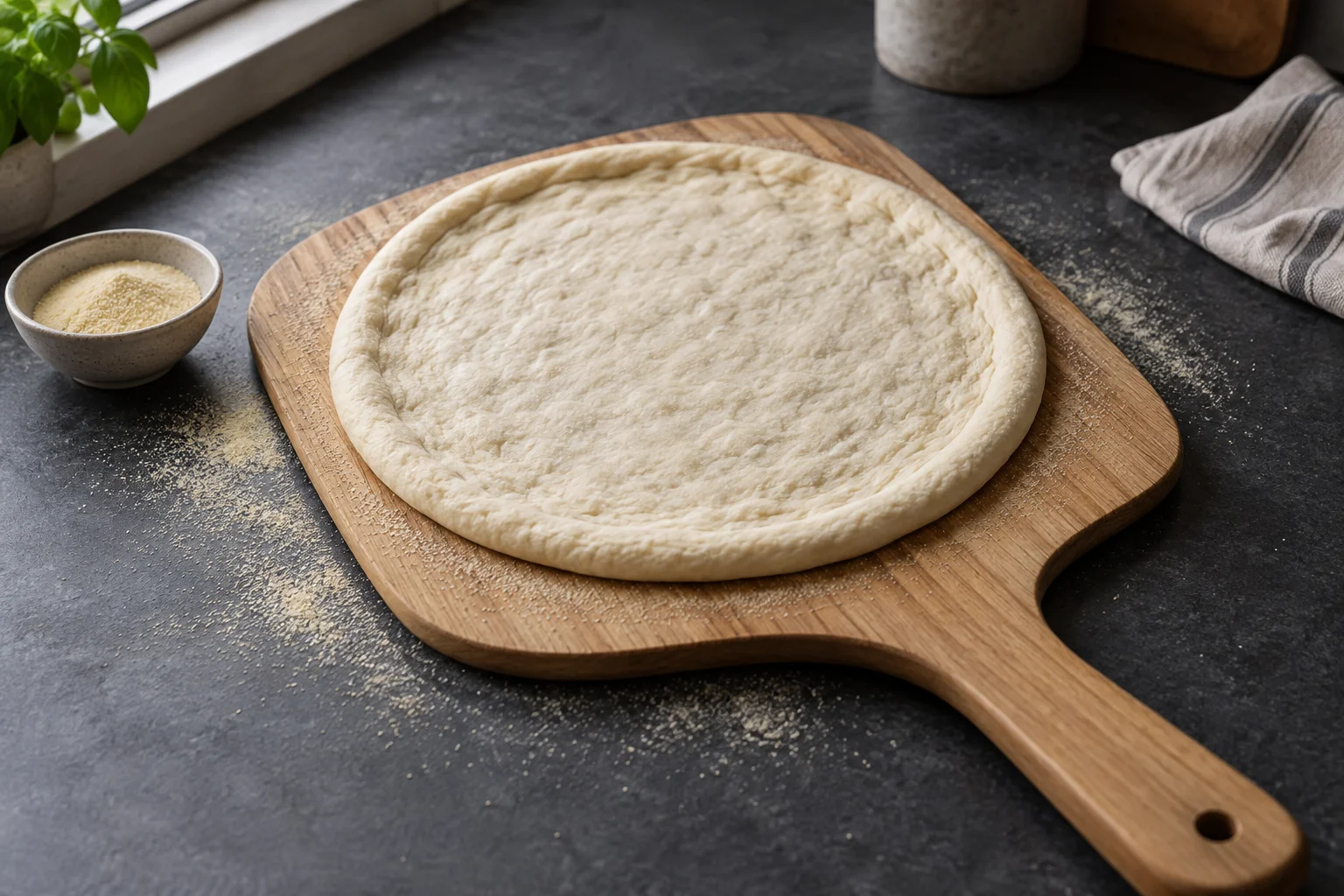
A thin separating layer is enough
Semolina is made from durum wheat. Finely milled semola rimacinata can also be used for dusting; coarse grains are not essential. It contains wheat and gluten. Keep the small dusting bowl separate from the flour weighed for the dough, so that you do not casually knead increasing amounts of flour into it.
Lightly dust a clean, dry peel that has cooled down. Avoid making a thick yellow bed. Excess flour can burn in a hot oven and taste bitter. A perforated blade helps loose particles fall away, but does not replace restrained dusting. The peel must be large enough to support the entire base.
Check movement before adding sauce
Place the opened base on the peel and gently move it a short distance backwards and forwards above the worktop. The dough should slide with the movement without slipping over the edge. If one spot sticks, gently lift that edge and add a little semolina specifically underneath it. Check again before adding sauce and toppings.
Prepare the ingredients and oven in advance. Keep toppings manageable and wipe spilled sauce off the peel before it gets beneath the base. Gently close holes in the untopped dough. The longer a topped pizza waits on the peel, the more likely it is to stick again. Jerking a heavy, firmly stuck pizza rarely gives a controlled recovery.
Separate sticking from burnt flour
If the pizza slides well but the underside tastes bitter, first check how much loose dusting flour you used. If it sticks before topping, check moisture, peel temperature and dough condition. More semolina will not fix every cause. For the next pizza, note the one variable you actually change, such as less dusting with the same dough portion.
Remove residue from the baking stone only as directed in the appliance instructions and with suitable equipment. Never pour water onto a hot stone. Cleaning and launching are separate steps; getting a pizza in promptly must not lead to reaching into a hot oven with your hands or unsuitable objects.