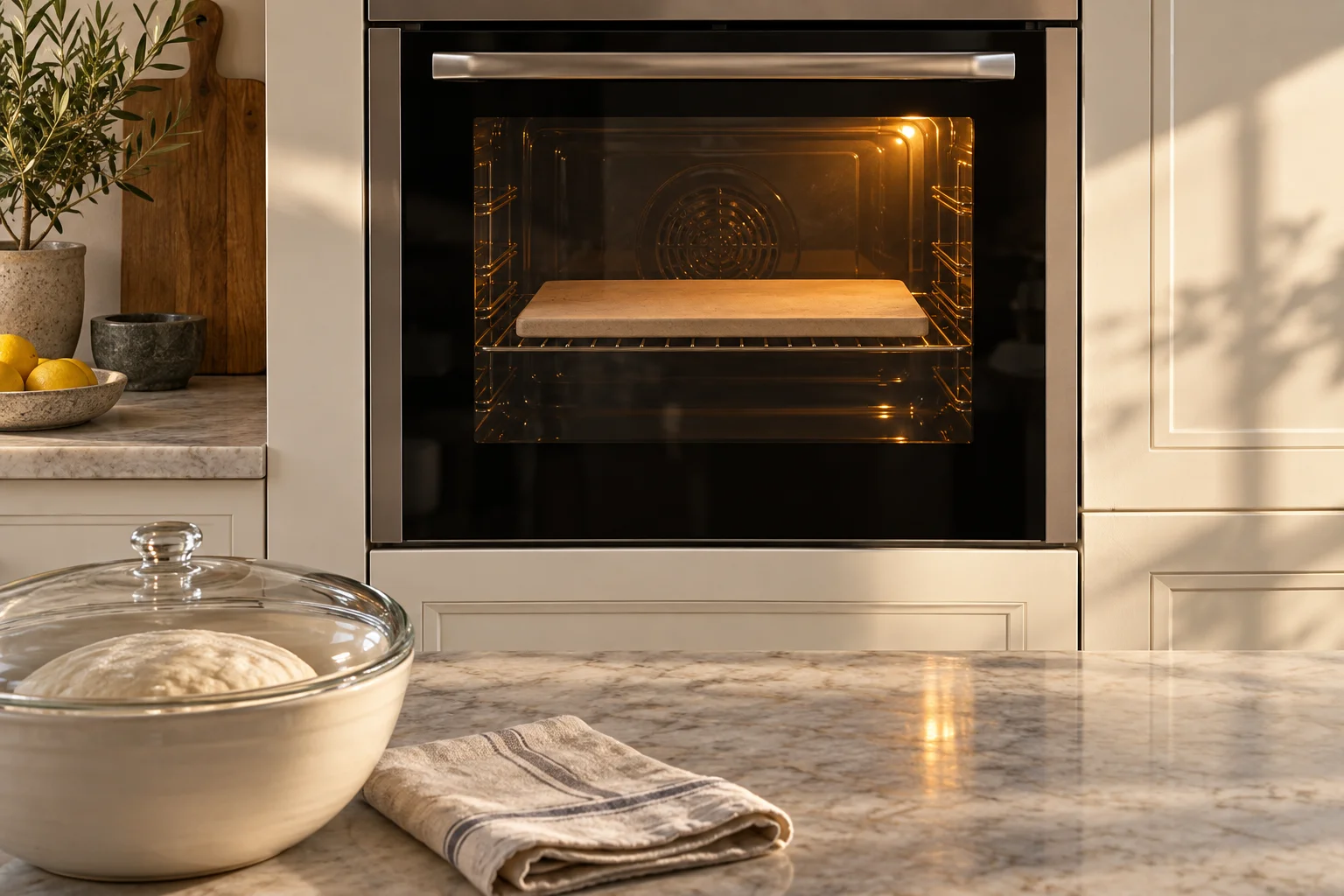
Plan the baking surface and recipe together
First decide which pizza you want to bake and which surface is intended for it. A thicker pan pizza needs different conditions from a thin pizza directly on a hot stone. Do not automatically select the highest temperature. The recipe, appliance instructions and approved use of accessories set the boundaries.
Position the intended stone or steel according to its instructions before the oven becomes hot. A heavy, hot insert is difficult to move later. Do not stack extra slabs in the hope of storing more heat: weight, clearances and airflow must suit the oven. Any required initial commissioning or burn-in is a separate procedure and does not replace normal preheating on later pizza nights.
Understand what the display tells you
A household oven's indicator light reflects its temperature control, not necessarily the temperature across your entire baking surface. A large flame in an outdoor oven does not prove the stone is evenly hot either. Material, thickness, starting temperature, oven output and positioning affect heating. One fixed number of minutes therefore cannot fit every setup.
A suitable infrared thermometer can help assess the surface. Measure a clear area using an appropriate emissivity setting and a measurement spot fully contained within the target. On shiny steel, reflections from the surroundings can distort the reading. You cannot reliably measure the stone behind a closed glass door through that glass. Also observe the thermometer's permitted ambient operating temperature.
Prepare the first pizza at the right time
Work backwards from your intended baking time using the instructions and your actual setup to plan preheating. Use that period to organise sauce, cheese and a clear work surface. Bring out the dough balls from refrigeration according to their recipe; a universal warming time for every dough is no more useful than a universal preheating time for every oven.
Top the first pizza once both oven and workflow are ready. A long wait on the peel encourages sticking. Gas, wood and pellet ovens need an appropriate fuel supply and supervision during preheating. Keep doors, vents and chimneys in the positions prescribed for the particular model. A timer can remind you to check; it cannot perform the check for you.
Let the surface recover between pizzas
The baking surface transfers heat to the dough. Before the next pizza it may therefore need time to recover, even if the air temperature display hardly changes. If necessary, compare the same clear points you measured earlier. An especially hot area around the edge does not prove that the recently used centre has recovered sufficiently.
If the next base remains pale, consider dough thickness, moisture and topping quantity as well as recovery. When everything on top darkens while the base lags behind, the balance of top and bottom heat needs attention. Briefly record the settings, preheating progression and result for your setup. This gives you a useful routine for next time without turning one baking time into a rule for every oven.