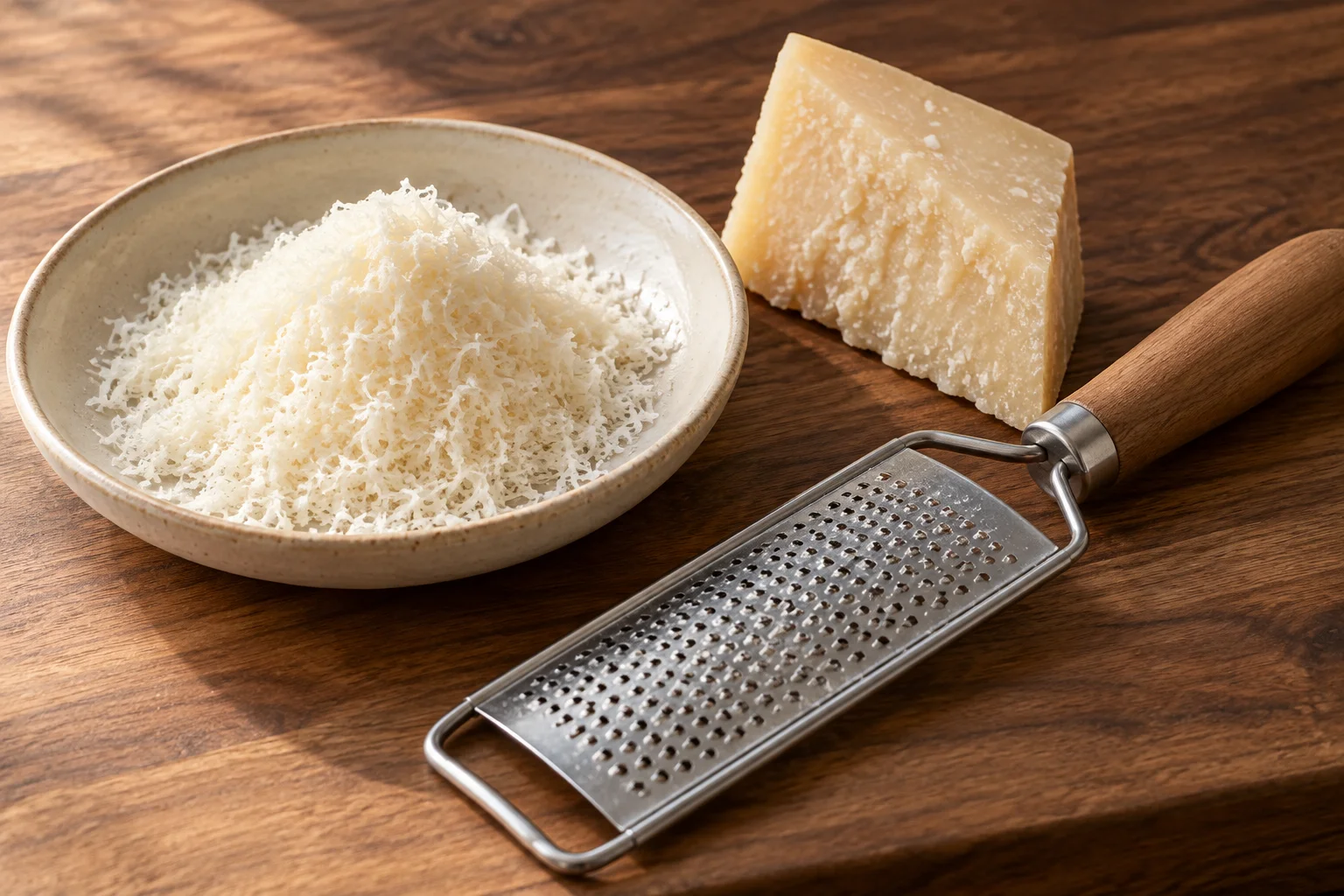
Choose an appropriate grating surface
For sauce, look for small, fairly even particles. A fine grater may produce short delicate strands, while a suitable star grater gives finer granules. Both differ from long coarse shreds or broad shaved pieces, which have their own use as garnishes. The actual cut matters more than the overall size of the tool.
Have a bowl ready and grate the required cheese before the final cooking stage begins, so hot pasta does not have to wait. Use a firm piece that is easy to hold, leaving the hard rind out of the portion you want to grate finely for this sauce. Measure grated cheese by the recipe’s weight rather than an arbitrarily heaped bowl.
Grate evenly and stop safely
Support the grater securely and move the cheese across its cutting surface with controlled strokes. Heavy pressure does not replace a suitable sharp grating surface. Keep fingers away from the teeth and use a compatible food holder where provided. There is no need to work every last crumb of a tiny piece between your fingertips.
Grate over a dry container. Steam from the pasta pot can make the fine particles damp and sticky before they reach the sauce. Weigh the finished amount: fluffy strands and more compact granules occupy different volumes at the same weight. A tablespoon is therefore not a reliable conversion from a gram measurement for every style of grating.
Fine particles do not prevent every lump
Add the cheese in the stages and at the temperature specified by your sauce recipe. A large addition to a boiling, almost dry pan can clump even when finely grated. Use the intended liquid and incorporate the cheese in portions. For Alfredo or a similar cheese emulsion, finishing away from strong heat is particularly useful.
Once a solid lump has formed, extra cheese will not automatically make the sauce smoother. Check heat and liquid distribution first. Parmesan and Pecorino are not identical ingredients either: saltiness, maturity and recipe quantities differ. Make a deliberate recipe-based substitution instead of simply using the same visual handful of another cheese.
Store freshly grated cheese appropriately
Where practical, grate the amount you need shortly before eating. Fine cheese has plenty of exposed surface and can lose aroma or dry out when left uncovered. Keep any remaining grated cheese in a clean, closed suitable container in the refrigerator and follow the purchased product’s instructions. The storage time of a large unopened piece does not automatically apply to loose grated leftovers.
Clean the grater according to its instructions and let it dry before storage. For packaged grated cheese, check ingredients and cut size; not every product contains additives, and not every blend consists of the same cheese. For a vegetarian meal, the rennet used or a suitable vegetarian alternative also matters, rather than simply whether the cheese has been grated.