Choose the method to suit the dish
First look at the pasta you actually have. Loose cooked penne with separately stored tomato sauce needs a different approach from a solid slice of lasagne. A frying pan is useful for one or two portions that you can turn: you can control added liquid and check the bottom. A microwave suits a single portion already mixed with sauce, provided you stir thoroughly between heating stages. An oven helps with layered or filled dishes that should keep their shape. The choice therefore depends less on the name of the pasta shape than on quantity, sauce and access to the centre.
Take out only the amount you intend to eat now. Heating a whole storage box and chilling the remainder again adds unnecessary work and more temperature changes. Remove cold portions with a clean spoon and return the remaining food to the refrigerator straight away. Have your plate, cutlery and any fresh garnish ready before heating. Cooked pasta softens and its sauce thickens while it waits. A small meal is easier to manage when everyone can eat as soon as it is ready, rather than leaving the pan on the hob while the table is cleared.
Storage matters before heating starts
Use leftovers that were cooled promptly in shallow portions after their first serving and then kept continuously refrigerated. Store them covered at no more than 7°C, preferably below 5°C. Two to three days is general guidance for cooked meals, rather than a promise for every mixture of ingredients. Shorter package instructions and particularly delicate components take priority. A preparation date on the container is more useful than trying to remember your last shopping trip. Adding a spoonful of freshly made sauce later does not extend the storage life of the older pasta already in the box.
If the pasta stood unrefrigerated on the hob overnight, or its refrigeration history is uncertain, more vigorous boiling will not reliably fix the problem. Some bacterial toxins already formed in food resist heat. A normal smell also does not demonstrate safe storage. Do not put those leftovers in the pan. Next time, set aside a separate portion early: food intended for tomorrow can go through prompt cooling without spending the whole meal in a warm serving bowl. Food that has already spoiled has no useful reheating method, regardless of how powerful the appliance may be.
Reheat tomato pasta in a pan
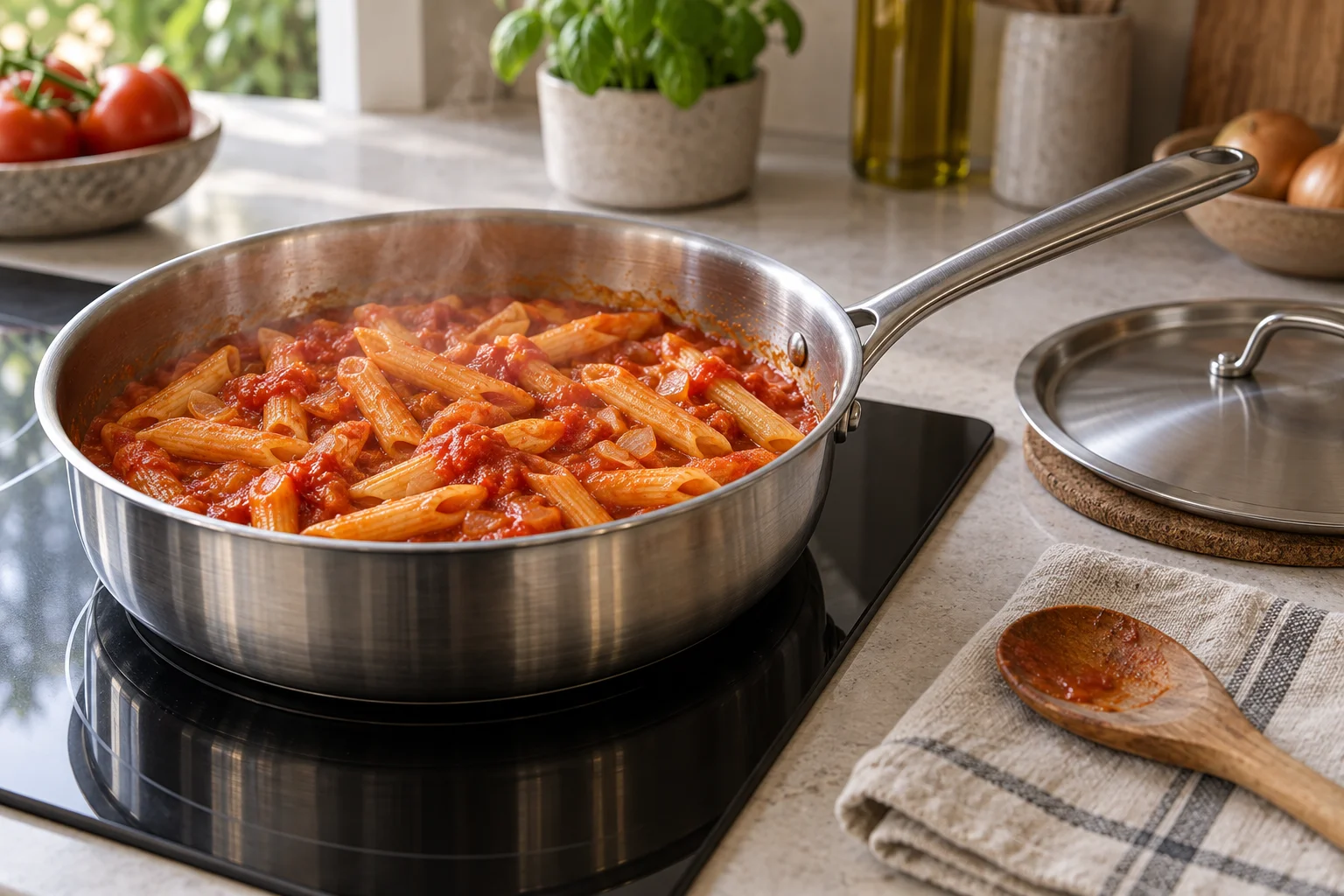
A manageable example is one portion made from 200 g of already COOKED penne and 150 g of already cooked tomato sauce. These are not dry pasta weights. Put the sauce and an initial 20 ml of drinking water into a sufficiently wide pan and warm over medium to low heat. Add the cold penne once the sauce moves easily around the pan. Cover with a suitable lid, lifting it regularly to turn the pasta gently and release it from the bottom. A spatula or spoon reaches the lower layer more reliably than simply shaking a crowded pan.
If the sauce becomes very thick before the food is fully hot, add another tablespoon of water at a time and distribute it. Aim for a coating sauce with no dry patches; there is no need to create a pool of soup. Heat every part of the dish to at least 70°C for two minutes. If uncertain, check several places with a clean suitable food thermometer, then check again after turning. A fixed number of minutes cannot replace that check: starting temperature, pan and depth all affect heating. Adjust salt and pepper at the end, since the existing sauce is already seasoned and can concentrate further as it warms.
Use the microwave for even heating
Spread one portion in a microwave-safe, fairly shallow round or oval dish. A tall compact mound is harder to mix properly. For dry tomato pasta, start with a tablespoon of water or a little compatible sauce. Use a suitable cover according to the appliance and container instructions, rather than a tightly locked airtight storage lid. A container suitable for freezing is not automatically microwave-safe. Check its marking before transferring food; metallic decoration and unsuitable packaging do not belong in this method. Have the right dish ready while the meal is still refrigerated, so you can start without leaving it waiting on the counter.
Heat in short stages at medium power according to your appliance instructions. Between stages, stir from the edge towards the centre and from the bottom upwards, reaching any cooler areas. Turn larger connected pieces carefully and follow any standing time required by the appliance instructions. Thorough heating matters more than a steaming surface. Check the target temperature in the centre and several other places; one hot reading is insufficient. Open the cover away from you so that escaping steam does not reach your hands or face directly. Stir once more and eat the finished portion promptly.
Keep plain pasta separate from sauce
If pasta and sauce were stored separately, first loosen the sauce on its own. A thin tomato sauce may need little extra water; a thick vegetable ragù may need slightly more. Add the noodles in manageable amounts and fold them through. Cold strands stuck together separate more easily when a little warm liquid reaches between them. Avoid pulling hard at a solid clump of spaghetti. Spread it gently, working from the outside inwards. This gives long strands a better chance of staying intact instead of breaking at the few points taking all the force.
For cooked pasta with no sauce, start with a little water in a non-stick or otherwise suitable pan. For around 200 g of cooked pasta, two tablespoons is a useful starting point for adjusting texture, rather than a compulsory liquid requirement. Heat, turn occasionally and add a little more if needed. Once the entire portion is sufficiently hot, combine it with a prepared sauce that has also been adequately reheated. Another coating of oil will not solve a cold centre. Deliberately fried noodles are a different preparation with desired browning; for moist pasta, keep the bottom damp and free from a hard crust.
Warm lasagne and pasta bakes in the oven
Individual lasagne slices are easier to reheat if they were neatly portioned while cold. Set them in a suitable ovenproof dish and add a little sauce compatible with the original filling beside any dry edges. Cover with a lid explicitly suitable for the oven. For a chilled bake that was already fully cooked, around 170–180°C conventional heat is one possible starting point; the recipe and dish manufacturer take priority. A small slice needs a different length of time from a full deep dish. Plan around portion thickness and verifiable heating rather than one universal baking time.
The centre must also reach at least 70°C for two minutes. Bubbling sauce at the edges or melted cheese on top does not prove this. Insert a suitable thermometer into the thickest part without merely measuring the hot base of the dish. Once the centre is ready, you may uncover briefly for extra browning if the food and dish allow it. Follow the permitted temperature changes for glass and ceramics: a cold dish is not automatically suitable for a hot oven, a hot hob or a cold wet surface immediately after baking. Transfer the food to another suitable dish where necessary.
Set realistic expectations for cheese, cream and eggs
Tomato sauce is generally more forgiving during reheating than a delicate mixture of cheese, fat and cooking water. Cacio e pepe can become grainy, a cream sauce may separate, and carbonara can lose its original creaminess. A small addition of liquid and gentle stirring may improve distribution, but cannot guarantee restoration. Do not deliberately leave these leftovers merely lukewarm to preserve their texture. Adequate heating takes priority. For a meal with guests, it therefore makes sense to combine delicate sauces freshly and prepare only suitable components in advance, rather than relying on reheating to recreate the first serving exactly.
For pasta already mixed with cream sauce, start with a little water or an appropriate unsweetened liquid used in the original recipe. Not every plant drink tastes neutral, and extra milk changes both allergens and seasoning. Stir over moderate heat until the portion is evenly and sufficiently hot, accepting a less smooth sauce if necessary. Add freshly grated cheese only at the temperature specified by the recipe; adding it indiscriminately often makes a split sauce denser. Fresh pesto for a new meal can be combined separately with hot pasta. Chilled noodles already mixed with pesto are still a leftover dish requiring suitable reheating.
Allow time for frozen portions
For this method, thaw frozen cooked pasta or lasagne in the refrigerator, for example overnight. Place the closed suitable container on a tray that can catch any escaping liquid. Thawing time depends on quantity and thickness; a large frozen block will not reliably be ready as quickly as a shallow single portion. Check its condition before the planned meal, without trying to speed matters up by leaving it at room temperature for a long time. Replace freezer packaging with suitable cookware before heating if its instructions do not permit oven or microwave use.
After thawing, choose the method appropriate to the dish and heat the entire portion thoroughly. If the centre is still frozen, a hot edge cannot count as a finished result. Heating directly from frozen requires a suitable specific recipe or product instruction; the instructions on a packaged ready-made lasagne are not a general guide to your homemade dish. Next time, record the portion count and freeze in shallower containers to make planning easier. Raw frozen ravioli and uncooked gnocchi are ingredients that still need cooking, and belong to a different process from this guide to already cooked leftovers.
Correct dry, soft or unevenly heated pasta
For dry patches, first add a little liquid and distribute it before increasing the heat. If the sauce has become too thin, briefly lift out the adequately heated pasta and reduce the sauce on its own. Combine again and serve immediately. Noodles that have already become very soft will not regain their bite through more boiling. Move them as little as possible and avoid lengthy extra cooking. A large addition of salt or cheese will not solve a texture problem either. Identify whether the issue is moisture, uneven temperature or lost firmness, then change the relevant part of the method.
Three small adjustments help with the next meal: set aside appropriately sized portions, store a needed sauce separately where practical, and add garnishes only when serving. Check the coolest part during reheating, rather than relying on the appliance display or surface appearance. You can record an approximate time for your usual portion as a personal planning aid, while retaining thorough heating as the actual criterion. A double portion does not simply need double the time; it may need a wider dish or two separate batches. The process stays manageable, and the pasta receives only the additional heat required for a properly hot finished meal.