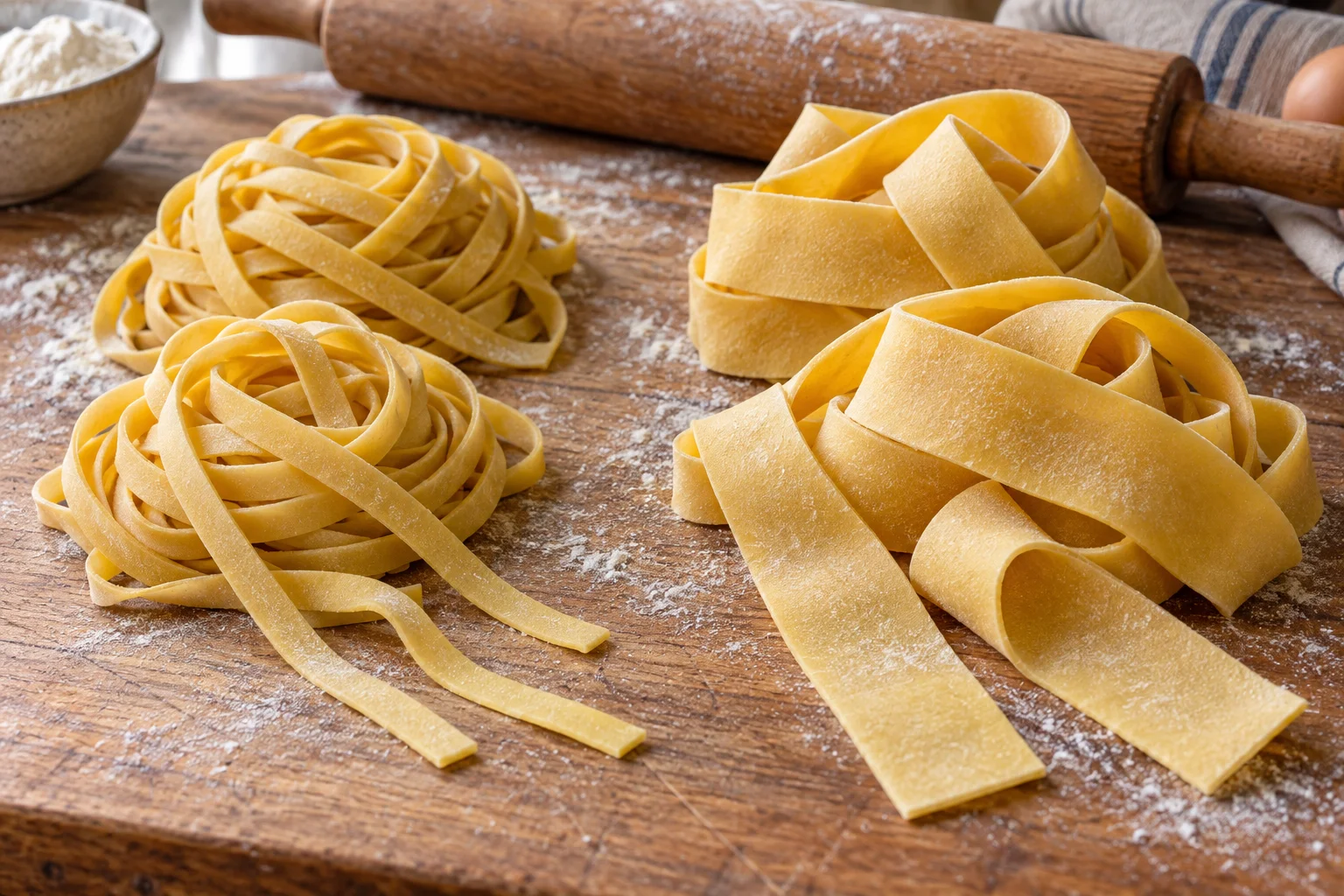
Width does not explain everything
Tagliatelle are narrower ribbons, while pappardelle are considerably wider. Both are sold fresh and dried, frequently with egg. Their names do not establish one worldwide width or thickness. Look at the actual ribbons and read the ingredients when egg or other components matter for your meal.
A wide, thinly rolled fresh pappardella may cook faster than a narrower dried tagliatella. “Wider means longer cooking” is therefore unreliable. Loosely wound nests are simply a way of selling or arranging the pasta. They do not determine a universal portion size or cooking time.
Sauce should spread between the ribbons
Tagliatelle suit a finely distributed ragù or a sauce with small mushroom pieces. Pappardelle offer plenty of surface for substantial, somewhat chunkier sauces. Tomato sauce also works with both. The important point is a moist connection: sauce should coat the ribbons and come with them when you lift a forkful.
If a ragù has become too dry, loosen it with a little suitable liquid before combining. Broad noodles can break when you try to distribute a solid mass of sauce by vigorous stirring. Instead, lift the cooked ribbons gently through the prepared sauce with tongs or two suitable spoons. Thin fresh pasta particularly benefits from careful handling.
Portion by weight and follow separate timings
Weigh dried nests instead of automatically allowing two or three per person. One manufacturer may make smaller nests than another. When swapping comparable dried egg noodles, the same weight is a sensible initial quantity. For fresh pasta, follow the amounts in its own recipe; its water content changes the weight you need to buy.
Add pasta to the water according to the package and gently separate nests as they soften. Do not force dry ribbons apart. Towards the end of the stated cooking time, check a piece after letting it cool briefly. Different fresh and dried products should not share one cooking batch without a coordinated sequence.
Cut homemade ribbons evenly
First roll the dough to an even thickness, then cut ribbons to your chosen width. Consistent thickness helps them cook together more than a visually exact measurement along every edge. Use a little suitable flour as needed to prevent sticking; thick pockets of flour between ribbons make it harder to combine them neatly with sauce later.
Have the sauce ready before fresh ribbons enter the cooking water, so you can proceed immediately after checking their bite. Work with small amounts at a time and follow the refrigeration requirements of the dough, particularly when it contains egg. Use a complete pasta dough method for quantities, resting and rolling; choosing a wider shape does not replace those steps.